


Key Findings
- In a prospective clinical trial published in The Lancet, Google's AMIE conversational diagnostic model achieved a 90 percent match with physician differential diagnoses established through eight-week follow-up chart reviews.
- Evaluating adult patients prior to urgent primary care visits, the diagnostic system placed the final correct medical condition within its top three candidate diagnoses in 75 percent of cases.
- Supervising physicians required zero safety stops across all patient encounters, though researchers emphasized that software cannot replace hands-on physical examinations or bedside human empathy.
A sharp, unfamiliar ache flares beneath the ribcage on a Tuesday morning. Most people do not wait several weeks for an outpatient clinic slot; they reach instinctively for a smartphone, typing disjointed symptom descriptions into a search bar. The results returned by commercial web search engines frequently range from benign indigestion to terminal malignancies, inducing needless panic while offering zero tailored clinical reasoning. But what happens when that conversational interface connects directly to an advanced diagnostic engine trained on millions of clinical records, medical textbooks, and peer-reviewed journals? Could an artificial intelligence system conduct an intake interview, ask the right follow-up questions, and identify an underlying illness as accurately as a board-certified physician?
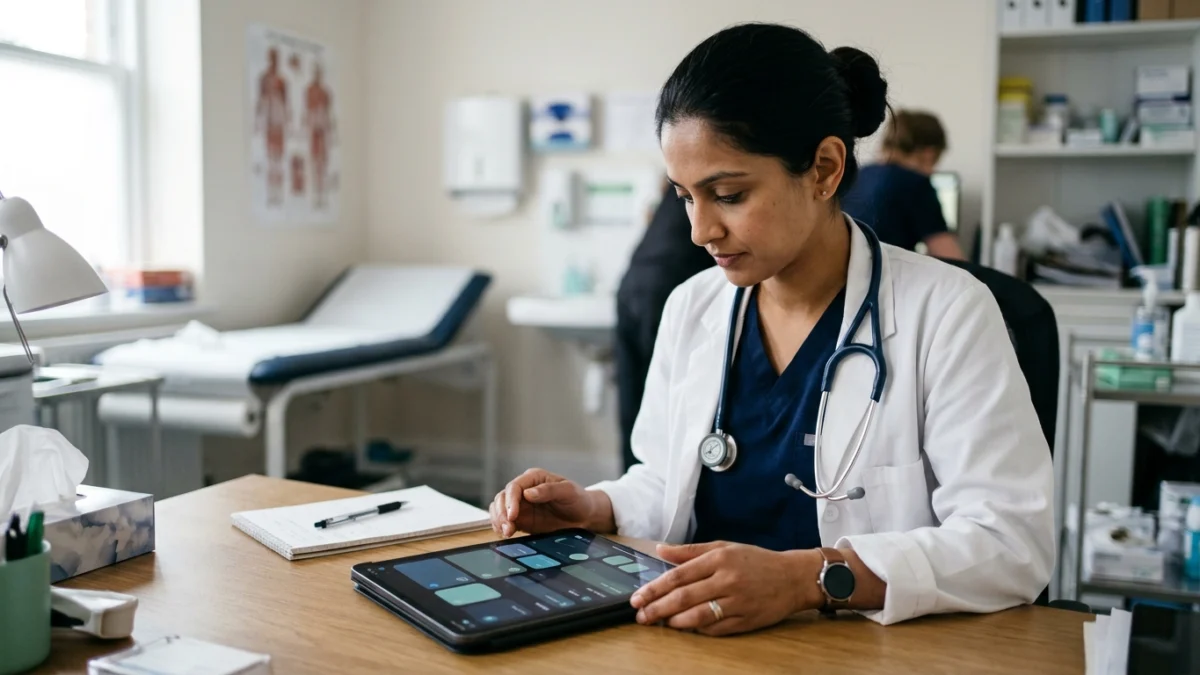
A landmark prospective clinical trial published in The Lancet provides the first rigorous real-world answer to this question [1]. Led by investigators from Beth Israel Deaconess Medical Center, Harvard Medical School, and Google Research, the study evaluated Google’s specialized medical conversational model, known as AMIE (Articulate Medical Intelligence Explorer). Rather than testing algorithms on synthetic patient scenarios or retrospective exam questions, the researchers deployed the system directly into an active primary care setting. In an evaluation of 98 completed patient encounters, AMIE matched the final physician-established diagnosis in 90 percent of cases. The findings mark a distinct transition in computational medicine: shifting artificial intelligence from theoretical benchmark demonstrations to prospective clinical workflows with real human patients.
- 98 Patients
- Completed Encounters From 114 enrolled prospective clinical subjects
- 90%
- Diagnostic Match Rate Concordance with 8-week final physician diagnoses
- 75%
- Top-3 Accuracy Correct diagnosis placed within top 3 differentials
- 0
- Safety Stops Needed Zero supervisory interruptions required during live trials
The Growing Strain on Modern Primary Care
Modern ambulatory medicine operates under severe time compression. Across busy outpatient networks in the United States and global health systems, an average routine primary care appointment lasts between 10 and 15 minutes. Within this tiny window, an attending doctor must perform multiple demanding tasks simultaneously. The clinician reviews previous electronic health records, listens to complex patient narratives, conducts targeted physical examinations, places laboratory orders, formulates a differential diagnosis, and dictates clinical notes into the computer. Under this intense cognitive load, subtle clinical clues frequently slip through the cracks. Patients often forget to report critical symptoms due to anxiety or haste, while exhausted doctors may miss atypical presentations of uncommon disorders.
Diagnostic errors represent one of the leading causes of preventable patient harm in outpatient medicine. Studies estimate that roughly 5 percent of outpatient adult consultations in the United States involve a diagnostic error, contributing to substantial morbidity, unnecessary imaging expenditures, and delayed treatment protocols. While acute emergencies like sudden cardiac arrest in athletes demand immediate physical resuscitation, chronic and subacute primary care complaints require careful deductive reasoning. When a patient arrives with persistent fatigue, vague abdominal cramping, or fluctuating joint pain, uncovering the underlying pathophysiology demands an exhaustive, unhurried interview.
This systemic bottleneck motivated the development of automated pre-visit diagnostic systems. If an artificial intelligence agent can interview a patient in their own home several days before an appointment, gathering detailed timelines and asking logical clarifying questions without time constraints, it can furnish the physician with an organized diagnostic summary before the physical examination begins. The Lancet feasibility trial aimed to discover whether such software could handle the messy, ambiguous reality of real human illness safely and effectively.

The Lancet Feasibility Trial at Beth Israel Deaconess
Previous publications evaluating medical machine learning models frequently faced justified skepticism from the medical community. Most early papers relied on standardized actor-based simulations, multiple-choice licensing exam questions (such as the USMLE), or retrospective electronic health record datasets where the correct diagnosis was already known. While algorithms frequently achieved impressive test scores in these controlled settings, real-world clinical medicine is far more unpredictable. Actual patients do not describe their discomfort using textbook terminology; they use colloquial phrases, omit relevant chronologies, and present multiple overlapping conditions simultaneously.
To test AMIE under realistic conditions, researchers at Beth Israel Deaconess Medical Center in Boston designed a prospective, single-center clinical trial [1]. Between April and November 2025, the study enrolled 114 adult patients who had booked appointments at an urgent primary care ambulatory clinic for single, acute, or worsening medical complaints. These complaints ranged from persistent unilateral headaches, atypical chest twinges, and musculoskeletal strains to unexplained digestive distress and respiratory symptoms.
Of the 114 enrolled participants, 98 patients successfully completed both the pre-visit artificial intelligence conversation and their scheduled face-to-face physician appointment. Patients interacted with AMIE via a secure text-based messaging platform on their personal computers or mobile phones up to five days before their clinic visit. The trial established stringent safety protocols: every message exchanged between patients and the AI system was monitored in real time by licensed physician safety supervisors via secure display feeds. If the software suggested a dangerous medical action, hallucinated toxic guidance, or failed to detect red-flag emergency symptoms, the supervising doctor held the authority to trigger an immediate safety override. Remarkably, zero safety stops were triggered across the entire trial cohort.
Study Methods: How the Diagnostic System Was Evaluated
The core clinical architecture of AMIE relies on an iterative, multi-turn diagnostic reasoning loop. In medicine, history-taking is not a static intake questionnaire; it is a hypothesis-driven investigative conversation. A good physician begins with an open-ended question, listens attentively, forms an initial mental differential diagnosis, and then asks targeted questions to rule candidate diseases in or out. AMIE was engineered to mirror this cognitive strategy using reinforcement learning from clinical dialogue simulations. The sequence below outlines the step-by-step diagnostic workflow validated in the Lancet study.
Clinical Workflow of Pre-Visit Conversational Diagnostic Evaluation
Step 1: Patient Symptom Reporting
The patient initiates a secure remote text chat up to five days prior to their clinic visit, detailing current discomforts.Step 2: Adaptive Clinical Inquiry
The system poses dynamic clarifying questions targeting onset, severity, radiation of pain, and aggravating factors.Step 3: Algorithmic Differential Generation
The engine references medical literature to build a ranked differential diagnosis of plausible underlying etiologies.Step 4: Structured Clinician Briefing
Before the patient enters the examination room, the attending physician receives an organized clinical digest.Step 5: Physical Examination and Confirmation
The doctor performs hands-on physical exams and diagnostic testing, confirming the final clinical diagnosis over eight weeks.
During the intake chat, the system explored the chronological onset of symptoms, character of discomfort, severity scales, aggravating and relieving factors, family medical history, current medications, and relevant lifestyle context. For instance, understanding a patient’s routine cardiovascular exertion or their adherence to daily physical activity benchmarks helps differentiate musculoskeletal chest wall strain from cardiometabolic concerns. The software synthesized these disparate inputs into a structured clinical brief, which was routed to the attending physician’s clinical inbox prior to the consultation.
To establish a definitive ground truth for diagnostic accuracy, the study implemented an extensive eight-week longitudinal follow-up protocol. Initial impressions formed during a brief clinic visit can change as laboratory blood work, microbiological cultures, and radiological imaging results return. A panel of senior independent physician reviewers reviewed every patient’s comprehensive medical chart eight weeks after the initial visit. These reviewers established the confirmed final diagnosis based on objective test results, specialist referrals, and treatment outcomes. AMIE’s pre-visit differential diagnosis was then rigorously compared against this finalized clinical benchmark.
Ninety Percent Agreement: What the Clinical Data Shows
When researchers analyzed the concordance between AMIE’s predictions and the confirmed final diagnoses, the statistical alignment proved striking. In 90 percent of the 98 evaluated patient cases, the software’s ranked differential diagnosis included the true disease established by doctors after eight weeks of clinical observation [1]. Furthermore, in 75 percent of cases, the system placed the confirmed disease within its top three candidate diagnoses. In 56 percent of cases, the model identified the correct illness as its single top recommendation.
The prospective trial also measured qualitative perceptions from both clinicians and patients. Attending primary care physicians reported that the structured summaries generated by the AI helped them prepare for appointments in 75 percent of encounters. Doctors noted that reviewing the pre-visit history allowed them to focus immediately on physical examination maneuvers and shared decision-making, rather than spending their limited consultation minutes typing repetitive baseline demographic questions. The table below details the empirical performance markers documented in the trial.
| Evaluation Metric | Observed Performance | Clinical Significance |
|---|---|---|
| Differential Diagnosis Match | 90% | Proportion of cases where AI differential matched the 8-week final doctor diagnosis. |
| Top-3 Diagnostic Accuracy | 75% | Correct final diagnosis was placed within the AI model’s top 3 suggestions. |
| Top-1 Primary Recommendation | 56% | System correctly identified the true diagnosis as its single most probable choice. |
| Clinician Preparation Utility | 75% | Attending physicians reported the pre-visit AI summary aided consultation prep. |
| Safety Interventions Triggered | 0 | Zero instances requiring physician safety supervisors to abort encounters. |
| Minor Hallucinations Documented | 1 occurrence | Only one non-harmful factual hallucination observed across 98 completed visits. |
Source: Brodeur et al., The Lancet, October 2026.
| AMIE Diagnostic Concordance and Accuracy Rates (%) | Series 1 |
|---|---|
| Diagnosis Match | 90% |
| Top-3 Precision | 75% |
| Primary Pick | 56% |
| Doctor Prep Aid | 75% |
Source: The Lancet, prospective evaluation of 98 completed patient encounters.
Safety reviewers documented only a single instance of minor factual hallucination across all 98 clinical dialogues, representing an error rate well below 1 percent. In five instances, supervising physicians manually added brief clinical annotations where they felt the conversational engine had omitted minor contextual details. Patients themselves rated the communication quality of the system favorably across 48 to 96 percent of qualitative criteria, noting that the software felt attentive, unhurried, and easy to interact with from their home environment.
Diagnostic Software Versus Human Clinicians: A Direct Comparison
Demonstrating high diagnostic concordance does not mean algorithmic software can or should function as an autonomous doctor. Rather, the study highlights how computational models and human practitioners exhibit complementary operational strengths. While an algorithm possesses rapid memory recall across millions of rare disease reports, it lacks biological senses, tactile intuition, and legal accountability. The structured comparison below outlines the contrasting capabilities of human clinicians versus specialized diagnostic software.
| Feature | Clinical BalanceHuman Attending Physician | Conversational Diagnostic AI (AMIE) |
|---|---|---|
| Medical History Acquisition | Subject to 10-minute clinic visit constraints | Explores symptoms without time pressure or conversational fatigue |
| Diagnostic Evidence Recall | Constrained by individual clinician memory | Retrieves published guidelines across vast medical databases instantly |
| Hands-On Physical Exam | Performs manual palpation, auscultation, and reflex tests | Cannot touch patients or evaluate tactile tenderness and murmurs |
| Interpersonal Empathy | Provides compassionate eye contact and bedside emotional reassurance | Communicates via synthetic text without genuine biological empathy |
| Diagnostic Fatigue | Vulnerable to sleep deficits and long hospital shift exhaustion | Operates consistently 24 hours a day without cognitive degradation |
Source: Comparative clinical analysis based on Harvard Medical School and Google Research data.
Understanding the interplay between cognitive focus and clinical performance is essential. Just as research in neuroscience and cognitive function shows how fatigue degrades human analytical focus, hospital shift work inevitably strains physician alertness. Diagnostic software operates with uniform computational consistency regardless of whether a patient initiates an interview at noon or midnight. When deployed alongside clinicians, software handles the repetitive data-gathering burdens, freeing human practitioners to apply their specialized physical diagnostic training.
The Deskilling Dilemma and Practical Pitfalls
Despite the encouraging accuracy metrics reported in The Lancet, senior medical ethicists and clinical educators urge caution regarding uncritical hospital adoption. In an editorial published in The Lancet Digital Health, researchers warned of a subtle hazard known as clinical deskilling [2]. When healthcare professionals rely routinely on automated decision aids, their independent deductive abilities can deteriorate over time, creating dangerous blind spots when technical infrastructure fails.
Analogous phenomena have been observed across other medical domains. In clinical trials evaluating computer-aided detection systems for colonoscopy polyps, gastroenterologists who practiced alongside algorithmic prompt overlays demonstrated a measurable decline in independent polyp detection rates during follow-up testing when the software was turned off. Similar skill atrophy has been documented among junior radiologists using automated mammography screening tools. If resident physicians and medical students routinely rely on artificial intelligence summaries to formulate differential diagnoses, they risk failing to develop the intuitive pattern recognition that seasoned doctors cultivate through years of unassisted clinical practice.
Automation bias presents an equally serious risk. When busy physicians review an algorithmic clinical summary that confidently highlights a benign etiology, they may unconsciously exhibit confirmation bias, overlooking subtle contradictory signs during the physical exam. Furthermore, current diagnostic models remain vulnerable to demographic data biases. Algorithms trained disproportionately on urban, digitally literate populations may fail to interpret atypical idioms of distress expressed by rural, elderly, or marginalized patient communities.
Study Limitations: What These Findings Cannot Tell Us
While the Lancet prospective study establishes an important feasibility milestone, several critical boundaries must be recognized before translating these findings into general medical practice. First and foremost, the trial was conducted at a single academic medical center in Boston, Massachusetts, evaluating a relatively modest cohort of 98 completed patient encounters. The participants consisted exclusively of English-speaking adults who felt comfortable navigating a web-based text chat on personal digital devices. The findings cannot be assumed to generalize across pediatric populations, patients with severe cognitive impairment, non-English speakers, or individuals with limited technological access.
Second, the study evaluated single-complaint urgent care consultations rather than highly complex, multi-system chronic diseases. Managing a middle-aged patient presenting with acute localized back strain is vastly different from managing an elderly individual navigating brittle diabetes, end-stage renal failure, chronic heart failure, and complex polypharmacy. Determining how conversational software performs when sorting through hundreds of conflicting historical medications and interdependent metabolic variables requires much larger multi-center trials.
Third, software cannot replace the physical examination. An algorithm cannot place a hand over McBurney’s point to check for peritoneal rebound tenderness in suspected acute appendicitis. It cannot auscultate subtle diastolic heart murmurs, evaluate pupillary light reflexes, or inspect skin lesions for blanching under glass pressure. Because history-taking accounts for roughly 80 percent of diagnostic clues, software can generate plausible possibilities; however, the remaining 20 percent discovered through tactile physical evaluation frequently determines whether a patient undergoes emergency surgery or returns home safely.
Next Steps for Clinical Practice and Patient Care
The true promise of conversational medical artificial intelligence lies in augmenting clinical capacity rather than replacing clinicians. Global healthcare faces staggering workforce shortages, with projections indicating a shortfall of millions of healthcare workers by 2030. In underserved rural communities and developing healthcare systems, patients wait months simply to access basic outpatient consultations. Intelligent intake systems could help bridge this divide, triaging incoming patient inquiries, structuring initial health records, and flagging urgent symptoms before patients travel long distances to crowded clinics.
Over the coming years, academic medical centers and regulatory bodies will conduct randomized controlled trials measuring tangible patient outcomes. Future research must determine whether automated pre-visit intake genuinely shortens total diagnostic delay, reduces unnecessary emergency department admissions, and prevents medication errors. Software developers are currently working to integrate multimodal diagnostic capabilities, enabling models to evaluate patient smartphone photographs of dermatological rashes alongside conversational symptom descriptions.
For patients, the central takeaway from The Lancet trial is one of measured reassurance. Artificial intelligence is steadily maturing into a dependable diagnostic copilot for primary care providers. As these tools integrate into hospital portals, patients can expect more thorough pre-visit preparation and less rushed face-to-face appointments. Nevertheless, the cornerstone of healing remains the human relationship: a physician’s empathetic touch, critical clinical intuition, and unyielding responsibility to the living patient in front of them.
Frequently Asked Questions
Glossary
Scientific terms used in this article
- AMIE (Articulate Medical Intelligence Explorer)Specialized Clinical Conversational Model
- An experimental research-grade conversational diagnostic artificial intelligence system developed by Google Research.
- Differential DiagnosisRanked List of Potential Illnesses
- A structured clinical list of candidate diseases that could explain a patient’s reported symptoms and physical findings.
- Clinical History TakingPatient Symptom Interview
- The systematic questioning process by which healthcare providers gather information about a patient’s onset of illness, medical history, and symptoms.
- Clinical DeskillingDiagnostic Skill Atrophy
- The erosion of independent diagnostic acumen that occurs when clinicians rely excessively on automated decision-support software.
- Model HallucinationFabricated Output Generation
- An error where an artificial intelligence model generates plausible-sounding medical assertions that are factually inaccurate or unsupported by clinical data.
- Primary Care Physician (PCP)General Practice Doctor
- A general practitioner who provides continuous personal care and serves as the initial medical contact for patients within the healthcare system.
Conversational diagnostic artificial intelligence in ambulatory primary care: a prospective feasibility study
- Journal
- The Lancet
- Study Type
- Cohort
- Year
- 2026
DOI10.1016/S0140-6736(26)01535-7
Frequently Asked Questions
Common reader questions about this study
Can patients use Google's AMIE medical system at home today?
No. AMIE remains an experimental research model under investigation. It is not approved by regulatory authorities such as the FDA for direct public use, and clinical deployment is strictly limited to supervised hospital research settings.
Who bears legal responsibility if a medical software program suggests an incorrect diagnosis?
Under current medical licensing frameworks and legal standards, licensed human physicians maintain ultimate clinical responsibility. Diagnostic software functions solely as an advisory decision support tool rather than an autonomous medical provider.
Is typing symptoms into a consumer chatbot safe during an emergency?
No. Consumer chatbots are not calibrated for emergency triage. Acute medical symptoms such as crushing chest discomfort, sudden numbness, or severe respiratory distress require immediate evaluation at an emergency department.
Will diagnostic software make human doctors obsolete in primary care?
No. Clinical medicine requires physical touch, acoustic auscultation through stethoscopes, manual palpation, procedural skills, and emotional connection. Software is designed to automate clerical documentation and history gathering so clinicians can spend more time with patients.
What happens if diagnostic models are trained primarily on homogenous demographic data?
Biased training sets present significant diagnostic disparities across diverse ethnicities, genetic backgrounds, and socio-economic groups. Clinical researchers insist that widespread hospital deployment requires validation across varied geographic populations.


No comments yet. Be the first to join the conversation.