


Key Findings
- A 31-year longitudinal study in North Cyprus reveals that green sea turtles advance their nesting dates by 6.47 days for every 1°C increase in sea temperature.
- This phenological shift is driven primarily by individual behavioral plasticity rather than generational micro-evolutionary genetic adaptation.
- Rising sand temperatures threaten sea turtles through temperature-dependent sex determination, producing near-exclusive female cohorts.
- Incubation temperatures exceeding 34°C cause embryonic mortality, requiring artificial hatchery shading and coastal vegetation restoration.
Sea turtles are living testaments to evolutionary resilience. Having traversed Earth’s vast oceanic corridors for over one hundred million years, these ancient marine reptiles survived the catastrophic asteroid impact that eradicated the non-avian dinosaurs, weathered multiple ice ages, and witnessed the shifting of tectonic continents. Yet today, sea turtles face an unprecedented environmental crisis driven not by geological cataclysm, but by the rapid, anthropogenic heating of the planet’s oceans and shorelines [1].
Because sea turtles are ectothermic organisms, every dimension of their biology, from metabolic processing and seasonal trans-oceanic migrations to the developmental timing of egg maturation, is inextricably tethered to environmental temperatures. Over recent decades, marine ecologists observing global rookeries noted conspicuous alterations in nesting timetables. A landmark thirty-one-year longitudinal investigation published in the Proceedings of the Royal Society B: Biological Sciences provides rigorous empirical proof of how ocean warming is radically altering sea turtle nesting phenology [1].
Ancient Navigators in a Warming World: The Fragile Biology of Sea Turtles
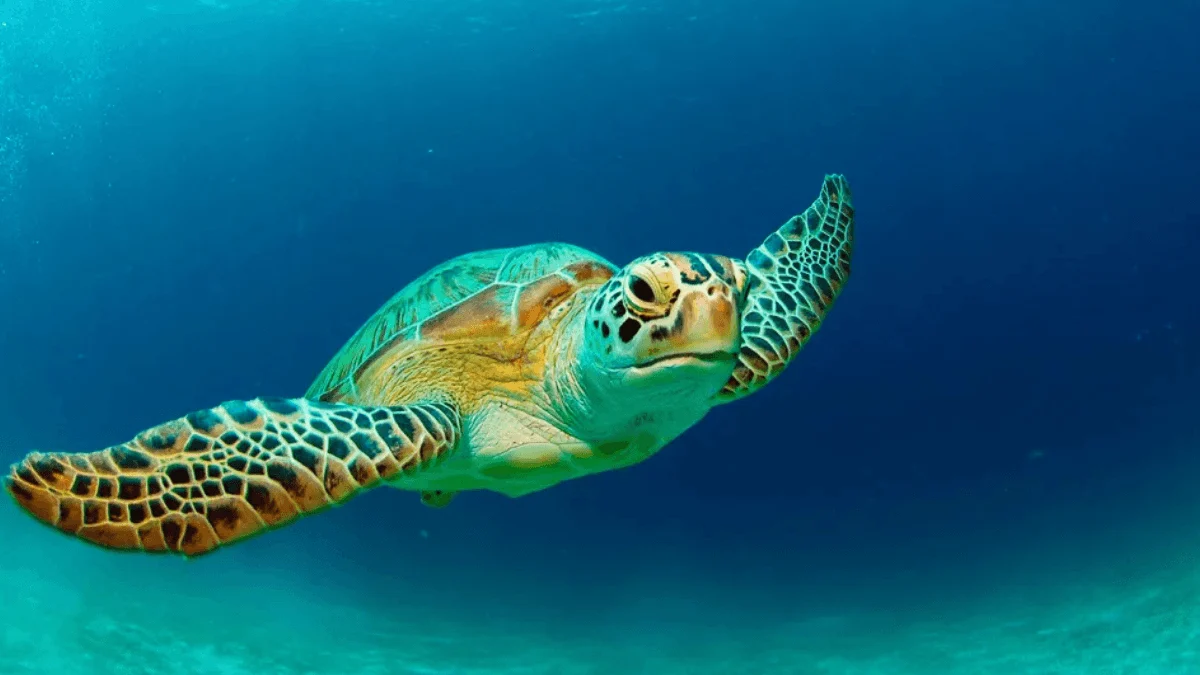
Green sea turtles (Chelonia mydas) represent one of the world’s seven extant sea turtle species, serving as keystone marine herbivores that maintain productive seagrass beds and coral reef ecosystems. Emerging during the late Cretaceous period, the superfamily Chelonioidea evolved specialized morphological adaptations for open-ocean life, including streamlined carapaces, modified paddle-like flippers, and salt-excreting lachrymal glands behind their eyes. After spending decades grazing across pelagic feeding grounds, mature adult turtles embark on arduous reproductive migrations spanning thousands of kilometers to return to the precise natal beaches where they hatched decades earlier [2].
Successful reproduction requires a finely calibrated ecological sequence: mating in offshore waters, hauling ashore under cover of night, excavating deep egg chambers in coastal dunes, depositing fifty to one hundred and fifty leathery eggs, and returning safely to the surf. However, because sea turtles lack internal physiological thermoregulation, their reproductive cycles depend directly on external thermal cues, rendering them acutely vulnerable to warming oceans and shifting climatic patterns [1] [4].
In the Mediterranean basin, green sea turtles represent a genetically distinct, critically endangered subpopulation. Isolated from broader Atlantic gene pools, these Mediterranean turtles nest primarily along the eastern coastlines of Cyprus, Turkey, and Syria, utilizing winter foraging grounds in the shallow coastal waters of Egypt and Libya. This geographic confinement makes Mediterranean rookeries an invaluable natural laboratory for tracking climate impacts [1] [2].
The 31-Year Alagadi Investigation: Tracking Three Decades of Mediterranean Nesting
To document how wild marine populations respond to rising temperatures over multi-decadal timeframes, researchers from the University of Exeter, the Society for the Protection of Turtles (SPOT), and the Department of Environmental Protection conducted an exhaustive field monitoring program at Alagadi Beach in North Cyprus. Covering thirty-one consecutive nesting seasons between 1992 and 2022, this project represents one of the longest continuous individual-level sea turtle demographic datasets in existence [1].
Every year from mid-May through mid-August, researchers patrolled the sandy Mediterranean beaches nightly. Female turtles crawling ashore were cataloged, measured for curved carapace length, and outfitted with unique titanium flipper tags and passive integrated transponders (PIT tags). Over the three decades of surveillance, researchers individually monitored 656 distinct female green turtles who laid a collective total of 3,410 recorded clutches, correlating each laying event with high-resolution satellite sea surface temperature measurements [1].
The continuity and meticulous scale of the Alagadi field project allowed scientists to distinguish between broad population-wide demographic shifts and subtle, year-to-year behavioral variations exhibited by individual nesting females over their entire reproductive lifespans [1] [4].
Nesting Phenology Under Pressure: The 6.47-Day Advance Per Degree Celsius
The statistical models developed by the international research team revealed a profound biological finding: green sea turtles are nesting significantly earlier in the year than they did three decades ago. Specifically, the study identified late spring (March 29 to April 29) sea surface temperature (SST) as the decisive thermal window dictating when nesting begins [1].
For every single degree Celsius (1°C) increase in regional sea surface temperature during this spring window, female green turtles laid their first clutch approximately 6.47 days earlier in the season. Over the course of the thirty-one-year monitoring timeline, the onset of the Mediterranean nesting season shifted forward by more than two full weeks [1].
Warmer spring ocean waters elevate maternal core body temperatures, which significantly accelerates the biochemical kinetics of vitellogenesis, the physiological process whereby dietary lipids and proteins are converted into nutrient-dense egg yolk inside the ovaries. Concurrently, elevated temperatures stimulate pituitary secretion of gonadotropic hormones, prompting earlier reproductive migration from African foraging grounds to Mediterranean nesting beaches [1] [4].
Phenotypic Plasticity Versus Micro-Evolution: How Individual Turtles Adapt
When wild animal populations display broad phenological shifts over multi-decadal timescales, evolutionary biologists must determine the underlying mechanism: is the population undergoing genetic micro-evolution through natural selection, or are individual organisms demonstrating behavioral and phenotypic plasticity? [1]
Because green turtles exhibit generational turnover spans exceeding twenty-five to thirty years, genetic adaptation within a three-decade window is practically impossible. By analyzing repeated nesting events from long-lived individual turtles across multiple decades, the researchers demonstrated that this phenological advance is driven primarily by individual phenotypic plasticity [1].
Experienced female turtles who nested repeatedly at Alagadi adjusted their arrival schedules dynamically from year to year in direct response to that season’s specific marine thermal conditions. Furthermore, larger, older, and more experienced females consistently nested earlier in the calendar year than smaller, first-time neophyte nesters, demonstrating that accumulated metabolic reserves enhance maternal phenotypic flexibility [1] [4].
However, scientists caution that individual behavioral plasticity is not an infinite buffer. While nesting two weeks earlier helps turtles evade the peak scorch of mid-July, there is a hard physiological limit to how early females can initiate vitellogenesis during chilly winter months [1].
Temperature-Dependent Sex Determination: The Threat of Population Feminization
While shifting nesting dates earlier in the spring allows sea turtles to avoid peak midsummer coastal temperatures, it intersects with a far more perilous biological vulnerability: Temperature-Dependent Sex Determination (TSD). Sea turtles lack sex-determining chromosomes; instead, the physical temperature of the sand during the middle third of incubation permanently determines the sex of the developing embryo [2].
In sea turtles, the pivotal incubation temperature sits at approximately 29.2°C (84.6°F), which produces a balanced fifty-fifty ratio of male and female hatchlings. Incubation temperatures cooler than this pivotal threshold yield exclusively male offspring, while temperatures exceeding 31°C produce nearly one hundred percent female hatchlings [2] [3].
At the molecular level, this thermal switch is mediated by the enzyme aromatase (CYP19A1). At elevated temperatures, aromatase expression spikes in the bipotential embryonic gonads, rapidly converting testosterone into estradiol, directing ovarian differentiation. As global atmospheric and ocean warming drives coastal sand temperatures relentlessly upward, major rookeries worldwide are producing dangerously skewed sex ratios. In the northern Great Barrier Reef, research published in Current Biology revealed that green sea turtle rookeries are producing over ninety-nine percent female hatchlings, creating a catastrophic shortage of breeding males that threatens long-term population viability [3].
Lethal Incubation Thermal Thresholds: When Sand Becomes Too Hot for Embryos
Beyond skewing sexual ratios, rising temperatures present an absolute lethal ceiling for reptilian development. While sea turtle embryos exhibit developmental plasticity within a narrow operational window (typically 25°C to 33°C), temperatures surpassing 34°C (93.2°F) trigger acute cellular toxicity [5].
Under hyperthermic conditions, essential embryonic transport enzymes denature, mitochondrial membranes collapse, and developing embryos suffer severe metabolic acidosis and hypoxia. Furthermore, hot sand increases metabolic oxygen consumption among developing embryos while reducing the porosity and gas conductance of dry coastal sand dunes. In many low-latitude tropical rookeries, unshaded sand temperatures regularly reach 36°C or higher, transforming subterranean nests into subterranean thermal traps where entire clutches perish before hatching [3] [5].
Ecological Cascades: Marine and Beach Comparison Grid
Understanding how rising temperatures reverberate across oceanic and terrestrial life stages provides essential clarity on the multifaceted conservation hurdles facing sea turtles:
Thermal Impacts Across Sea Turtle Life History Stages
Marine Stage: Ocean Warming Dynamics
Phenological Advance: Warmer spring SST prompts nesting 6.47 days earlier per 1°C increase.
Physiological Drivers: Accelerated vitellogenesis and elevated ectothermic metabolic rates in female nesters.
Foraging Alterations: Shifts in seagrass distribution and jellyfish abundance disrupting migratory routes.
Adaptive Mechanism: High individual behavioral plasticity among experienced, older female nesters.
Terrestrial Stage: Sand Incubation Stress
Phenological Threat: Nesting earlier fails to completely avoid extreme midsummer sand heatwaves.
Sex Ratio Skew: Incubation above 31°C produces 99% females, threatening reproductive demographics.
Lethal Thresholds: Sand temperatures above 34°C cause embryonic protein denaturation and clutch failure.
Conservation Need: Artificial shading, beach vegetation restoration, and managed incubation hatcheries.
Global Conservation Strategies: Protecting Sea Turtle Rookeries for the Next Century
Recognizing the limits of natural phenotypic plasticity, conservation biologists and marine protected area managers are deploying innovative active-management strategies to safeguard turtle nesting beaches [1] [3].
First, implement targeted nest cooling interventions. Marine conservationists at vulnerable rookeries install high-density mesh shade cloths over nesting sand and plant native coastal vegetation, which lowers subterranean sand temperatures by 1.5°C to 3°C, effectively restoring male hatchling production. In severe equatorial locations, controlled seawater misting systems mimic natural precipitation to prevent clutch desiccation.
Second, establish managed hatchery translocations. When turtles nest on unshaded, erosion-prone, or excessively hot beaches, trained biologists carefully relocate newly deposited clutches within two hours of laying into protected, temperature-monitored beach hatcheries.
Third, mitigate non-climatic anthropogenic stressors. Protecting sea turtles from plastic pollution, industrial longline bycatch, artificial beach lighting, and coastal seawall construction enhances the baseline demographic resilience of populations, giving these ancient marine creatures the biological breathing room required to endure a changing climate [1] [2].
Frequently Asked Questions (FAQ)
How does sea surface temperature affect turtle nesting schedules?
Sea turtles are ectothermic reptiles whose metabolic rates, vitellogenesis (egg development), and migratory behaviors depend on ambient ocean temperatures. Warmer spring waters accelerate follicular maturation, prompting females to arrive at nesting beaches weeks earlier.
What is temperature-dependent sex determination in sea turtles?
Sea turtles do not possess sex chromosomes (X or Y). Instead, the ambient temperature of the incubation sand during the middle third of development determines gender. Temperatures around 29°C produce a balanced ratio; warmer temperatures yield females, while cooler temperatures yield males.
Can sea turtles evolve quickly enough to outpace climate change?
Because sea turtles take fifteen to thirty years to achieve sexual maturity, their generational turnover is exceptionally slow. While individual females exhibit behavioral plasticity by nesting earlier in the season, this flexibility has physiological limits that cannot indefinitely buffer rapid global heating.
What happens when nesting beach sand exceeds 34°C?
When sand temperatures surpass 34°C (93°F), developing embryos experience catastrophic protein denaturation, severe metabolic acidosis, and cellular hypoxia, causing hatchling emergence success to drop toward zero.
What practical conservation measures protect turtle nests from extreme heat?
Marine biologists employ non-invasive conservation interventions, including erecting mesh shade cloths over vulnerable nests, irrigating incubation sand with cool seawater, translocating doomed clutches to deeper temperature-controlled hatcheries, and planting native coastal trees.
References and Research Citations
Individual plasticity in response to rising sea temperatures contributes to an advancement in green turtle nesting phenology
- Journal
- Proceedings of the Royal Society B: Biological Sciences
- Study Type
- Journal Article
- Year
- 2024
DOI10.1098/rspb.2024.1809
Environmental sex determination in reptiles: some unsolved problems
- Journal
- Journal of Experimental Zoology
- Study Type
- Journal Article
- Year
- 1980
DOI10.1002/jez.1402320314
Global warming and sex ratios of green sea turtles
- Journal
- Current Biology
- Study Type
- Journal Article
- Year
- 2018
DOI10.1016/j.cub.2017.11.057
Phenological shifts in terrestrial and marine ecosystems under climate change
- Journal
- Proceedings of the National Academy of Sciences
- Study Type
- Review
- Year
- 2018
DOI10.1073/pnas.1711221114
Thermal tolerance and developmental plasticity in marine turtle embryos
- Journal
- Journal of Experimental Biology
- Study Type
- Journal Article
- Year
- 2019
DOI10.1242/jeb.199463
References
- ↩ Individual plasticity in response to rising sea temperatures contributes to an advancement in green turtle nesting phenology
- ↩ Environmental sex determination in reptiles: some unsolved problems
- ↩ Global warming and sex ratios of green sea turtles
- ↩ Phenological shifts in terrestrial and marine ecosystems under climate change
- ↩ Thermal tolerance and developmental plasticity in marine turtle embryos


No comments yet. Be the first to join the conversation.