
Key Findings
- Coal fly ash contains high concentrations of toxic heavy metals (arsenic, lead, cadmium, and chromium) that leach into brackish coastal waterways.
- Benthic estuarine species bioaccumulate heavy metals, transferring toxic burdens up the marine food web into local commercial seafood.
- Restoring Ennore Creek requires hydraulic dredging with impermeable containment, total circular ash recycling in concrete, and mangrove phytoremediation.
Just north of Chennai, where the Kosasthalaiyar River empties into the Bay of Bengal, lies the Ennore Creek, a sprawling coastal wetland that once served as the vital ecological kidney of northern Tamil Nadu. For generations, this brackish estuarine labyrinth sustained luxuriant mangrove forests, buffered coastal communities from violent storm surges, and supported thousands of artisanal fisherfolk harvesting mud crabs, tiger prawns, and sea bass [1] [3]. Today, however, environmental monitoring reports describe a catastrophic ecological transformation. Decades of intensive coal-fired power generation, unlined slurry pipelines, and ash pond overflows have smothered tidal channels beneath millions of metric tons of toxic industrial residue [1] [2]. What toxic elements hide within coal fly ash, how do heavy metals travel through marine food webs, and what does modern geochemical science say about restoring this beleaguered coastal ecosystem [2] [4]?
Coal Combustion Residuals and the Fly Ash Crisis
To produce electricity from thermal energy, coal-fired power stations pulverize raw bituminous and sub-bituminous coal into fine dust before burning it in high-temperature boilers exceeding 1,200 degrees Celsius [2]. While organic carbon and volatile hydrocarbons combust into carbon dioxide and water vapor, the non-combustible inorganic mineral matter within raw coal melts, vitrifies, and solidifies into microscopic spherical particles [2].
These combustion residuals consist primarily of two fractions:
• Fly Ash: Fine, powder-like glassy spheres captured from flue gas stacks by electrostatic precipitators, representing over eighty percent of total coal ash [2].
• Bottom Ash: Coarser, angular clinkers that settle at the base of the furnace chamber [2].
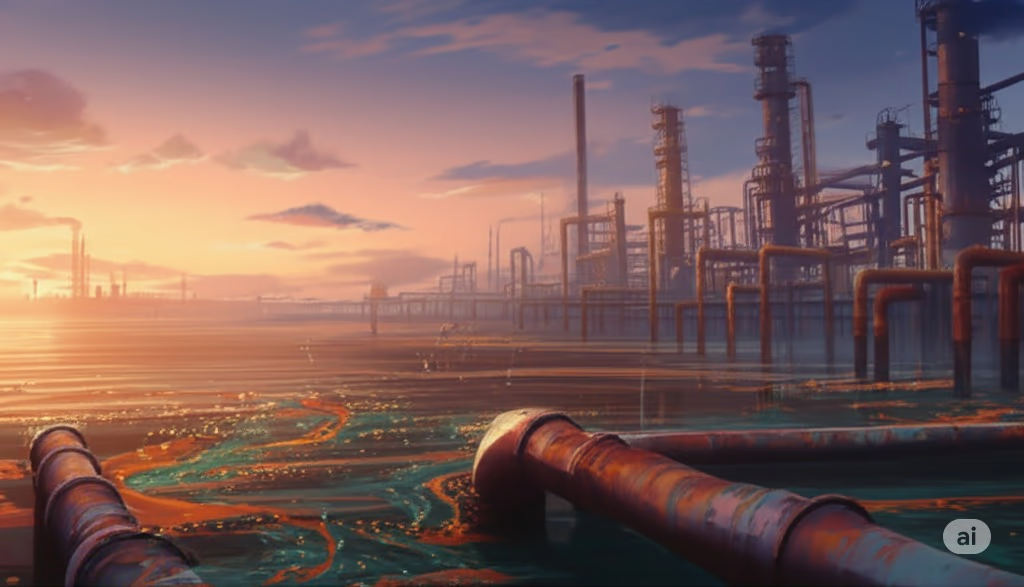
In thermal power installations surrounding Ennore, notably the North Chennai Thermal Power Station (NCTPS), hundreds of metric tons of ash are mixed with seawater to create slurry, which is pumped through kilometers of pipelines to expansive storage ash ponds [1] [3]. Over decades of pipeline ruptures, dike breaches, and unregulated discharges, fine fly ash slurry has escaped into tidal tributaries, coating tidal mudflats with feet of toxic grey silt [3].
Toxic Heavy Metals and Leaching Geochemistry
Fly ash is not benign crushed rock; it is a concentrated chemical cocktail of toxic trace elements [2]. Because volatile trace metals vaporize during boiler combustion and recondense onto the surface of fine fly ash particles as flue gas cools, the smallest ash particles carry the highest concentrations of hazardous heavy metals [2] [5].
Geochemical assays of Ennore Creek sediments reveal alarmingly elevated concentrations of toxic metals [1] [3]:
• Arsenic (As): A potent Group 1 human carcinogen that leaches rapidly under alkaline and brackish conditions, causing skin hyperpigmentation, cardiovascular disease, and internal organ cancers [2] [5].
• Lead (Pb): A persistent neurotoxic metal that interferes with neurotransmitter release, causing irreversible cognitive deficits in developing children and chronic hypertension in adults [2] [5].
• Cadmium (Cd): A nephrotoxic metal with a biological half-life of twenty to thirty years in human renal tissue, responsible for tubular necrosis and severe bone demineralization (Itai-Itai pathology) [4] [5].
• Chromium (Cr): Present in both trivalent and hexavalent states; hexavalent chromium (Cr-VI) is highly mobile in water and causes pulmonary mutagenesis and severe ulceration [2] [3].
• Mercury (Hg): Methylated by anaerobic sediment bacteria into monomethylmercury, an insidious lipophilic neurotoxin that attacks the central nervous system [4].
Heavy Metal Concentrations in Ennore Creek Sediments vs. Baseline Standards
| Trace Element | Ennore Creek Peak (mg/kg) | Safe Ecological Baseline (mg/kg) | Primary Toxicological Hazard |
|---|---|---|---|
| Arsenic (As) | 35.4 to 78.2 | 8.2 (Canadian ISQG) | Multi-organ carcinogenicity, epigenetic DNA methylation alteration |
| Lead (Pb) | 112.5 to 184.0 | 30.2 (Ecological Threshold) | Pediatric neurotoxicity, heme synthesis inhibition, nephropathy |
| Cadmium (Cd) | 4.8 to 9.6 | 0.7 (Severe Effect Level) | Renal tubular necrosis, severe skeletal calcium leeching |
| Chromium (Cr) | 140.0 to 265.0 | 52.3 (Sediment Guideline) | Hexavalent cellular mutagenesis, oxidative stress, dermal ulceration |
| Mercury (Hg) | 0.85 to 2.10 | 0.13 (Probable Effect Level) | Monomethylmercury biomagnification, neurodevelopmental arrest |
Bioaccumulation and Trophic Biomagnification
When heavy metals enter estuarine sediments, they do not remain inert dirt. They enter the biological food web through a two-step process: bioaccumulation and biomagnification [4].
At the base of the estuarine ecosystem, benthic organisms, such as deposit-feeding polychaete worms, mud clams, and bottom-dwelling shrimp, ingest sediment particles coated with heavy metals [4]. Because heavy metals cannot be easily broken down by metabolic enzymes, they bind to intracellular proteins (such as metallothionein) and accumulate inside the organisms’ tissues at concentrations far exceeding ambient water levels [3] [4].
As predatory species feed on contaminated prey, trophic transfer accelerates. Mud crabs (Scylla serrata) and predatory finfish (such as mullet and sea bass) consume hundreds of contaminated worms and small crustaceans [4]. Over time, toxic metals accumulate inside their gills, digestive hepatopancreas, and muscle flesh. Marine toxicological studies conducted on Ennore seafood have reported lead and cadmium concentrations in crab meat exceeding permissible Food Safety and Standards Authority of India (FSSAI) thresholds by multiple orders of magnitude [1] [4].
Public Health Hazards for Coastal Communities
For the artisanal fishing villages of Ennore, Mugathwara Kuppam, and Kattukuppam, coal ash pollution is not an abstract ecological concern; it is a daily public health emergency [1] [3].
Local populations face multi-pathway toxic exposure [5]:
1. Inhalation of Fugitive Dust: During hot, dry summer months, winds whip dried fly ash from un-vegetated ash ponds into fine aerosolized plumes. Inhaling respirable particulate matter (PM2.5 and PM10) laden with silica and heavy metals causes chronic obstructive pulmonary disease (COPD), silicosis, asthma, and elevated lung cancer incidence [2] [5].
2. Dietary Ingestion: Artisanal fishing families rely on creek seafood as their primary source of dietary protein. Daily consumption of bioaccumulated crabs and fish exposes adults and pregnant mothers to sustained doses of neurotoxic lead and methylmercury, threatening fetal brain development [4] [5].
3. Dermal and Occupational Exposure: Fishermen wading through shallow ash-choked channels to cast hand nets experience chronic contact dermatitis, severe skin rashes, and non-healing foot ulcers caused by caustic ash chemistry and trace metal toxicity [1] [3].
Ecological Destruction of Estuarine Nursery Grounds
Beyond chemical toxicity, coal fly ash causes devastating physical habitat destruction [1] [3]. When fine ash settles across estuarine riverbeds, it fills deep tidal channels, reducing the natural depth of the creek from four to five meters down to less than one meter [3].
This massive siltation restricts natural tidal flushing between the creek and the open ocean. Water temperatures rise, dissolved oxygen levels collapse, and historic mangrove habitats (Avicennia marina) suffocate as aerial pneumatophore roots are buried in sticky grey mud [1] [3]. Without deep, oxygen-rich mangrove roots, the vital nursery grounds for tiger prawns, juvenile crabs, and migratory coastal fish disappear entirely, decimating fish catches and plunging traditional fishing families into economic distress [1].
Remediation Science and Ecological Restoration
Reversing decades of severe heavy metal contamination requires rigorous, science-based engineering and ecological interventions [2] [3]. Modern environmental engineering offers four critical solutions:
• Hydraulic Dredging and Safe Containment: Slurry ash deposited in tidal channels must be systematically dredged using specialized low-turbidity suction dredgers to prevent resuspending toxic sediment into the water column [3]. Dredged ash must be relocated into secure, engineered landfills equipped with high-density polyethylene (HDPE) impermeable composite liners to prevent groundwater leaching [2].
• Total Circular Economy Utilization: Power stations must achieve 100 percent dry ash collection. Instead of pumping wet slurry into vulnerable ponds, dry fly ash should be channeled into green cement manufacturing, geopolymer concrete, and prefabricated building blocks, permanently binding toxic trace elements within an insoluble silicate matrix [2].
• Phytoremediation with Native Halophytes: Planting specialized salt-tolerant mangrove species and hyperaccumulating marsh grasses can stabilize contaminated shorelines. These plants absorb and immobilize heavy metals in their root systems, preventing further toxic migration into open water [3] [5].
• Strict Legal Compliance and Continuous Monitoring: Environmental directives issued by the National Green Tribunal (NGT) mandate that power plants monitor ground water quality, replace ageing pipelines with leak-detection telemetry, and fund comprehensive wetland restoration trusts [1] [3].
Frequently Asked Questions
Primary Sources and References
A baseline study of trace metals in waters of Ennore creek, Chennai
- Journal
- Marine Pollution Bulletin
- Study Type
- Marine Environmental Pollution
- Year
- 2005
DOI10.1016/j.marpolbul.2005.01.021
References
- ↩ A baseline study of trace metals in waters of Ennore creek, Chennai
- ↩ Characterization of Heavy Metals and Toxicants in Coal Fly Ash
- ↩ Heavy metal contamination in estuarine sediments of Kosasthalaiyar River and Ennore Creek
- ↩ Bioaccumulation of heavy metals in commercially important marine species and ecological risk assessment
- ↩ Public health and ecological risks of coal combustion residuals: A review of trace element mobility

No comments yet. Be the first to join the conversation.