


Key Findings
- Cerumen provides an acidic (pH 6.1–6.8) antimicrobial mantle protecting against Pseudomonas and Aspergillus.
- Epithelial migration continuously cleans the ear canal laterally at a rate of 0.05 mm per day.
- Swabs produce a piston effect, packing 80% of cerumen tightly against the tympanic membrane.
- In the US alone, over 263,000 children suffered swab-related ear injuries over 21 years, 25% with ruptured eardrums.
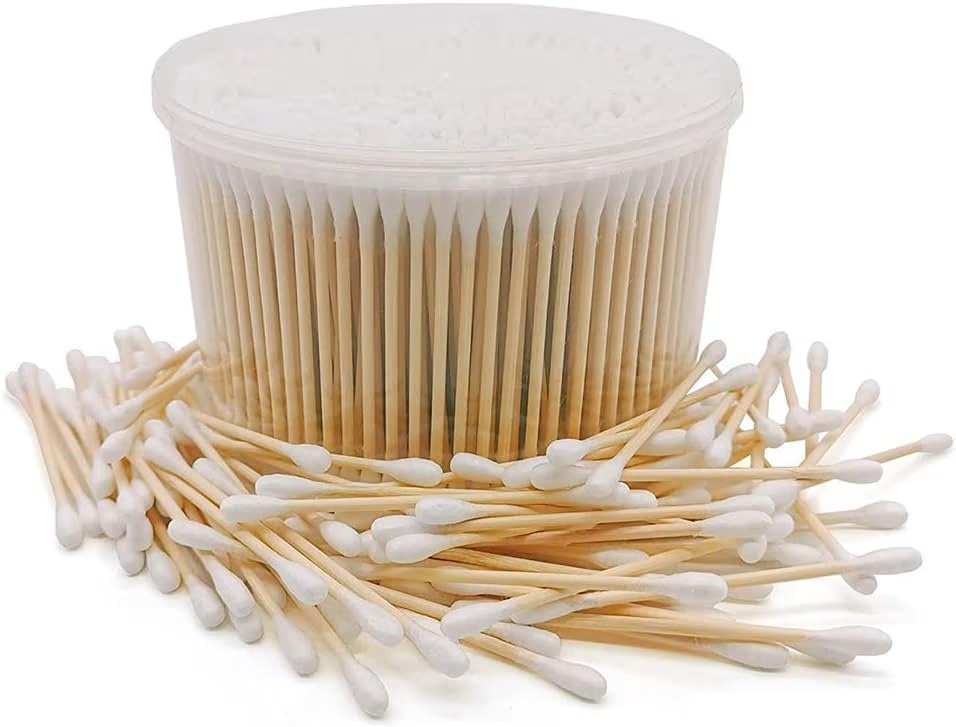
For millions of people around the world, taking a cotton-tipped swab after a morning shower and twisting it deep into the ear canal has become an almost irresistible daily ritual. The distinct sensory satisfaction, paired with the yellow residue visible on the cotton tip, fosters a comforting belief that one has thoroughly sanitized the auditory canal. However, the international otolaryngology (ENT) medical consensus presents an alarming, unequivocal verdict: you are not cleaning your ears; you are placing your hearing at grave risk of eardrum perforation, chronic infections, and irreversible acoustic damage [1, 2].
Manufacturers explicitly print clear warning labels across packaging: “Do not insert into ear canal.” Invented in 1923 by Leo Gerstenzang, cotton swabs were originally designed to apply antiseptics to infant skin or touch up cosmetics, never to probe delicate internal body cavities. Multicenter epidemiologic studies from the American Academy of Otolaryngology–Head and Neck Surgery (AAO-HNS) and The Journal of Pediatrics reveal a staggering global toll of domestic injuries resulting from this ubiquitous habit [1, 2].
Why does twisting a cotton swab inside the ear feel so intensely pleasurable? What biophysical defense mechanisms does natural earwax provide to the tympanic membrane? How do cotton applicators turn soft wax into a rock-hard mechanical blockage? Below, we examine the neurobiology, physical risks, and clinical otolaryngology guidelines that govern safe, evidence-based ear care [2, 3].
- 263,000+
- Pediatric Emergency Visits Documented cotton-tip applicator ear injuries over 21 years in US hospital ERs
- 34 Daily
- Emergency Admissions Average daily pediatric emergency hospital presentations from swab trauma
- 25%
- Tympanic Perforations Proportion of injured pediatric patients suffering torn or ruptured eardrums
- 0.05 mm
- Epithelial Migration Rate Daily outward self-cleaning conveyor movement of healthy ear canal skin
Cerumen: Waste Product or Sophisticated Biological Shield?
The fundamental misconception driving the earbud habit is the assumption that earwax (medically termed cerumen) is dirty bodily waste requiring aggressive extraction. From a biochemical and immunological perspective, cerumen is one of the human body’s most effective defense barriers. Synthesized in the outer cartilaginous third of the external auditory canal, it is an emulsion produced by specialized ceruminous apocrine glands and sebaceous glands combined with shed keratinocytes [2, 4].
Cerumen features a unique lipid matrix containing squalene, lanosterol, cholesterol, and long-chain fatty acids. This composition maintains a naturally acidic microenvironment with an average pH of 6.1 to 6.8. This acidic mantle functions as an antimicrobial and antifungal barrier, inhibiting opportunistic pathogens such as Pseudomonas aeruginosa, Staphylococcus aureus, and Aspergillus spores. Furthermore, cerumen contains lysozyme, secretory immunoglobulins (sIgA), and antimicrobial peptides that neutralize bacteria on contact [2, 4].
In addition to chemical defense, cerumen provides vital physical protection. Its sticky, hydrophobic consistency traps ambient dust, sand particles, dead cells, and insects before they can migrate inward to damage the fragile tympanic membrane. Stripping this protective lipid coating leaves the canal parched, irritated, and susceptible to severe cracking and bleeding [2].
The Self-Cleaning Conveyor Belt of the Auditory Canal
The human ear is an exquisite, self-cleaning biological organ. The cutaneous lining of the external auditory canal possesses a unique physiological mechanism known as epithelial migration. Unlike skin elsewhere on the body that sloughs off vertically, the epithelial cells of the ear canal migrate laterally outward like a miniature conveyor belt [2].
Originating at the center of the eardrum (the umbo), new epidermal cells travel outward toward the external meatus at a rate of roughly 0.05 millimeters per day, a velocity identical to fingernail growth. Simultaneously, the mechanical motion of the temporomandibular joint during chewing, talking, and yawning produces micro-vibrations that loosen dried, oxidized cerumen. The migrating skin carries this old wax to the outer ear opening, where it naturally flakes off during bathing. In healthy individuals, there is zero biological necessity to insert any tool into the ear canal [2, 3].
The Neurobiology of Cotton Swab Satisfaction
Why do so many people struggle to stop probing their ears? The answer lies in cranial neuroanatomy. The inferior and posterior walls of the external auditory canal receive sensory innervation from the auricular branch of the vagus nerve (cranial nerve X), historically designated as Arnold’s nerve [1].
The vagus nerve is the central parasympathetic conduit linking the brain to the heart, lungs, and digestive tract. When a cotton swab touches these sensitive nerve endings, the gentle mechanical stimulation triggers an immediate neurochemical response. The brain releases dopamine and endorphins, producing a wave of visceral pleasure and relaxation often colloquially called an “ear-gasm.” [1]
However, intense stimulation of Arnold’s nerve can also provoke sudden paroxysmal dry coughing, throat tickling, or vagal bradycardia, a reflex known as Arnold’s nerve cough reflex. Driven by the dopaminergic reward loop, individuals continually scrape their ears, ignoring the anatomical damage unfolding beneath the surface [1, 2].
Epidemiological Emergency Evidence: Pediatric Trauma Data
The physical dangers of cotton swabs were documented in a landmark 21-year pediatric epidemiologic study conducted by Dr. Kris R. Jatana and colleagues at Nationwide Children’s Hospital and Ohio State University, published in The Journal of Pediatrics [1].
Analyzing National Electronic Injury Surveillance System (NEISS) data from 1990 to 2010, the investigators identified 263,338 pediatric patients treated in United States emergency departments for cotton-tip applicator ear injuries. This equates to an average of roughly 12,500 children per year, or 34 emergency admissions every single day [1].
In 73 percent of cases, injuries occurred when children used the swabs themselves or when well-meaning parents attempted to clean their ears. Most alarmingly, 25 percent of these emergency patients sustained traumatic tympanic membrane perforations, requiring complex microsurgical repair and risking permanent conductive hearing deficits [1].
Five Major Clinical Complications of Earbud Use
The adult external auditory canal is a delicate, S-shaped passage measuring only 2.5 centimeters in length, while in infants and young children it is shorter than 1.5 centimeters. Forcing a rigid cotton-tipped stick into this narrow space produces five severe medical complications [1, 2]:
1. Piston Effect and Cerumen Impaction: Because the diameter of a cotton swab approximates the width of the ear canal, inserting it functions like a piston in an engine cylinder. Rather than extracting wax, the swab collects only superficial residue while pushing 80 percent of the wax deeper toward the tympanic membrane. Over months, this compresses into a rock-hard mass (impacted cerumen plug), causing conductive hearing impairment, persistent tinnitus, and painful pressure [2].
2. Tympanic Membrane Perforation: The eardrum is an ultra-thin tissue membrane measuring only 0.1 millimeter in thickness. A sudden elbow bump, an accidental slip, or probing too deeply drives the swab tip directly through the eardrum. Traumatic rupture causes intense pain, bleeding, tinnitus, and immediate hearing loss. Large perforations require surgical tympanoplasty [1, 2].
3. Ossicular Chain Dislocation: Deep mechanical puncture can dislodge the auditory ossicles, the tiny middle ear bones comprising the malleus, incus, and stapes. Disrupting this delicate chain eliminates sound amplification to the cochlea, causing severe conductive hearing loss and debilitating vestibular vertigo [1, 2].
4. Acute Otitis Externa (Swimmer’s Ear): Scraping the canal wall strips away protective lipid barriers and inflicts micro-abrasions on the sensitive dermis. When moisture from swimming or bathing enters these micro-tears, bacterial pathogens proliferate rapidly. The canal becomes swollen, intensely painful, and discharges purulent exudate [2].
5. Retained Foreign Bodies: Low-cost cotton applicators frequently utilize cheap adhesives. The cotton pledget can detach during rotation, becoming lodged deep within the canal. The retained fiber acts as a nidus for fungal colonization and granulation tissue, requiring microscopic extraction under direct visualization [1, 2].
| Pathological Condition | Etiological Mechanism | Clinical Symptoms | Evidence-Based Treatment |
|---|---|---|---|
| Cerumen Impaction | Piston effect compacting wax against eardrum | Muffled hearing, autophony, persistent fullness | Cerumenolytics, ENT micro-suction |
| Otitis Externa | Micro-abrasions allowing bacterial infiltration | Severe otalgia, canal edema, purulent discharge | Topical ciprofloxacin-steroid drops |
| Eardrum Perforation | Direct mechanical puncture by rigid applicator tip | Acute stabbing pain, bleeding, conductive loss | Dry ear precautions, surgical tympanoplasty |
| Ossicular Dislocation | Displacement of incus, malleus, or stapes | Severe deafness, rotational vertigo, nausea | Ossiculoplasty reconstructive surgery |
| Otomycosis | Fungal proliferation in stripped, moist canal | Intense pruritus, black/white fungal hyphae | Micro-suction debridement, topical clotrimazole |
Evidence-Based Medical Solutions for Earwax Impaction
When cerumen overproduction or prior swab use leads to a symptomatic impaction, how should it be managed safely? A comprehensive Cochrane systematic review evaluated medical interventions for cerumen removal [3]:
1. Cerumenolytic Eardrops: Medically formulated drops, including carbamide peroxide, sodium bicarbonate, or sterile saline, soften and disintegrate compacted cerumen over 3 to 5 days, enabling natural extrusion [2, 3].
2. Professional Micro-Suction: Considered the global gold standard by otolaryngologists, an operating microscope provides illuminated magnification while a micro-cannula suctions out the blockage painlessly without introducing water [2].
3. Warm Water Irrigation: Performed exclusively by trained medical clinicians using water warmed precisely to normal body temperature (37°C). Water that is too cold or warm stimulates horizontal semicircular canals, triggering acute nystagmus and vertigo via the caloric reflex [2].
Dangerous Folk Remedies and Ear Candling Hazards
Popular traditional remedies, such as pouring hot garlic oil, onion juice, or castor oil into the ear, pose serious hazards. If an unrecognized micro-perforation exists in the eardrum, caustic oils enter the middle ear space, damaging auditory nerve endings and producing permanent sensorineural deafness [2].
Equally dangerous is “ear candling,” a pseudo-scientific practice claiming that hollow burning candles create negative pressure to extract earwax. The United States Food and Drug Administration (FDA) has strictly banned ear candles, noting that they fail to remove wax and have caused devastating eardrum burns, canal obstruction from melted candle wax, and middle ear fires [2].
Golden Rules of Safe Ear Hygiene
The American Academy of Otolaryngology–Head and Neck Surgery encapsulates safe auditory hygiene in a famous medical adage: “Never insert anything smaller than your elbow into your ear canal.” [2]
To care for your ears safely, adhere to these guidelines [2]:
Rule 1: Clean Only the Outer Ear: After bathing, wrap a clean, damp cotton washcloth around your index finger and gently wipe the external auricle (pinna) and the outer perimeter of the opening. Never push the cloth into the canal.
Rule 2: Allow Natural Migration: Let your ear’s epithelial conveyor belt perform its natural function. Any visible wax appearing at the outer entrance can be wiped away with a tissue.
Rule 3: Seek Professional Evaluation: If you experience persistent ear fullness, muffled hearing, pain, or fluid discharge, consult a qualified ENT specialist. Never allow unqualified barbers or street cleaners to probe your ears with unsterilized metal instruments [2].
Frequently Asked Questions
Why do earbud packages say 'do not insert into ear canal'?
Manufacturers include this warning because cotton applicators were designed solely for external skin care and cosmetics. Inserting them into the narrow ear canal frequently causes impactions, punctures, and traumatic eardrum injuries, creating severe legal liability.
How can I safely dry my ears after swimming or showering?
Tilt your head to each side to let trapped water drain out naturally, or gently blot the outer opening with a towel. You can also use a hairdryer set to low heat held 30 cm away to evaporate residual canal moisture safely.
Does excessive earwax indicate poor personal hygiene?
No. Cerumen production is a genetically determined, healthy physiological process. Some individuals naturally produce drier or more abundant wax. Having wax inside your ears is a sign of a healthy, functioning defense system.
Can a perforated eardrum heal on its own?
Small traumatic perforations often heal spontaneously within 6 to 8 weeks, provided the ear is kept completely dry and free from infection. However, larger tears or infected perforations require microscopic surgical repair (tympanoplasty) by an ENT surgeon.
Pediatric Cotton-Tip Applicator-Related Ear Injuries Treated in United States Emergency Departments, 1990-2010
- Journal
- The Journal of Pediatrics
- Study Type
- Cohort Study
- Year
- 2017
DOI10.1016/j.jpeds.2017.03.049
Clinical Practice Guideline: Cerumen Impaction (Update)
- Journal
- Otolaryngology–Head and Neck Surgery
- Study Type
- Clinical Guideline
- Year
- 2017
DOI10.1177/0194599816671491
Water-based versus oil-based for the removal of ear wax: a systematic review and network meta-analysis
- Journal
- Cochrane Database of Systematic Reviews
- Study Type
- Meta-analysis
- Year
- 2018
DOI10.1002/14651858.CD012171.pub2
The antimicrobial properties of human cerumen
- Journal
- International Journal of Pediatric Otorhinolaryngology
- Study Type
- Laboratory Study
- Year
- 1990
DOI10.1016/0165-5876(90)90342-9
References
- ↩ Pediatric Cotton-Tip Applicator-Related Ear Injuries Treated in United States Emergency Departments, 1990-2010
- ↩ Clinical Practice Guideline: Cerumen Impaction (Update)
- ↩ Water-based versus oil-based for the removal of ear wax: a systematic review and network meta-analysis
- ↩ The antimicrobial properties of human cerumen


No comments yet. Be the first to join the conversation.