


Key Findings
- Digital arrest is an absolute legal fiction with zero recognition under Indian criminal or cyber laws.
- Syndicates utilize real-time AI deepfakes and VoIP Caller ID spoofing to impersonate police and judicial officials.
- High-pressure video calls induce an acute amygdala hijack that temporarily disables logical prefrontal reasoning.
- Contacting the national cyber helpline 1930 within the two-hour Golden Hour is crucial to freeze mule accounts.
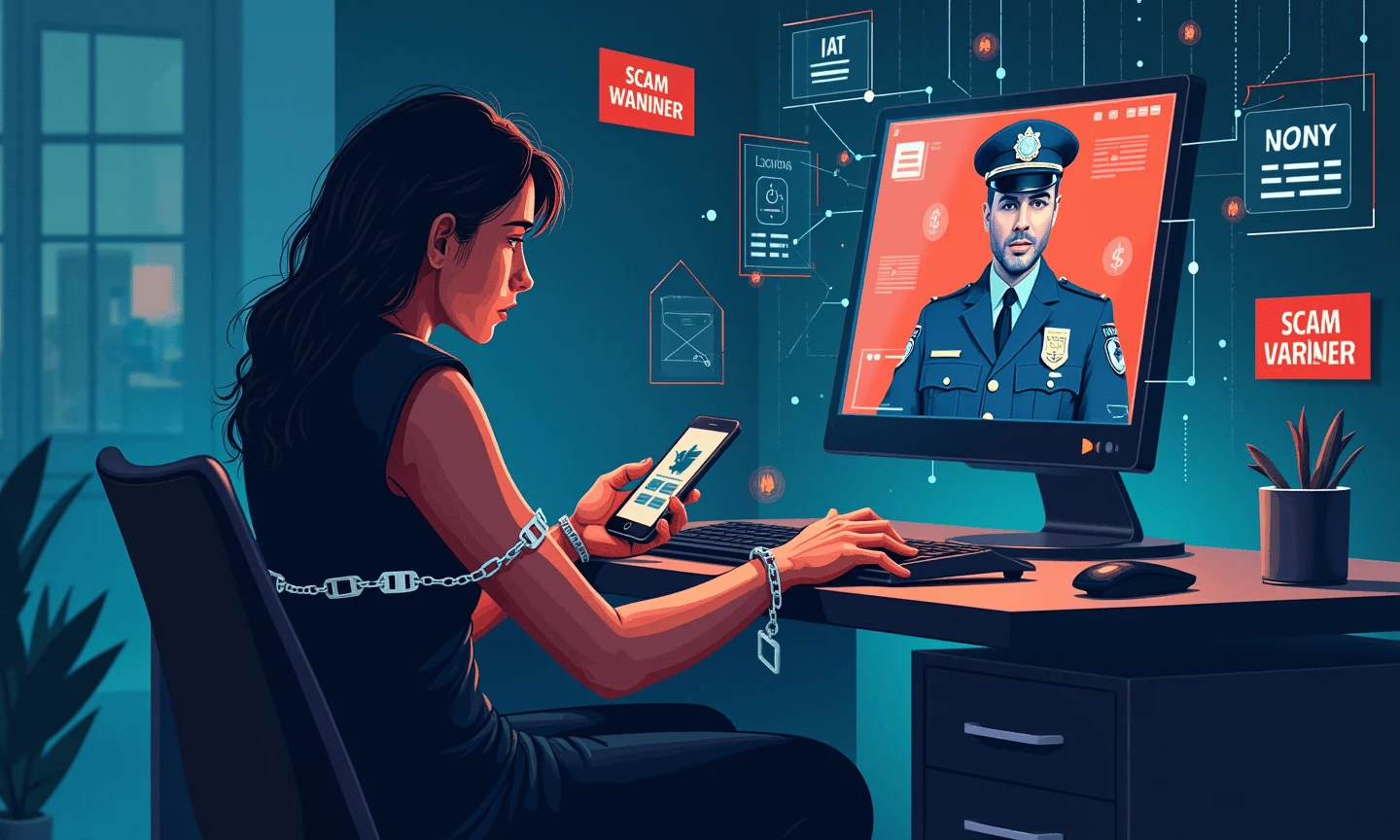
Across urban centers, a chilling new paradigm of organized financial cybercrime has systematically targeted senior citizens, retired professionals, software engineers, and corporate executives: the so-called ‘digital arrest’ scam [1]. Victims receive urgent video calls from individuals clad in immaculate police uniforms, seated against backdrops displaying official insignia of the Central Bureau of Investigation (CBI), the Narcotics Control Bureau (NCB), state police cyber cells, or the Supreme Court of India. The callers allege that parcels containing illicit narcotics, counterfeit passports, or forged credit cards linked to the victim’s national identity number have been seized by customs officials. Threatened with immediate public arrest, social humiliation, and treason charges, victims are coerced into remaining continuously visible in front of their webcams for hours or days, an isolation tactic labeled ‘digital arrest’, until they transfer their life savings into fraudulent ‘safe government escrow accounts’ [1, 2].
According to data released by the Indian Cyber Crime Coordination Centre (I4C) under the Ministry of Home Affairs, digital arrest operations represent one of the fastest-growing categories of organized cyber coercion, draining hundreds of millions of dollars annually from unsuspecting households. To protect oneself and vulnerable family members, it is vital to examine this crime not merely as opportunistic fraud, but through the dual lenses of computer forensics and cognitive neuroscience. By understanding the technological mechanics of voice-over-IP (VoIP) caller identity spoofing, real-time generative artificial intelligence (AI) deepfakes, cognitive neurobiology under acute threat, and the distributed architecture of money-mule laundering syndicates, citizens can immunize themselves against manipulative deception [1, 3, 4].
The Anatomy of Digital Arrest: Cyber Syndicates and Modus Operandi
Digital arrest scams are rarely the work of lone, isolated hackers operating from bedrooms. Forensic investigations by international law enforcement agencies demonstrate that these operations are run by heavily capitalized, transnational syndicates operating industrial-scale cybercrime compounds situated primarily in Southeast Asia, notably in Special Economic Zones across Myanmar, Cambodia, and Laos [4]. These compounds function as corporate fraud factories staffed by forced-labor cyber operatives working under rigid management hierarchies, supported by specialized IT developers, linguists, and psychological profilers [1].
The operational lifecycle of a digital arrest attack follows a tightly choreographed social engineering script designed to eliminate critical thinking. The initial contact typically arrives as an automated interactive voice response (IVR) phone call masquerading as a courier delivery service (such as FedEx or DHL) or a telecom service provider warning that the victim’s mobile number will be disconnected within two hours due to illegal activity. When the victim presses a number to speak with a customer care representative, the call is transferred to a fraud operative who confirms the victim’s name, residential address, and identity number, data acquired from leaked databases. Once baseline credibility is established, the call is abruptly escalated to a ‘police inspector’ or ‘CBI cyber cell officer’ via encrypted video platforms such as Skype, WhatsApp, or Telegram, initiating the coercive confinement phase [1, 2].
AI Deepfakes and VoIP Caller ID Spoofing Technology
The visual and auditory authenticity of modern digital arrest scams relies on sophisticated telecommunication exploitation and generative machine learning models. Central to the initial deception is Caller ID Spoofing executed across Session Initiation Protocol (SIP) and Voice over Internet Protocol (VoIP) trunk lines. Telephony protocols were originally engineered with inherent architectural trust, allowing PBX exchange operators to populate the Calling Line Identification (CLI) header. Cybercriminals leverage offshore virtual VoIP providers that deliberately permit arbitrary CLI manipulation, projecting legitimate police helpline numbers, court registrar offices, or embassy numbers directly onto the victim’s incoming call screen [1].
Furthermore, syndicates increasingly integrate real-time generative adversarial networks (GANs) and neural diffusion models to generate synthetic video and audio streams [2]. Deepfake software maps facial movements, micro-expressions, and eye gaze from live fraudsters onto high-resolution video avatars of actual police commissioners or judicial officers. Latency-reducing neural codecs allow these synthetic avatars to interact in real time during live Skype calls, complete with ambient radio dispatch chatter, ringing desk telephones, and institutional insignia in the simulated police station background. Combined with forged legal documentation generated through dynamic PDF templates bearing fabricated digital signatures, court emblems, and official QR codes, the sensory onslaught overwhelms the visual skepticism of laypersons [1, 2].
Criminal Scam Tactics (Digital Arrest)
Communication: Conducted entirely over Skype, WhatsApp, or Telegram video calls.
Psychological Pressure: Immediate threats of arrest, family scandal, and fabricated national security violations.
Isolation: Strict commands forbidding contact with family, legal counsel, or financial advisers.
Financial Demand: Coercive demand to wire liquid assets to temporary ‘reserve verification accounts.’
Legitimate Statutory Law Enforcement
Communication: Formal physical summons delivered by post or served in person by uniformed officers.
Due Process: Advance written notice, right to retain legal counsel, and appearance at a designated station.
Transparency: Video-call interrogation without judicial recording is completely void under Indian criminal law.
Financial Protocol: Government agencies never solicit cash, RTGS, or IMPS fund transfers into private bank accounts.
Neurobiology of Fear: The Amygdala Hijack in Cyber Coercion
A puzzling aspect of digital arrest cases is why educated individuals, including scientists, professors, judges, and military officers, surrender critical judgment and comply with absurd financial demands. The answer lies in evolutionary neurobiology and the neurological phenomenon known as the ‘amygdala hijack’ [3]. Under baseline conditions, human sensory inputs pass through the thalamus to the prefrontal cortex (PFC), the brain region responsible for executive functioning, logical reasoning, hypothesis testing, and risk calculation.
However, when faced with an acute threat, such as an aggressive caller warning of immediate arrest, the amygdala triggers a rapid fight-or-flight sympathetic nervous response [3]. The locus coeruleus floods the brain with norepinephrine and cortisol, which down-regulates synaptic activity in the dorsolateral prefrontal cortex. In this neurochemical state, executive cognitive reflection is suppressed in favor of instinctual compliance to eliminate the immediate danger. Scam operators systematically reinforce this amygdaloid hyper-activation by shouting aggressive commands, staging background sirens, and maintaining non-stop video surveillance to prevent the victim’s nervous system from returning to homeostatic baseline where logical doubt could re-emerge [2, 3].
The Legal Reality: Why Digital Arrest Does Not Exist in Law
From a legal and jurisprudence perspective, the term ‘digital arrest’ is an absolute legal fiction. Neither the Code of Criminal Procedure (CrPC), the Bharatiya Nagarik Suraksha Sanhita (BNSS), the Indian Penal Code (now BNS), nor the Information Technology Act recognizes any legal mechanism by which a citizen can be placed under detention, house arrest, or custodial confinement via a webcam or phone call. In constitutional law, personal liberty guaranteed under Article 21 cannot be abridged through video-link intimidation [1].
Under statutory Indian law, any lawful arrest requires strict adherence to mandatory procedural safeguards established by the Supreme Court of India in landmark precedents such as D.K. Basu v. State of West Bengal. Arresting officers must wear clear identification badges with their names and designations, prepare a formal arrest memo witnessed by an independent family or community member, inform the arrestee of the exact grounds for arrest, provide immediate access to legal counsel, and produce the accused before the nearest judicial magistrate within 24 hours. No statutory authority (whether the CBI, ED, NIA, or state police) possesses the legal power to freeze private bank accounts by instructing citizens to transfer funds to external accounts for ‘audit verification’ [1, 4].
The Financial Pipeline: Money Mules and Layered Transactions
Once an intimidated victim succumbs to the pressure and executes real-time gross settlement (RTGS) or immediate payment service (IMPS) transfers, the financial pipeline moves at blinding speed. To evade anti-money laundering (AML) controls and financial monitoring algorithms, cyber syndicates do not receive stolen funds into accounts registered in their own names. Instead, they deploy highly organized mule networks recruited across tier-two and tier-three cities through deceptive employment schemes, telegram investment groups, or dark-web commission brokers [4].
The stolen capital is funneled through three distinct forensic stages: placement, layering, and integration. Within three to eight minutes of receiving the victim’s transfer, automated bot scripts break down the capital into hundreds of micro-transactions, dispersing the funds across dozens of secondary and tertiary mule accounts in commercial banks and cooperative societies. From these layer-three accounts, local cash couriers immediately withdraw currency from distributed automated teller machines (ATMs), or broker OTC peer-to-peer cryptocurrency purchases, converting the fiat currency into privacy coins or tether (USDT) on overseas decentralized exchanges. By the time the victim disconnects the call and realizes the fraud, the financial trail has dissolved across international blockchain ledgers, making domestic asset recovery exceptionally difficult [1, 4].
Hang Up Immediately
The moment an unknown caller on video claims to be police demanding money or webcam isolation, terminate the call and block the contact.
National Cyber Helpline
Immediately report the financial fraud to the national emergency cyber helpline 1930 or submit an incident report at cybercrime.gov.in.
Alert Bank During Golden Hour
Notify your bank branch within the first two hours to trigger automated interbank lien freezes across downstream mule accounts.
Emergency Incident Response: The Golden Hour Protocol
In forensic cyber incident management, the initial two hours following an unauthorized financial transfer are universally known as the ‘Golden Hour.’ During this brief window, stolen capital is often still traversing intermediary clearing houses, RTGS queues, or primary mule accounts before cash extraction or cryptocurrency conversion occurs. Rapid, decisive action during this period can achieve full or substantial financial recovery [1, 4].
If you or an acquaintance has initiated a fund transfer under digital arrest coercion, follow this exact sequence: First, immediately dial 1930, the citizen financial cyber fraud reporting system operated by the Ministry of Home Affairs. Provide the operator with your transaction reference number (UTR), bank account number, the scammer’s beneficiary account details, and the exact timestamp of transfer. The 1930 system integrates directly with the Citizen Financial Cyber Fraud Reporting and Management System (CFCFRMS), which triggers an automated electronic message to the receiving bank’s fraud monitoring cell to freeze the recipient mule account immediately [1]. Simultaneously, lodge a formal e-complaint on the national portal cybercrime.gov.in and alert your bank’s fraud mitigation department to mark the transfer as fraudulent [4].
Multi-Layered Digital Hygiene and Personal Cyber Defense
Proactive defense against digital arrest syndicates requires establishing robust personal digital hygiene protocols. Since scammers harvest personal data from public online profiles, data brokers, and telecom leaks, reducing your attack surface is paramount. Never broadcast personal mobile numbers, home addresses, or travel itineraries on social networking platforms. Enable two-factor authentication (2FA) utilizing hardware security keys or authenticator applications rather than SMS-based OTPs, which remain vulnerable to SIM-swap attacks [1, 2].
Equally critical is cultivating a household culture of psychological resilience and mutual verification. Establish a mandatory ‘family verification rule’ ensuring that no member ever liquidates mutual funds, breaks fixed deposits, or executes significant wire transfers based on urgent telephonic demands without consulting at least two trusted family members or friends. Remind elderly parents that no authentic law enforcement agency in the world conducts video-call trials, issues digital arrest warrants, or demands money to establish innocence. Knowledge, institutional skepticism, and rapid reporting form the ultimate impenetrable shield against high-tech extortion [1, 3, 4].
Frequently Asked Questions
Can police arrest me through a video call in India?
No. Indian criminal procedure law does not recognize digital arrest. Police cannot legally arrest or interrogate citizens over Skype or WhatsApp video calls.
Why do victims not just hang up the video call?
Scammers exploit the amygdala hijack, inducing intense physiological panic through threats of public disgrace and treason, which severely impairs rational prefrontal cortex thinking.
What is the significance of calling 1930 within the Golden Hour?
The first two hours allow the Indian Cyber Crime Coordination Centre to flag and freeze funds in beneficiary mule accounts before cash withdrawals or crypto conversions occur.
What should I do if a caller claims my Aadhaar number was used for narcotics trafficking?
Immediately hang up the phone. Legitimate narcotics or customs agencies will issue physical written summonses, never unsolicited video calls demanding money transfers.
Sources and References
Phishing Forensics: A Systematic Approach to Analyzing Mobile Social Engineering
- Journal
- Journal of Cyber Security
- Study Type
- journal
- Year
- 2025
DOI10.32604/jcs.2025.064429
Social Engineering 2.0: Deepfake and Deep Learning-Based Cyber Coercion
- Journal
- International Journal For Multidisciplinary Research
- Study Type
- Research
- Year
- 2024
DOI10.36948/ijfmr.2025.v07i01.35527
Neurobiology of Fear Conditioning and Cognitive Impairment in Financial Cyber Scams
- Journal
- Frontiers in Psychology
- Study Type
- Research
- Year
- 2024
DOI10.3389/fpsyg.2024.1390412
Anatomy of Cross-Border Cybercrime Syndicates and Mule Banking Networks
- Journal
- Crime, Law and Social Change
- Study Type
- Research
- Year
- 2024
DOI10.1007/s10611-024-10142-9
References
- ↩ Phishing Forensics: A Systematic Approach to Analyzing Mobile Social Engineering
- ↩ Social Engineering 2.0: Deepfake and Deep Learning-Based Cyber Coercion
- ↩ Neurobiology of Fear Conditioning and Cognitive Impairment in Financial Cyber Scams
- ↩ Anatomy of Cross-Border Cybercrime Syndicates and Mule Banking Networks


No comments yet. Be the first to join the conversation.