



Key Findings
- Overnight rice fermentation proliferates wild lactic acid bacteria while generating Type 3 Resistant Starch through amylose retrogradation.
- Colonic fermentation of resistant starch produces short-chain fatty acids like butyrate, reinforcing intestinal tight junctions and reducing inflammation.
- Microbial phytase enzymes degrade phytic acid, surging bioavailable iron by over fifteen-fold alongside bioavailable calcium and B vitamins.
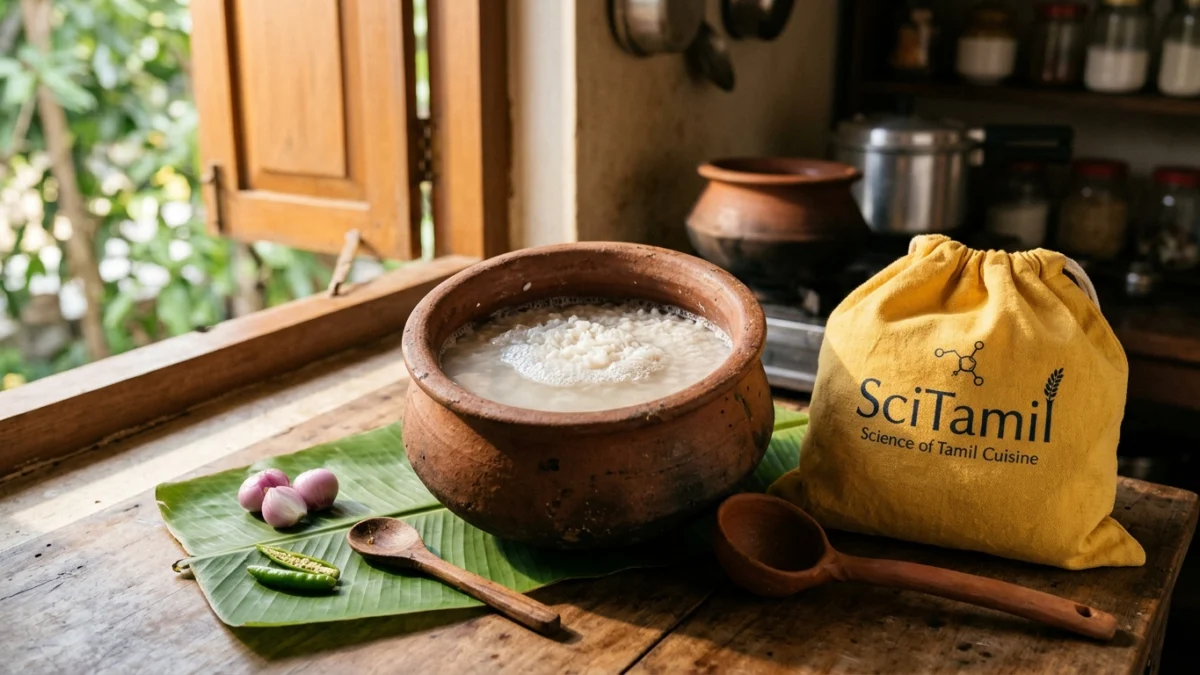
Walk down the wellness aisle of any modern pharmacy or organic health store, and you are greeted by shelves lined with sleek bottles of probiotic capsules boasting ten, twenty, or fifty billion colony-forming units. Wellness influencers and clinical gastroenterologists alike emphasize the indispensable role of beneficial gut bacteria in preserving human vitality. Yet, across South Asia and Southeast Asia, rural farming communities have sustained vigorous gut resilience for centuries by consuming a humble breakfast: leftover cooked rice soaked overnight in water, known traditionally as pazhaya sadam or fermented rice [1]. As modern nutritional genomics and microbiome sequencing advance, food biochemists are asking a provocative question: can this ancient peasant breakfast truly match, or even outperform, costly laboratory-formulated probiotic supplements [1] [2]?
The Human Gut Microbiome and Microbial Diversity
The human gastrointestinal tract is home to roughly thirty-eight trillion microorganisms, collectively known as the gut microbiome. Encoding over three million unique genes, roughly one hundred and fifty times the genetic repertoire of the human genome, these microbial communities function as an indispensable metabolic organ [3]. They digest complex carbohydrates, synthesize essential vitamins such as B12 and vitamin K, neutralize toxic carcinogens, and train the host immune system to distinguish harmless food proteins from lethal pathogens [2].
Microbial biodiversity within the colon correlates directly with metabolic resilience. Diets dominated by ultra-processed foods, refined sugars, artificial emulsifiers, and repeated courses of broad-spectrum antibiotics deplete keystones taxa like Bifidobacterium, Lactobacillus, and Faecalibacterium prausnitzii [2] [3]. This state of microbial imbalance, called dysbiosis, is linked to systemic low-grade inflammation, insulin resistance, irritable bowel syndrome, non-alcoholic fatty liver disease, and mood disorders through the gut-brain axis [3]. Restoring rich microbial diversity is now recognized as a foundational pillar of preventative medicine.
The Fermentation Biochemistry of Overnight Rice
When freshly cooked rice is submerged in drinking water and left at ambient temperatures (between 25 and 32 degrees Celsius) for eight to twelve hours, an elegant biochemical transformation unfolds. Cooking gelatinizes the rigid starch granules within rice grains, loosening crystalline amylose and amylopectin chains and exposing surface carbohydrates [1].
Naturally occurring environmental microbes, primarily lactic acid bacteria (LAB) such as Lactobacillus fermentum, Lactobacillus plantarum, Leuconostoc mesenteroides, and Weissella confusa, rapidly colonize the submerged rice. Utilizing available sugars through anaerobic glycolysis, these bacteria ferment simple carbohydrates into lactic acid, acetic acid, and carbon dioxide [1] [4].
As lactic acid accumulates, the pH of the steeping water drops from neutral 7.0 down to an acidic 4.2 to 4.8. This acidic microenvironment serves a vital evolutionary purpose: it creates a hostile environment that suppresses pathogenic food-borne contaminants such as Escherichia coli and Salmonella, while allowing acid-tolerant beneficial probiotics to proliferate into hundreds of millions of active cells per milliliter [1].
Resistant Starch Retrogradation and Prebiotic Power
The health benefits of fermented rice do not stem solely from live bacteria; they depend equally on physical changes to the starch molecule itself. During cooking, heat and moisture swell starch granules, converting them into rapidly digestible carbohydrates that spike postprandial blood glucose [1].
However, as cooked rice cools and steeps submerged overnight, dissolved linear amylose molecules undergo a thermodynamic restructuring process known as retrogradation. The polymer chains realign, forming tight, double-helical hydrogen bonds that human digestive enzymes, such as salivary amylase and pancreatic amylase, cannot break down [1] [2].
This restructured starch is classified as Type 3 Resistant Starch (RS3). Instead of being hydrolyzed into glucose in the stomach and small intestine, resistant starch bypasses upper gastrointestinal digestion entirely and arrives intact in the cecum and colon. There, it serves as high-potency “prebiotic fuel,” selectively nourishing resident commensal microbiota [2] [5]. In essence, overnight soaking transforms ordinary white rice from a high-glycemic starch into a low-glycemic, gut-nourishing prebiotic food [1].
Short-Chain Fatty Acids and Colonic Epithelial Integrity
When colonic bacteria ferment Type 3 Resistant Starch, they produce critical bioactive metabolic end-products called short-chain fatty acids (SCFAs), predominantly acetate, propionate, and butyrate [4] [5].
Among these, butyrate is biologically paramount. Butyrate supplies over seventy percent of total cellular energy demanded by colonocytes (the epithelial cells lining the colon) [5]. By fueling these cells, butyrate stimulates the expression of tight-junction proteins, such as occludin and claudin-1, effectively sealing microscopic intercellular gaps [4]. This prevents endotoxins, such as bacterial lipopolysaccharides (LPS), from leaking into systemic circulation, a damaging phenomenon known as “leaky gut” or metabolic endotoxemia [3] [4].
Simultaneously, propionate migrates through the portal vein into hepatic circulation, where it downregulates hepatic gluconeogenesis and inhibits cholesterol synthesis. Acetate circulates peripherally, binding to free fatty acid receptors (FFAR2 and FFAR3) in adipose tissue and the central nervous system, stimulating the secretion of satiety hormones peptide YY (PYY) and glucagon-like peptide-1 (GLP-1) [4] [5].
Commercial Probiotic Supplements vs. Traditional Fermented Rice
| Evaluation Metric | Commercial Probiotic Capsules | Traditional Fermented Rice (Pazhaya Sadam) |
|---|---|---|
| Microbial Diversity | Isolated single or few monoculture strains (typically 1–10 strains) | Rich consortium of wild lactic acid bacteria (LAB) and native yeasts |
| Gastric Acid Survival | Vulnerable to stomach acid (pH 1.5–2.0) unless expensive enteric coating is used | Naturally protected within an acid-adapted whole food starch matrix |
| Prebiotic Carrier | Usually zero or minimal inulin filler; bacteria lack colonisation substrate | Abundant Type 3 Resistant Starch (RS3) acts as a built-in prebiotic carrier |
| Micronutrient Value | Pure bacteria; provides no bioavailable minerals or native vitamins | Enormous increases in bioavailable iron, potassium, calcium, and B vitamins |
| Cost and Accessibility | High monthly recurring expense ($20–$60 per month) | Virtually zero marginal cost; utilizes everyday household food resources |
Probiotic Pills vs Fermented Rice: The Synbiotic Advantage
Why do nutritional scientists describe fermented rice as a synbiotic power food? In clinical nutrition, a “synbiotic” refers to a formulation combining both live probiotics (beneficial microbes) and prebiotics (non-digestible fibers that nourish them) within a unified delivery vehicle [1] [2].
Most commercial probiotic pills deliver freeze-dried, dormant bacterial isolates inside gelatin capsules. When swallowed, these delicate microbes must endure the formidable chemical barrier of human gastric juice (pH 1.5 to 2.0) and concentrated bile salts in the duodenum. Without sophisticated pharmaceutical enteric coatings, a massive percentage of capsule-borne bacteria perish before reaching the colon [1]. Furthermore, once surviving microbes arrive in the colon, they find themselves in an unfamiliar environment without their natural metabolic growth substrates [2].
In stark contrast, bacteria in fermented rice have already adapted to acidic environments during overnight fermentation. Because they are physically embedded within retrograded starch granules, this food matrix shields them from digestive acids. When they arrive in the large intestine, they are accompanied by the exact prebiotic resistant starch required for sustained colonization and short-chain fatty acid synthesis [1] [4].
Micronutrient Bioavailability: The Iron and Mineral Surge
One of the most striking biochemical discoveries regarding fermented rice centers on mineral bioavailability. Unfermented cooked rice contains substantial quantities of phytic acid (myo-inositol 1,2,3,4,5,6-hexakisphosphate). Phytic acid is an “anti-nutrient” with a strong chemical affinity for divalent mineral cations. It binds tightly to dietary iron, zinc, magnesium, and calcium, creating insoluble mineral-phytate chelates that human intestinal brush-border enterocytes cannot absorb [1].
During overnight fermentation, proliferating lactic acid bacteria produce active phytase enzymes. These microbial phytases cleave the phosphate groups off phytic acid molecules, neutralizing their chelating capacity and liberating bound micronutrients [1].
Peer-reviewed biochemical assays demonstrate remarkable shifts in nutrient bioavailability [1]:
• Bioavailable Iron: In 100 grams of standard cooked white rice, bioavailable iron averages approximately 3.4 milligrams. Following twelve hours of fermentation, bioavailable iron surges to over 70 milligrams, an astonishing increase exceeding fifteen-fold [1].
• Calcium and Potassium: Free bioavailable calcium increases up to threefold, while bioavailable potassium levels rise substantially, providing natural electrolytic hydration [1].
• B-Complex Vitamins: Proliferating microbial colonies synthesize riboflavin (vitamin B2), thiamine (vitamin B1), pyridoxine (vitamin B6), and cobalamin-like precursors, revitalizing energy metabolism in fatigue-prone individuals [1].
Preparation Science and Food Safety Guidelines
Reaping the full nutritional rewards of fermented rice requires adhering to fundamental microbiological hygiene. Because cooked starch left at warm room temperatures can occasionally host opportunistic food-borne bacteria, specifically Bacillus cereus, proper preparation technique is non-negotiable [1].
Follow these evidence-based safety steps for daily preparation:
1. Use Clean Potable Water: Always submerge cooked rice in boiled-and-cooled or filtered drinking water. Tap water containing residual chlorine can inhibit beneficial lactic acid bacteria growth.
2. Clay Pots vs Steel Containers: Traditionally, unglazed earthenware clay pots (manpaanai) are preferred. Clay pots allow microscopic evaporative cooling, buffering fermentation temperatures between 24 and 28 degrees Celsius, which promotes optimal LAB proliferation over wild fungal growth [1]. Clean food-grade stainless steel is an acceptable alternative.
3. Fermentation Time: Allow rice to steep for 8 to 12 hours at moderate indoor temperatures. Fermenting beyond 16 to 18 hours in hot tropical climates causes over-acidification, leading to unpleasant ethanol-like sour odors and increased contamination risks [1].
4. Pairing with Shallots and Curd: Consuming fermented rice with small raw shallots (sambar onions) provides potent inulin prebiotics and quercetin flavonoids, while a spoonful of fresh churned buttermilk introduces complementary probiotic strains, completing a synergistic gut meal [1].
Preventing Metabolic Disorders and Gut Inflammation
Regular consumption of traditionally fermented rice exerts profound systemic effects on cardiometabolic health. Clinical studies tracking glycemic responses reveal that the retrogradation of starch in fermented rice significantly dampens postprandial glucose spikes compared to freshly boiled hot rice [1] [2]. For individuals managing prediabetes or type 2 diabetes, replacing high-glycemic morning tiffins with a controlled portion of fermented rice can stabilize morning insulin demand.
Furthermore, the persistent production of butyrate strengthens colonic mucosal barriers against chronic inflammatory bowel conditions, including ulcerative colitis and functional constipation [3] [4]. By nourishing a thriving microbial ecosystem, this simple ancient practice restores natural metabolic homeostasis without demanding expensive synthetic pharmaceutical interventions [1] [3].
Frequently Asked Questions
Primary Sources and References
Microbial dynamics, nutritional enhancement, and gut microbiome modulation by traditionally fermented cooked rice (Pazhaya Sadham)
- Journal
- Journal of Ethnic Foods & Frontiers in Microbiology
- Study Type
- Review
- Year
- 2024
DOI10.1186/s42779-024-00219-5
References
- ↩ Microbial dynamics and nutritional enhancement of fermented cooked rice
- ↩ Starving our microbial self: the consequences of a diet deficient in microbiota-accessible carbohydrates
- ↩ The gut microbiome as a modulator of healthy ageing and metabolic resilience
- ↩ Short-chain fatty acid production and gut barrier integrity modulation by fermented rice
- ↩ From dietary fiber to host physiology: Short-chain fatty acids as key bacterial metabolites
No comments yet. Be the first to join the conversation.