


In modern aerospace engineering and defense physics, the guided missile stands as one of the most sophisticated integrations of autonomous robotics, aerodynamic flight control, high-energy chemical propulsion, and precision sensor signal processing ever constructed. Across contemporary military theaters, an air-defense missile interceptor or an anti-ship cruise weapon can travel hundreds or even thousands of kilometers across turbulent atmosphere, tracking a supersonic maneuverable target flying at Mach 3, and score a direct kinetic hit within a margin of mere centimeters. This jaw-dropping accuracy is not magic; it is the manifestation of fundamental Newtonian dynamics, vector mathematics, sensor physics, and real-time closed-loop control theory [1].
Historically, unguided artillery shells and early rocket artillery, such as the Mysorean iron rockets employed by Hyder Ali and Tipu Sultan or the German V-2 rockets of the Second World War, relied strictly on ballistic trajectories. Once launched, an unguided projectile follows a fixed gravitational parabola dictated entirely by its initial velocity vector, launch elevation angle, atmospheric air density, and wind resistance. Any slight fluctuation in crosswind speed, atmospheric temperature, or rocket motor burn rate caused significant dispersion, requiring massive artillery barrages to saturate a single designated area. The advent of miniature onboard solid-state microcomputers, gyroscopic inertial measurement sensors, and radio-frequency guidance completely altered this paradigm, converting blind ballistic rockets into intelligent, self-correcting autonomous aerospace vehicles [1], [2].
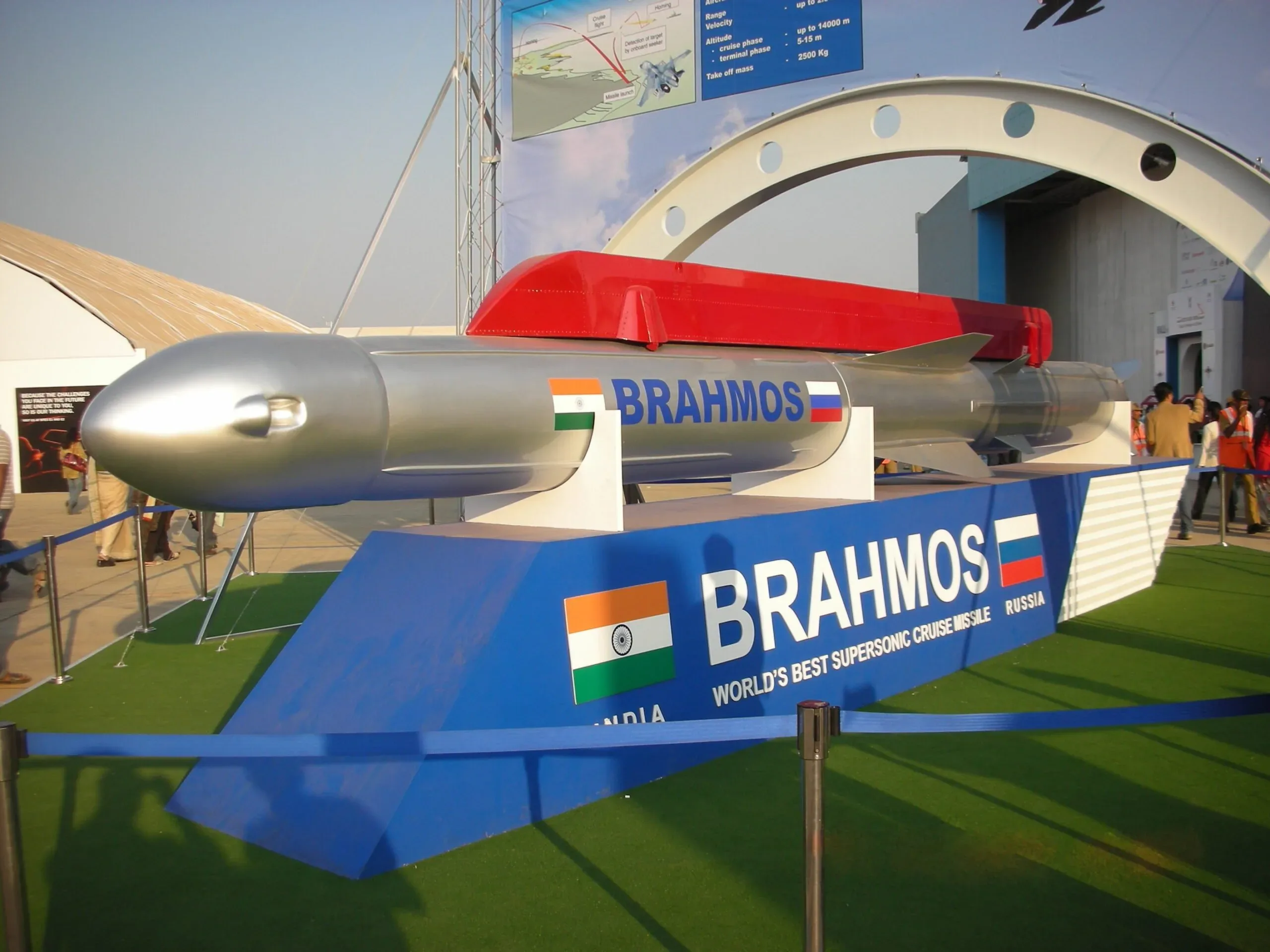
A modern guided missile is essentially an expendable autonomous robotic aircraft designed to make thousands of microscopic aerodynamic recalculations every second. To grasp how these high-speed vehicles track, pursue, and destroy fleeting aerial or terrestrial targets, one must dissect the three interconnected engineering subsystems that dictate every microsecond of missile flight: the propulsion plant, the guidance computer, and the flight control actuators.
- Mach 3-5+
- Supersonic Speed
- 100-1000 Hz
- Autopilot Rate
- < 1 meter
- Circular Error
- 30-50 G
- Turn Limit
Anatomy of Precision: Propulsion, Guidance, and Control Architecture
Every guided missile, regardless of whether it is designed as a lightweight shoulder-fired man-portable air-defense system (MANPADS) or an intercontinental ballistic missile (ICBM), is engineered around a tripartite functional architecture consisting of propulsion, guidance, and flight control [2]. These subsystems operate in an unbroken closed feedback loop known to control theorists as the guidance, navigation, and control (GNC) triad.
The propulsion section provides the necessary kinetic energy and sustained velocity to escape gravity, overcome atmospheric drag, and close the physical distance to the target. Most tactical missiles utilize solid-propellant rocket motors packed with ammonium perchlorate composite propellant (APCP) and hydroxyl-terminated polybutadiene (HTPB) binder. Solid rockets provide immediate high thrust without the dangerous pre-launch fueling requirements of liquid propellants. Longer-range cruise missiles, in contrast, employ miniature air-breathing turbofan or turbojet engines that sip jet fuel efficiently, allowing them to skim the terrain for hours beneath radar detection envelopes before striking their objective [3].
The guidance system acts as the missile’s sensory organ and central nervous system. Using an array of external seekers and internal navigation instruments, the guidance unit continuously estimates the state vector, the three-dimensional position, velocity, and orientation, of both the missile and its designated target. The flight computer processes these telemetry streams and executes guidance algorithms to calculate the optimal steering commands. These electronic steering commands are instantly routed to the control section, which physically manipulates aerodynamic fin actuators, canard surfaces, or thrust vector control (TVC) exhaust vanes to alter the missile’s flight path in real time [1], [3].
Inertial Navigation Systems and Midcourse Correction Physics
During the initial and midcourse phases of flight, which often encompass over ninety percent of total transit distance, a missile must navigate accurately across featureless oceans, mountain ranges, or deep night skies without relying on external signals that could be jammed or spoofed by enemy electronic warfare. This autonomy is achieved through an Inertial Navigation System (INS) [2].
An INS consists of an Inertial Measurement Unit (IMU) integrating three orthogonal accelerometers and three orthogonal angular rate gyroscopes. Ring Laser Gyroscopes (RLGs) and Fiber Optic Gyroscopes (FOGs) utilize the Sagnac effect, measuring the minute phase difference between counter-propagating laser beams travelling along an optical coil, to track rotational changes down to fractions of a degree per hour without any physical moving parts. Meanwhile, micro-electro-mechanical systems (MEMS) accelerometers measure specific forces acting along each spatial axis.
By executing double mathematical integration of sensed linear acceleration over time, the missile’s guidance processor derives current velocity and absolute spatial position relative to its initial launch coordinates: v(t) = v_0 + integral(a(t) dt) p(t) = p_0 + integral(v(t) dt) However, all inertial measurement sensors suffer from inevitable numerical integration drift, where tiny microvolt measurement biases accumulate into growing positional errors over extended flight times [2].
To eliminate inertial drift during long-distance midcourse transit, advanced weapons fuse INS data with satellite navigation networks (such as GPS, GLONASS, or NavIC) and terrain-matching sensors via extended Kalman filtering algorithms [2]. In terrain contour matching (TERCOM), a downward-looking radar altimeter bounces pulses off the ground below, comparing measured elevation profiles against a pre-loaded onboard digital topographic map. Digital Scene Matching Area Correlation (DSMAC) goes further, using optical cameras to photograph key geographical landmarks and aligning them with satellite imagery to correct positional coordinates down to within a few meters.
The Mathematical Magic of Proportional Navigation Guidance
When a missile enters its terminal flight phase and confronts an evasive target, such as a fighter jet performing high-G banking turns, simple pursuit guidance (steering the missile’s nose directly at the target’s current position) fails catastrophically. In pure pursuit, the missile constantly trails behind the target, resulting in an inefficient curved tail-chase that demands extreme, unattainable lateral acceleration in the final moments before interception.
To overcome this aerodynamic limitation, missile engineers utilize the mathematically elegant principle of Proportional Navigation (Pro-Nav or PN) [1], [4]. Invented in the mid-twentieth century and continually refined, Pro-Nav is based on the everyday geometric phenomenon observed by sailors and athletes: if the line-of-sight (LOS) angle between you and an approaching object remains completely constant while the range decreases, you are on a direct collision course.
Rather than flying toward where the target is right now, Pro-Nav commands a lateral acceleration proportional to the rate of rotation of the line-of-sight vector: n_c = N * V_c * omega_LOS where n_c represents the commanded lateral acceleration normal to the missile flight path, N is a dimensionless navigation constant (typically calibrated between 3 and 5), V_c is the closing velocity between missile and target, and omega_LOS is the time derivative (angular rate of change) of the line-of-sight angle measured by the seeker [1].
By forcing the rotation rate of the line of sight toward zero, the missile automatically leads the target, steering along a predicted collision triangle. If the target attempts evasive maneuvers, any change in target trajectory immediately induces an angular rotation in the line of sight, which the proportional navigation guidance law instantly translates into a proportional counter-maneuver. Modern variants, such as Augmented Proportional Navigation (APN), incorporate estimated target acceleration terms, allowing hypersonic interceptors to execute precision kinetic impacts against maneuvering ballistic warheads and stealth platforms [4]. For readers interested in how specialized technical terms across ballistics and flight mechanics are systematized, consult our comprehensive scientific terminology guide.
Terminal Seeker Technologies: Infrared, Radar, and Optical Guidance
During the frantic terminal seconds of an engagement, external midcourse guidance updates become too slow to accommodate dynamic target maneuvers. The missile must activate its own dedicated nose-mounted sensor, known as the seeker head, to track the target autonomously with millisecond latency [3]. Modern seekers operate across distinct bands of the electromagnetic spectrum, each offering unique tactical advantages and physical trade-offs.
Infrared (IR) Homing: Infrared seekers detect thermal photon emissions generated by the intense aerodynamic skin friction of high-speed aircraft and the scorching exhaust plumes of jet engines or rocket nozzles. Early heat-seeking missiles utilized single-element uncooled lead sulfide (PbS) photodetectors that could only lock onto hot tailpipes from behind. Modern fifth-generation interceptors employ cryogenically cooled Focal Plane Array (FPA) imaging infrared (IIR) sensors containing tens of thousands of indium antimonide (InSb) or mercury cadmium telluride (MCT) micro-detectors. Rather than chasing a single point source of heat, an IIR seeker captures high-contrast thermal video images of the entire airframe, allowing computer vision algorithms to distinguish genuine targets from pyrotechnic decoy flares and steer the warhead toward vulnerable structural zones such as the cockpit or fuel cells [3].
Active and Semi-Active Radar Homing: For beyond-visual-range (BVR) engagements and all-weather operational capability through thick cloud cover, rain, and fog, radar homing is paramount [2]. In Semi-Active Radar Homing (SARH), the launch platform’s powerful fire-control radar illuminates the target with radio-frequency pulses, and a passive receiver inside the missile’s nose tracks the reflected echoes. In Active Radar Homing (ARH), the missile houses its own miniature transmitter and receiver, often utilizing an Active Electronically Scanned Array (AESA) millimeter-wave radar. Once the ARH missile approaches within 20 to 30 kilometers of its target, it goes fully autonomous (‘fire-and-forget’), tracking the target independently while the launch aircraft maneuvers to safety [2], [3].
Laser Beam-Riding and Semi-Active Laser (SAL): In anti-tank and precision close-air-support applications, ground operators or unmanned aerial vehicles (UAVs) illuminate a target with an invisible pulsed infrared laser beam. A quadrant photodiode sensor in the missile’s nose detects the scattered laser energy, calculating elevation and azimuth deviations to ride the reflected laser spot directly into armored vehicles or reinforced bunkers.
Comparative Analysis of Missile Guidance Categories
Choosing a guidance architecture depends heavily on the weapon’s operational domain, intended engagement range, atmospheric conditions, and the electronic countermeasure threats posed by the adversary. A comparison of contemporary missile guidance systems illustrates the structural diversity across modern aerospace arsenals.
| Guidance Mode | Sensors Employed | Operational Range | Electronic Warfare Vulnerability | Typical Combat Use |
|---|---|---|---|---|
| Inertial (INS / GPS) | Laser gyros, accelerometers, satellite receiver | Unlimited (Global) | Immune (INS); Satellite signals vulnerable to RF jamming | Midcourse transit, ballistic warheads, cruise strikes |
| Imaging Infrared (IIR) | Cryogenic Focal Plane Array (3-5 or 8-12 µm) | Short to medium (1 to 30 km) | Low; susceptible to laser dazzlers and dense aerosols | Dogfight air-to-air, point-defense interceptors |
| Active Radar (ARH) | Monopulse transceiver, Ku/Ka-band AESA array | Medium to long (20 to 200+ km) | Moderate; challenged by chaff, DRFM radar jamming | Beyond-visual-range intercept, naval air-defense |
| Semi-Active Laser (SAL) | Quadrant optical photodiode detector | Line of sight (1 to 15 km) | High to heavy smoke, obscurants, and laser warning receivers | Precision anti-tank, urban close air support |
| Terrain Correlation (DSMAC) | Optical / infrared camera with digital scene matcher | Terminal phase (final 5 to 10 km) | Very low; completely passive, immune to RF jamming | Subsonic cruise missile precision land attack |
Aerodynamic Control, Autopilots, and Kinetic Interception Physics
Calculating the mathematical collision trajectory is useless if the missile cannot physically force its physical airframe to execute the commanded turn. Missile flight dynamics are governed by an internal digital autopilot operating at refresh rates between 100 Hz and 1,000 Hz. The autopilot acts as a fast inner stabilization loop, commanding high-bandwidth electromechanical servo motors to deflect control surfaces.
Missiles employ three distinct aerodynamic control configurations: tail-control, wing-control, and canard-control. Canards, small forward-mounted aerodynamic fins positioned near the missile’s nose, provide extremely rapid pitch and yaw turn initiation, making them ideal for agile dogfighting weapons. Tail fins, in contrast, provide superior aerodynamic stability and reduced cross-coupling oscillations at extreme supersonic Mach numbers.
At supersonic velocities between Mach 2 and Mach 5, intense shockwave interactions occur along the missile’s fuselage. Oblique shockwaves formed at the pointed radome nose generate steep adverse pressure gradients along the boundary layer, threatening to trigger localized aerodynamic flow separation. High-performance missile autopilots continuously compute air data inputs, including angle of attack (alpha), sideslip angle (beta), dynamic pressure (q = 0.5 * rho * v^2), and Mach number, modulating fin deflection angles to prevent control reversal or catastrophic aerodynamic stall during aggressive terminal maneuvers.
However, in the upper stratosphere and exosphere, where air density approaches zero, traditional aerodynamic fins produce negligible dynamic lift (L = 0.5 * rho * v^2 * S * C_L). High-altitude anti-ballistic missile defense systems, such as the US THAAD, Israeli Arrow-3, or Indian BMD interceptors, must therefore employ Divert and Attitude Control Systems (DACS). A DACS unit consists of a cluster of miniature high-thrust solid-fuel or hypergolic thrusters arranged circumferentially around the missile’s center of gravity. By firing explosive micro-thrusters in microsecond pulses, the vehicle can violently shift its lateral position by tens of meters without relying on atmospheric air, achieving ‘hit-to-kill’ kinetic interceptions where the sheer collision velocity pulverizes incoming nuclear or conventional warheads through brute impact energy [1], [4].
Electronic Countermeasures, Deception, and Modern Seeker AI
Modern missile engagements do not occur in an electronic vacuum; they take place within contested, hostile electromagnetic environments saturated with deceptive jamming, radar decoy chaff clouds, and spectral blinding flares. The evolution of guided weapons is therefore an unending electronic chess match between seekers and Electronic Countermeasures (ECM).
When an adversary aircraft detects an incoming radar-guided missile, its onboard Digital Radio Frequency Memory (DRFM) jammer samples the missile’s incoming radar waveform, digitizes it, alters its phase and timing, and transmits back a synthetic replica. This false signal creates multiple ghost targets or creates velocity gate pull-off (VGPO) deception, tricking older monopulse radar seekers into steering into empty sky. Similarly, modern military vehicles deploy multi-spectral aerosol smoke grenades that create impenetrable thermal and visual fog blankets, scattering laser target illuminators and infrared homing trackers.
To defeat advanced electronic warfare, contemporary missile guidance computers integrate multi-mode sensor fusion and real-time artificial intelligence algorithms. Modern weapons often combine dual-mode seekers, pairing millimeter-wave active radar with high-resolution imaging infrared within the exact same gimbal assembly. Onboard neural networks, conceptually analogous to the autonomous cognitive systems and machine reasoning pipelines explored in modern studies on reasoning architectures in artificial intelligence, analyze the optical geometry, radar cross-section, and velocity profile of every detected object. If the target attempts to deploy deceptive electronic countermeasures, such as those evaluated in advanced mathematical analyses of cryptographic security and algorithm validation, the missile’s autonomous computer identifies the decoy’s unnatural trajectory, rejects the false returns, and maintains lock on the authentic target.
Future Frontiers: Hypersonic Glide Vehicles and Autonomous Swarming
The frontier of missile science is currently undergoing a revolutionary transition toward hypersonic flight dynamics and distributed cooperative swarming. Hypersonic Glide Vehicles (HGVs) and scramjet-powered Hypersonic Cruise Missiles (HCMs) travel at velocities exceeding Mach 5 (over 6,000 kilometers per hour) within the middle atmosphere between 30 and 60 kilometers altitude. At these blistering speeds, atmospheric air molecules disassociate into an enveloping sheath of ionized, superheated plasma exceeding 2,000 degrees Celsius.
This plasma sheath poses severe aerodynamic and sensor challenges, absorbing and distorting electromagnetic signals, which creates a phenomenon known as plasma blackout. Overcoming plasma blackout requires specialized ceramic-matrix composite radomes capable of transmitting radar and infrared frequencies at white-hot temperatures, alongside adaptive aerodynamic control surfaces engineered from refractory metals such as tantalum and hafnium carbide.
Simultaneously, autonomous swarming algorithms allow salvos of intelligent cruise missiles to communicate over encrypted decentralized data-links during flight. Rather than flying as isolated weapons, a swarm coordinates its flight profiles collectively, dynamically assigning targets, surrounding air defense radars from multiple azimuths simultaneously, and sacrificing decoy units to exhaust the adversary’s interceptor magazines before high-value kinetic assets strike their targets. Missile science has evolved far beyond the realm of simple ballistic propulsion; it represents a pinnacle of multidisciplinary aerospace physics, robotics, and cybernetic flight control.
அடிக்கடி கேட்கப்படும் கேள்விகள்
What is the fundamental difference between a ballistic missile and a cruise missile?
How can a missile intercept an aircraft moving at Mach 2 or Mach 3?
What happens if enemy electronic jamming disrupts a missile's GPS connection?
Can guided missiles turn faster than manned fighter aircraft?
Scientific References and Primary Literature
Design of Guidance and Control Systems for Tactical Missiles
- Journal
- CRC Press
- Study Type
- peer-reviewed
- Year
- 2019
DOI10.1201/9780429291203-8
Glossary
Scientific terms used in this article
- Seeker Head
- The forward-mounted sensor array (radar, infrared, or laser) that autonomously detects, locks onto, and tracks a target during the terminal phase of flight.
- Active Radar Homing
- A missile guidance method where the missile contains its own radar transmitter and receiver, enabling true fire-and-forget autonomous tracking.
- Divert and Attitude Control
- A cluster of miniature lateral reaction control rocket thrusters that maneuver exo-atmospheric interceptors without requiring aerodynamic airflow.
- Focal Plane Array
- An advanced sensor grid of electro-optical micro-detectors used in imaging infrared seekers to capture complete thermal images rather than single heat points.
References
- ↩ Yanushevsky, R. (2019). Design of Guidance and Control Systems for Tactical Missiles. CRC Press.
- ↩ GPS and radar aided inertial navigation system for missile systems. IEEE Position Location and Navigation Symposium.
- ↩ Zarchan, P. (2012). Tactical and Strategic Missile Guidance. AIAA.
- ↩ Yanushevsky, R. (2018). Modern Missile Guidance. CRC Press.

No comments yet. Be the first to join the conversation.