


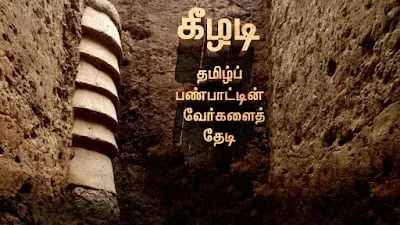
For nearly two centuries, standard historiographical narratives of the Indian subcontinent maintained that following the collapse of the Bronze Age Indus Valley Civilization, the ‘Second Urbanization’ of South Asia was confined exclusively to the northern Gangetic plains during the mid-first millennium BCE. Southern India, according to conventional colonial textbooks, remained a pastoral, agrarian periphery that developed complex urban structures and written literacy only centuries later under northern Mauryan influence [1, 2].
However, extensive multi-season archaeological excavations conducted along the Vaigai river basin at Keeladi (near Madurai in Tamil Nadu) by the Archaeological Survey of India (ASI) and the Tamil Nadu State Department of Archaeology (TNSDA) have shattered this outdated Eurocentric paradigm. Keeladi is not merely an archaeological site; it is a profound scientific watershed that has rewritten the timeline of South Asian civilization [1].
Rigorous multi-disciplinary scientific analyses–including Accelerator Mass Spectrometry (AMS) radiocarbon dating, High-Resolution Transmission Electron Microscopy (HRTEM), Raman spectroscopy, and epigraphical decipherment–have established that an advanced, literate, trade-driven urban society flourished on the banks of the Vaigai as early as the sixth century BCE (circa 580 BCE, over 2,600 years ago) [1, 2]. Even more astonishingly, materials scientists published in Nature Portfolio’s Scientific Reports discovered that ancient Keeladi artisans were synthesizing multi-walled carbon nanotubes inside their ceramic coatings–revealing a mastery of pyrotechnology millennia ahead of its time [1]. Here is the definitive scientific analysis of the Keeladi excavations and their revolutionary contributions to world archaeology.
- 580 BCE
- AMS Carbon Date
- MWCNTs
- Carbon Nanotubes
- 100% Secular
- No Religious Idols
- 1,000+ Meters
- Urban Drainage
The Vaigai River Civilization: Redefining South Asian Urbanization
Located twelve kilometers southeast of the historic temple city of Madurai, Keeladi sits on an alluvial terrace adjacent to the ancient, perennial Vaigai river. What began in 2014 as exploratory trenching led by archaeologist K. Amarnath Ramakrishna has expanded across multiple rigorous excavation phases into an expansive archaeological complex encompassing neighboring clusters at Konthagai (a megalithic burial necropolis), Agaram, and Manalur [1].
The archaeological material recovered from Keeladi differs radically from typical rural settlements. Excavation trenches revealed deeply stratified, multi-layered urban architectural complexes constructed with standardized kiln-fired clay bricks, roof tiles with functional grooved interlocking channels, paved limestone floors, and specialized industrial manufacturing zones [1, 2].
This structural sophistication proves that the Sangam Age–the golden classical era celebrated in ancient Tamil poetic anthologies such as the Purananuru, Akananuru, and Maduraikkanci–was not a romanticized literary myth, but an empirical historical reality, reflecting early environmental and faunal knowledge as documented in our review of ancient animal science and biodiversity [1]. The Vaigai river valley supported a thriving, densely populated urban metropolis characterized by commercial manufacturing, complex craft specialization, advanced metallurgy, and widespread secular literacy contemporaneous with the Mahajanapadas of the Gangetic valley [1].
Recent geological and remote-sensing investigations conducted by the Indian Space Research Organisation (ISRO) and regional geo-archaeologists utilizing Synthetic Aperture Radar (SAR) imagery have revealed intricate networks of subterranean paleochannels (fossil riverbeds) crisscrossing the modern Vaigai alluvial plain. In the first millennium BCE, the Vaigai was a significantly wider, perennial fluvial system carrying abundant glacial-era monsoonal runoff from the Western Ghats. Sediment core drillings at Keeladi confirm rich agricultural silt deposition that supported intensive double-cropping of rice and millets, providing the economic grain surpluses necessary to sustain a large non-agricultural urban artisan and merchant population [1, 2].
AMS Radiocarbon Chronology: Establishing the Sixth Century BCE Horizon
In modern archaeological science, chronological dating can no longer rely on stylistic ceramic typologies or subjective artistic comparisons. To establish an unassailable chronological framework, the Tamil Nadu State Department of Archaeology submitted stratified organic charcoal samples excavated from deep trenches at Keeladi to the world-renowned Beta Analytic Testing Laboratory in Miami, Florida [1].
Beta Analytic utilized Accelerator Mass Spectrometry (AMS) radiocarbon dating, the gold standard in archaeological geochronology: – Physical Principle: Radiocarbon dating measures the decay of carbon-14 (C-14), an unstable radioactive isotope with a known half-life of 5,730 years, relative to stable carbon-12 (C-12) within ancient organic matter. AMS directly accelerates carbon ions to high kinetic energies, physically separating and counting individual C-14 atoms with extreme precision, requiring merely milligrams of charcoal sample [1]. – The Landmark Date: A charcoal sample recovered at a depth of 353 centimeters from trench B4/4 yielded an uncalibrated radiocarbon age of 2,460 ± 30 BP. When calibrated against dendrochronological international calibration curves (INTCAL13), the sample returned a definitive calendar date of 580 BCE (with a high-probability confidence interval spanning 600 BCE to 535 BCE) [1].
This 580 BCE date established that urbanization in Tamil Nadu was already mature in the sixth century BCE, decisively pushing back the dawn of the Sangam era by more than three centuries and placing Keeladi contemporary with the archaic Greek city-states, the Persian Achaemenid Empire, and the early Roman Republic [1, 2].
The Nanotechnology Discovery: Multi-Walled Carbon Nanotubes in Ancient Pottery
Perhaps the most electrifying discovery emerging from Keeladi was reported in 2020 by a team of materials scientists from Vellore Institute of Technology (VIT), the Indian Institute of Science (IISc), and the CSIR-National Physical Laboratory, published in Nature Portfolio’s prestigious journal Scientific Reports [1].
The researchers examined shards of high-status Black-and-Red Ware (BRW) pottery excavated from sixth-century BCE cultural strata at Keeladi. These potsherds exhibited a jet-black, lustrous internal coating that remained remarkably smooth, reflective, and impervious to chemical weathering after spending 2,600 years buried in acidic tropical soils [1]: 1. High-Resolution Transmission Electron Microscopy (HRTEM): Under magnification exceeding 500,000 times, the researchers observed tubular nanostructures embedded within the black carbon matrix. The structures were identified as Multi-Walled Carbon Nanotubes (MWCNTs) with outer diameters ranging from 10 to 40 nanometers and lengths extending several micrometers [1]. 2. Raman Spectroscopy: Raman spectroscopic excitation revealed sharp, distinct G-band (graphitic sp2 carbon vibrational stretching at 1585 cm-1) and D-band (disorder-induced structural mode at 1350 cm-1) peaks. The low ID/IG intensity ratio confirmed high crystalline graphitic structural order within the nanotubes. 3. Elemental Composition: Energy-Dispersive X-Ray Spectroscopy (EDS) confirmed that the coating consisted almost entirely of pure carbon (up to 85%), accompanied by microscopic trace inclusions of iron, silicon, and aluminum [1, 2].
Carbon nanotubes are modern synthetic allotropes of carbon celebrated for possessing the highest tensile strength, elastic modulus, and electrical conductivity of any known material. The presence of MWCNTs explains why Keeladi pottery retains its astonishing physical strength, scratch resistance, and hydrophobic luster after twenty-six centuries [1].
At the atomic scale, HRTEM imaging revealed that the multi-walled carbon nanotubes exhibited a characteristic interplanar lattice spacing (d002) of exactly 0.34 nanometers, precisely matching the theoretical graphitic interlayer distance of modern lab-synthesized carbon nanotubes [1]. This historical finding bears striking scientific resonance with ancient crucible steel metallurgy: classical South Indian Wootz steel (the metallurgical foundation for the legendary Damascus swords) was later discovered by modern physicists to contain microscopic carbon nanotube and cementite nanowire networks formed during high-temperature charcoal smelting. The Keeladi ceramic coating discovery proves that southern Indian pyrotechnologists were manipulating nanoscale carbon structures across both ceramic and metallurgical domains as early as the sixth century BCE [1, 2].
Pyrotechnology and Ceramic Engineering: The Black-and-Red Ware Matrix
How did ancient Tamil artisans synthesize carbon nanotubes in the sixth century BCE without modern vacuum chambers, chemical vapor deposition (CVD) reactors, or lasers? The answer lies in sophisticated, highly controlled ancient pyrotechnology [1, 2].
Materials scientists hypothesize that Keeladi potters utilized an ingenious botanical and thermal manufacturing process: – Natural Hydrocarbon Precursors: Artisans coated unfired clay vessels with natural organic plant saps, plant resins, or seed oils containing complex long-chain aliphatic and aromatic hydrocarbons [1]. – In-Situ Catalytic Nanoparticles: The alluvial clay used for pottery contained microscopic natural iron oxide nanoparticles (such as hematite and magnetite). In modern nanotechnology, transition metals like iron act as essential chemical catalysts that seed and guide carbon nanotube growth. – Inverted Firing Technique: The pottery was placed inside kilns in an inverted orientation (open mouth facing downward) and buried beneath carbonaceous organic matter (such as plant husk or dung). By sealing the kiln, potters established a fiercely oxygen-depleted, reducing pyrolytic atmosphere reaching temperatures between 1,000°C and 1,100°C [1, 2].
Under these high-temperature reducing conditions, volatile plant resins underwent thermal decomposition (pyrolysis), releasing reactive carbon atoms. In the presence of catalytic iron nanoparticles inside the clay matrix, these carbon atoms self-assembled into concentric, tubular graphitic sheets, forming multi-walled carbon nanotubes that fused permanently into the ceramic surface. This demonstrates that Keeladi artisans possessed an empirical, master-level understanding of thermal carbon chemistry [1].
Urban Civil Engineering: Ring Wells, Closed Drainage, and Brick Architecture
Beyond ceramic pyrotechnology, the architectural excavations at Keeladi revealed an extraordinary degree of civic planning and public hydraulic engineering that rivals modern civil infrastructure [1, 2].
Key civil engineering features uncovered at Keeladi include: 1. Terracotta Ring Wells (Urai Kinaru): Excavators unearthed dozens of vertical ring wells constructed from stacks of interlocking, wheel-turned terracotta rings measuring approximately 80 centimeters in diameter. Sunk deeply into water-bearing sand strata, these ring wells served a dual hydraulic function: providing clean, filtered drinking water while preventing sand collapse, and functioning as percolation soak pits to recharge subterranean groundwater [1]. 2. Covered Brick Drainage Channels: One of the most remarkable discoveries is a continuous, covered sanitary drainage network constructed from kiln-fired bricks bonded with fine clay mortar. The drainage channels feature gentle downward gradients designed according to gravitational fluid dynamics, conveying domestic wastewater safely away from residential living quarters into external filtration soak pits. 3. Standardized Brick Metrology: Dimensional analysis of thousands of excavated bricks revealed strict dimensional standardization following an ancient mathematical ratio of 1:2:4 (typically 7 cm thick, 18 cm wide, and 36 cm long) [1, 2]. This identical geometric ratio is documented in classical Sangam literature and mirrors the metrological conventions of the Indus Valley Civilization, indicating unbroken South Asian architectural engineering traditions.
Ceramic petrography and X-ray diffraction (XRD) analyses of the brickwork and interlocking roof tiles revealed that Keeladi engineers selected specific alluvial clays enriched with quartz and feldspar, blended with sand and crushed organic tempers to prevent shrinkage cracks during firing. Fired inside updraft kilns reaching 900°C, the resulting terracotta exhibited high compressive strength and low porosity. Grooved rainwater channeling on the curved roof tiles allowed torrential monsoonal rains to drain rapidly into perimeter gravel gutters without eroding mud-plastered walls, proving a mature architectural tradition adapted to tropical climatic conditions [1, 2].
The presence of centralized sanitary drainage and standardized masonry proves that Keeladi was governed by an organized municipal authority that prioritized public health, hygiene, and sustainable urban water management [1].
Secular Literacy: Tamil-Brahmi Epigraphy and Democratized Education
One of the most consequential discoveries at Keeladi concerns the history of human literacy and writing in South Asia. In excavation layers dating from the sixth to third centuries BCE, archaeologists recovered more than one thousand potsherds bearing engraved inscriptions in the ancient Tamil-Brahmi (Tamili) script [1, 2].
Epigraphical and sociological analysis of these potsherd inscriptions revealed profound cultural insights: – Pre-Firing vs Post-Firing Inscriptions: Most crucially, many Tamil-Brahmi inscriptions were scratched into the pottery post-firing by individual owners after purchasing the vessels. Personal Tamil names–such as Athan, Uthiran, Thisan, and Kuviran–were inscribed on everyday utilitarian domestic bowls and storage jars [1]. – Democratization of Literacy: In many ancient civilizations, written literacy was a jealously guarded monopoly restricted to an elite priestly caste or royal court scribes. The discovery that ordinary domestic pottery at Keeladi was casually inscribed with personal names by weavers, potters, and merchants proves that written literacy was deeply democratized and widespread among common citizens across all social strata [1, 2]. – Linguistic Evolution: The presence of mature, phonologically developed Tamil-Brahmi in the sixth century BCE definitively disproves the colonial thesis that Emperor Ashoka’s third-century BCE edicts represented the invention of Brahmi script in India. Instead, epigraphists now conclude that South Indian Tamil-Brahmi evolved independently or developed earlier as an indigenous script adapted to Tamil phonology [1]. Furthermore, archaeologists documented over a thousand potmarks carrying geometric graffiti symbols that exhibit striking morphological continuities with late Harappan Indus Valley script signs, suggesting a tangible cultural and symbolic bridge spanning millennia between the Indus Valley Civilization and southern Peninsular India [1, 2]. For broader context on South Asian linguistic systems and terminology, explore our scientific terminology and linguistic guide.
Equally extraordinary is the complete secularity of the site: across multiple extensive excavation seasons, archaeologists have found zero religious altars, temple structures, sacrificial pits, or divine theological idols. Keeladi was an egalitarian, secular mercantile civilization focused on craft production, education, and international trade.
Maritime Commerce: Micro-Bead Manufacture and Indian Ocean Trade Routes
Keeladi was not an isolated inland enclave; it was the industrial manufacturing heart of a sprawling international maritime trading network connecting the Roman Mediterranean, Egypt, the Persian Gulf, and Southeast Asia [1, 2].
Archaeological evidence of international trade and industrial craft specialization at Keeladi includes: 1. Semi-Precious Stone Bead Workshops: Excavators uncovered thousands of exquisitely crafted micro-beads carved from non-local mineral stones: carnelian, agate, jasper, quartz crystal, amethyst, and lapis lazuli. Because carnelian and lapis lazuli deposits do not exist natively in Tamil Nadu, raw mineral boulders were imported from Gujarat, the Deccan plateau, and Afghanistan, cut and polished in Keeladi workshops using diamond-tipped drills, and exported across the ancient world [1]. 2. Carnelian Intaglios and Roman Links: Carnelian beads found at Keeladi match the precise chemical signatures of beads discovered in ancient Roman trading ports (such as Berenike on the Red Sea) and contemporary Southeast Asian sites (such as Khao Sam Kaeo in Thailand), confirming extensive trans-oceanic maritime routes. 3. Spindle Whorls and Textile Dyeing: Discoveries of bone weaving needles, terracotta spindle whorls, and industrial dyeing vats validate Sangam poetry describing Madurai’s famous export of ultra-fine muslin fabrics and cotton textiles to the Roman aristocracy, who paid for Indian textiles in pure gold coinage [1, 2].
Metallurgical analyses of metal artifacts recovered from Keeladi further demonstrate advanced metallurgical prowess. Archaeologists excavated high-purity iron smelting tuyeres, iron crucibles, arrowheads, and cutting tools, alongside antimony rods used for traditional cosmetic kohl (kajal) application. Scanning electron microscopy with energy-dispersive X-ray spectroscopy (SEM-EDS) confirmed that copper and bronze artifacts contained sophisticated alloy proportions of tin and lead designed to optimize malleability and corrosion resistance [1, 2]. These high-precision metallurgical crafts operated alongside glass-bead furnace installations, where glass was synthesized from silica sand and plant ash at temperatures exceeding 1,200°C.
Keeladi operated in direct harmony with the ancient seaport of Alagankulam at the mouth of the Vaigai river on the Bay of Bengal, where Roman amphorae fragments, rouletted ware, and imperial Roman coins prove continuous maritime commerce bridging East and West.
Comparative Matrix: Keeladi Urban Civilization vs Contemporary Ancient Sites
Comparing Keeladi against contemporary world archaeological sites illustrates why its material science and civic culture hold monumental global importance.
| Civilization Site | Chronological Horizon | Key Material Technology | Literacy and Civic Culture |
|---|---|---|---|
| Keeladi (Vaigai Valley, India) | 580 BCE (6th Century BCE, AMS Dated) | Multi-walled carbon nanotubes in ceramics; ring wells; drainage | Democratized Tamil-Brahmi on domestic pots; completely secular society |
| Gangetic Mahajanapadas (India) | 600–500 BCE (Early Historic) | Northern Black Polished Ware (NBPW); iron smelting | Brahmi script; centralized monarchies and early religious philosophies |
| Archaic Greek City-States | 600–500 BCE (Archaic Period) | Red-figure pottery; stone temple masonry; bronze coinage | Greek alphabet; civic poleis; polytheistic civic religious shrines |
| Early Achaemenid Persia | 550–500 BCE (Imperial Expansion) | Monumental stone palaces (Pasargadae); qanat underground canals | Old Persian cuneiform; royal imperial court administration |
Frequently Asked Questions
What is the exact age of the Keeladi civilization?
Accelerator Mass Spectrometry (AMS) radiocarbon dating conducted by Beta Analytic Laboratory in Florida confirmed that cultural charcoal layers at Keeladi date back to 580 BCE (6th century BCE), establishing it as over 2,600 years old.
How were carbon nanotubes formed in ancient Keeladi pottery?
Keeladi potters applied plant-derived hydrocarbon coatings onto iron-rich alluvial clay vessels and fired them in an oxygen-depleted reducing kiln atmosphere at 1,100°C. Natural iron nanoparticles acted as catalysts, seeding the self-assembly of multi-walled carbon nanotubes.
Were any religious temples or idols found at Keeladi?
No. Across multiple excavation seasons and thousands of trenches, archaeologists have uncovered zero religious altars, temple structures, or theological idols, demonstrating an advanced, egalitarian, and trade-centered secular society.
What does the Tamil-Brahmi script on pottery prove?
Because personal names were inscribed post-firing on everyday domestic pots by common citizens, it proves that written literacy was widespread and democratized across all social classes in Tamil Nadu by the 6th century BCE.
Scientific References and Primary Literature
Discovery of carbon nanotubes in sixth century BC potteries from Keeladi, India
- Journal
- Scientific Reports (Nature Portfolio)
- Study Type
- peer-reviewed
- Year
- 2020
DOI10.1038/s41598-020-76720-z
Glossary
Scientific terms used in this article
- Carbon Nanotubes (CNTs)
- Microscopic cylindrical allotropes of carbon featuring extraordinary tensile strength, thermal conductivity, and sp2 graphitic molecular bonding.
- AMS Radiocarbon Dating
- Accelerator Mass Spectrometry, a nuclear physics technique measuring residual carbon-14 atoms to determine the precise calendar age of ancient organic samples.
- Black-and-Red Ware (BRW)
- Ancient ceramic pottery fired in inverted kiln positions, creating a black interior and lower rim with an oxidized red outer surface.
- Tamil-Brahmi (Tamili)
- The archaic alphabetic script used in ancient Tamil Nadu from the 6th century BCE onward to record Old Tamil language and personal names.
- Ring Well (Urai Kinaru)
- A vertical subterranean well constructed from interlocking cylindrical terracotta rings, used for domestic water harvesting and drainage.
- Sangam Age
- The classical historical era of Tamil civilization marked by extensive literary production, urban planning, craft industries, and international maritime trade.
References
- ↩ Vijayan, N., et al. (2020). Discovery of carbon nanotubes in sixth century BC potteries from Keeladi, India. Scientific Reports, 10, 19495.
- ↩ Heritage Science: Pottery production and trades in Tamil Nadu region: new insights from Alagankulam and Keeladi excavation sites
- Tamil Nadu State Department of Archaeology: Keeladi: An Urban Settlement of Sangam Age on the Banks of River Vaigai
- Journal of Archaeological Science: Reports: Archaeological science and second urbanization in Peninsular India



No comments yet. Be the first to join the conversation.