

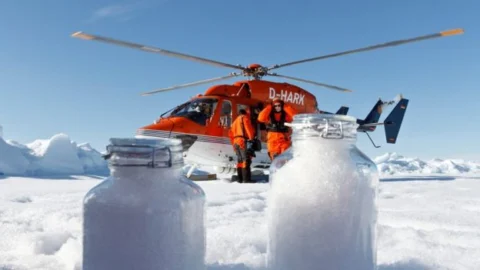

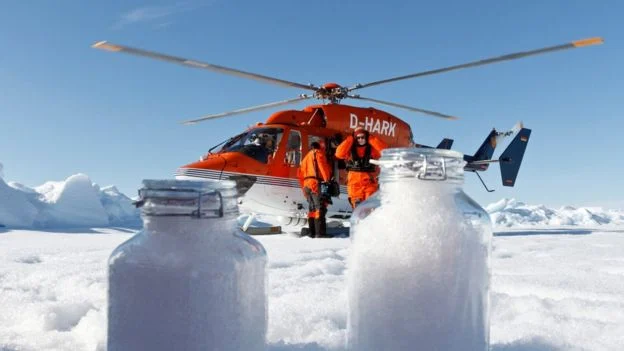
For decades, the high-latitude polar cryosphere–the sweeping expanses of Arctic sea ice, Greenland’s massive ice sheet, and remote subpolar glaciers–represented humanity’s quintessential image of untamed, immaculate wilderness. Miles from industrialized metropolitan centers, dense highway networks, and synthetic manufacturing complexes, polar snowpack was long assumed to be the purest, most pristine chemical baseline on planet Earth [1].
However, pioneering environmental geoscientists and glaciologists have shattered this foundational assumption. Landmark investigations led by researchers from the Alfred Wegener Institute Helmholtz Centre for Polar and Marine Research in Germany and the Swiss Federal Institute for Forest, Snow and Landscape Research (WSL) have confirmed that Arctic snowpack is saturated with microscopic anthropogenic debris: synthetic microplastics and nanoplastics [1, 2].
Publishing rigorous empirical findings in Science Advances and Nature Geoscience, international research teams documented that freshly fallen Arctic snow contained astonishing concentrations exceeding 10,000 to over 14,000 microplastic particles per liter of melted snow [1, 2]. These synthetic particles do not originate from local maritime shipping or indigenous settlements; they are delivered directly from planetary weather systems through high-altitude atmospheric transport [2]. Here is the definitive scientific analysis of microplastics in Arctic snow, examining airborne meteorological pathways, spectroscopic detection technologies, cryospheric albedo degradation, and broader planetary ecological ramifications.
- 14,400 /L
- Peak Snow Particle Density
- < 11 µm
- Dominant Particle Size
- -0.05
- Albedo Reduction Index
- 3,500+ km
- Atmospheric Range
The Pristine Illusion: Tracing Microplastics to Polar Frontiers
Microplastics are defined as solid synthetic polymer particles, fragments, or fibers measuring less than 5 millimeters in their longest dimension, while particles below 1 micrometer are categorized as nanoplastics [1]. For the initial four decades of marine plastic research, environmental monitoring focused overwhelmingly on visible oceanic gyres–such as the Great Pacific Garbage Patch–where buoyant macro-litter accumulated through slow surface currents [1, 2].
This conventional maritime narrative fostered a false geographic reassurance: because the central Arctic Ocean was capped by thick multi-year sea ice and human populations remained exceedingly sparse, high polar latitudes were presumed geographically insulated from industrial consumer waste [1]. Yet when glaciological expeditions ventured across the remote Fram Strait, the Svalbard archipelago, and drifting pack ice floes between 78° and 85° North, their analytical ice cores told a starkly different story [1, 2].
Snow samples collected from drifting ice floes far north of mainland Norway contained dense concentrations of microplastics, ranging from 140 particles per liter up to 14,400 particles per liter of meltwater [1]. While European continental samples gathered near Bavarian highways and Swiss alpine stations exhibited even higher densities (frequently exceeding 24,000 to 150,000 particles per liter), the presence of thousands of synthetic fragments in uninhabited polar wilderness confirmed that synthetic polymers have become an integrated, pervasive component of the global atmosphere [1, 2]. Understanding broader environmental footprints, as explored in our comprehensive urban home waste management and water reuse guide, illustrates how municipal polymer pollution scales rapidly into planetary atmospheric contamination.
Atmospheric Transport Mechanisms: How Synthetic Fibers Travel Continents
How do microscopic synthetic polymers travel thousands of kilometers across oceans and mountain ranges to deposit upon barren Arctic tundra and pack ice? The answer lies in dynamic atmospheric circulation models and aerosol physics [2].
Microplastic particles possess exceptionally high surface-area-to-volume ratios and low physical densities (typically between 0.90 g/cm³ for polypropylene and 1.38 g/cm³ for polyethylene terephthalate) [1, 2]. When synthetic textiles are laundered, automobile tires abrade along asphalt roadways, or municipal agricultural mulch degrades under solar ultraviolet radiation, micro-fragments and fibers are shed directly into the planetary boundary layer [2]: – Aerodynamic Suspension: Once lofted by thermal updrafts, surface turbulence, and convective winds, particles smaller than 10 to 20 micrometers exhibit terminal settling velocities of mere millimeters per second. Under standard tropospheric turbulence, downward gravitational settling is completely counterbalanced by ambient vertical air currents [2]. – Free Tropospheric Jet Streams: Convective storm systems inject suspended microplastic aerosols across the boundary layer into the free troposphere, where high-velocity planetary jet streams and prevailing westerlies transport them rapidly across continental boundaries at velocities exceeding 80 to 120 kilometers per hour [2]. – Polar Vortex and Meridional Circulation: Warm, moist air masses from industrialized mid-latitudes are drawn poleward along planetary Rossby waves and the North Atlantic storm track. As these air masses converge into the polar vortex and cool dramatically, moisture condenses into snow crystals, which scavenge airborne polymer particles through in-cloud condensation and sub-cloud precipitation washout [1, 2].
Atmospheric back-trajectory modelling conducted by meteorological agencies confirms that airborne microplastics can traverse 3,000 to 5,000 kilometers within four to seven days. Consequently, a synthetic polyester fiber generated inside a European laundry facility or an abraded tire particulate from an Asian megacity can be deposited onto an Arctic ice sheet within a single week [1, 2].
Atmospheric transport dynamics are further complicated by the phenomena of dry versus wet deposition. While heavy snowfall represents the most aggressive scavenging mechanism–capturing over seventy percent of airborne microplastics during winter blizzards–dry gravitational settling continuously deposits synthetic particles during calm, cloudless polar twilight periods. In these stagnant boundary layers, airborne fibers encounter micro-eddies and thermal inversions that trap particulate plumes close to the snowpack surface, ensuring that deposition never ceases even when precipitation is absent [1, 2].
Analytical Detection Technologies: FTIR and Raman Spectroscopic Fingerprinting
Detecting and quantifying microplastics in Arctic snowpack requires specialized, ultra-clean analytical instrumentation. Early optical microscopy studies suffered from severe analytical limitations: microscopic synthetic fibers are frequently indistinguishable by eye from natural cellulose, chitin, wool, or mineral dust particles [1].
To eliminate misidentification and provide unassailable chemical confirmation, researchers deployed advanced automated vibrational spectroscopy: 1. Micro-Fourier Transform Infrared (µ-FTIR) Spectroscopy: Melted snow samples are vacuum-filtered through gold-coated polycarbonate membranes or aluminum oxide filters (anodisc). The sample filters are placed under an automated FTIR microscope equipped with a Focal Plane Array (FPA) detector. Infrared radiation is beamed across thousands of microscopic pixels simultaneously; when infrared frequencies match specific molecular chemical bonds (such as ester bonds, amide linkages, or methylene chains), energy is absorbed, producing a distinct chemical absorption fingerprint [1]. 2. Micro-Raman Spectroscopy: For sub-micron particles and nanoplastics below the optical diffraction limit of infrared light (particles smaller than 5 micrometers), Micro-Raman spectroscopy utilizes focused monochromatic laser excitation (typically 532 nm or 785 nm). Inelastic scattering of photons reveals unique vibrational modes of synthetic polymer backbones, permitting accurate chemical classification down to 500 nanometers [1, 2]. 3. Pyrolysis-Gas Chromatography-Mass Spectrometry (Py-GC-MS): Complementing spectroscopic imaging, Py-GC-MS thermally decomposes sample filters at temperatures exceeding 600°C in an inert helium atmosphere. The resulting gaseous pyrolyzates are separated chromatographically and fragmented in a mass spectrometer, providing precise bulk mass quantification (micrograms of specific plastic types per kilogram of snow) [1].
Crucially, these rigorous spectroscopic protocols revealed that over 80% of all microplastic particles detected in Arctic snow fell below 11 micrometers in size [1]. Previous optical studies that utilized mesh filters with 300-micrometer pore sizes missed more than 99% of total polar plastic fallout, severely underestimating the true magnitude of cryospheric contamination [1, 2]. Modern spectroscopic science, which also helps unravel astrophysical phenomena as detailed in our analysis of what is a black hole and astrophysics science, underscores how refined detection tools fundamentally rewrite our understanding of complex natural systems.
Polymer Composition and Industrial Origins in Snowpack Samples
| Polymer Classification | Relative Abundance (%) | Primary Anthropogenic Origin | Environmental Persistence |
|---|---|---|---|
| Polyethylene (PE) & Polypropylene (PP) | 35% – 42% | Single-use packaging, consumer containers, agricultural film | Centuries; high resistance to biological hydrolysis |
| Synthetic Rubber / Nitrile | 22% – 28% | Automobile vehicle tire wear, commercial gasket friction | Extremely high; dense carbon-black composite chemistry |
| Polyester & Polyamide (Nylon) | 15% – 20% | Synthetic apparel laundering, technical textile fleece | Moderate; subject to mechanical fracturing into nanoplastics |
| Polyurethane & Acrylates (Paint) | 10% – 15% | Industrial protective coatings, building paints, marine vessels | Decades; brittle weathering yielding toxic resin flakes |
The predominant polymers recovered from Arctic snow are polyethylene (PE) and polypropylene (PP), which together account for more than a third of all identified synthetic fragments [1]. These low-density polyolefins are the global packaging industry’s workhorses, utilized in food wrap, single-use bags, caps, and shipping containers [1, 2].
Equally alarming is the immense proportion of synthetic rubber particulates and automobile tire wear particles (TWPs), representing over 25% of recovered debris in high-latitude snow [1]. Roadway tire abrasion generates billions of tons of micro-elastomers annually worldwide. Coated with carbon black, heavy metals (such as zinc), and toxic organic antiozonants (such as 6PPD-quinone), tire particles are aerodynamically ideal for long-range atmospheric suspension, carrying hazardous synthetic chemistry into Arctic precipitation [1, 2].
Cryosphere Destabilization: Surface Albedo Reduction and Glacial Melting
Beyond their chemical persistence, microplastics in Arctic snow exert a direct, destabilizing thermodynamic impact on global climate: the systematic degradation of cryospheric surface albedo [1, 3].
Albedo measures the fraction of incoming solar radiation reflected by a surface, scaled from 0.0 (complete absorption) to 1.0 (complete reflection) [3]: – Pristine Snow Albedo: Freshly fallen polar snow possesses an exceptionally high albedo ranging between 0.85 and 0.90, reflecting nearly 90% of incident shortwave solar energy back into space. This reflective planetary shield is fundamental to maintaining sub-zero polar temperatures and stabilizing the Northern Hemisphere cryosphere [3]. – Impurity Deposition and Darkening: When dark microplastics, synthetic rubber flakes, automotive paints, and associated industrial black carbon particles deposit onto snowpack, they dramatically darken the surface. Micro-particulates lower the local albedo by 0.02 to 0.05 units [3]. – Radiative Forcing and Melt Acceleration: A reduction in albedo causes snowpack to absorb substantially more shortwave solar radiation, converting light into thermal kinetic energy. This localized heating elevates snowpack temperature, promoting premature grain metamorphism, firn coarsening, and accelerated surface melting [1, 3].
Crucially, this process initiates an aggressive positive feedback loop. As surface snow melts, embedded microplastics do not evaporate; instead, they concentrate on the melting surface, creating increasingly dense, dark particulate films that further reduce albedo and accelerate glacial ablation [3]. Over continuous decades, atmospheric microplastic deposition directly threatens the mass balance of the Greenland ice sheet and high Arctic valley glaciers [1, 3].
On alpine glaciers and high-latitude ice caps, this dark particulate accumulation drives the proliferation of cryoconite holes–cylindrical, water-filled melt depressions formed when dark biological and industrial particles absorb intense solar irradiance and melt downward into the ice matrix [1, 3]. Glaciologists surveying Arctic ice fields have identified dense microplastic fibers and tire crumbs interwoven with cyanobacterial filaments inside these cryoconite granules. By physically stabilizing microbial colonies while amplifying solar thermal absorption, microplastics transform cryoconite ecosystems into accelerated melt engines that perforate ancient ice fields from within [3].
Ecotoxicological Cascades Across Polar and Trophic Networks
The seasonal melting of Arctic snowpack does not dilute microplastics into oblivion; it flushes billions of synthetic particles directly into sensitive polar meltwater rivers, coastal fjords, and marine pelagic ecosystems [1, 2].
Polar marine organisms exist within highly specialized, energetic food webs adapted to short summer productivity windows: – Cryophilic Microbial Communities: Glacier ice surfaces support specialized psychrophilic bacteria, cyanobacteria, and green algae. High concentrations of microplastics interfere with microbial biofilm architecture and introduce leached chemical plasticizers (such as phthalates, bisphenols, and organophosphates) that inhibit cellular enzymatic pathways [1, 2]. – Zooplankton Ingestion: Herbivorous polar zooplankton–most notably the Arctic copepod Calanus hyperboreus and krill species–graze indiscriminately upon suspended particles in the water column. Ingesting microplastics of similar size to diatom microalgae causes physical intestinal blockage, reduces lipid storage capacity, and limits reproductive fecundity [1]. – Trophic Bioaccumulation: Microplastics and their hydrophobic chemical additives bioaccumulate through polar trophic levels, moving from zooplankton to Arctic cod (Boreogadus saida), seabirds (such as northern fulmars), ringed seals, and apex apex predators like polar bears and indigenous human populations reliant on subsistence hunting [1, 2].
Furthermore, weathered microplastics act as microscopic environmental sponges. Due to their high surface area and hydrophobic nature, airborne plastic fragments adsorb atmospheric Persistent Organic Pollutants (POPs)–including polychlorinated biphenyls (PCBs), polycyclic aromatic hydrocarbons (PAHs), and per- and polyfluoroalkyl substances (PFAS, known as ‘forever chemicals’)–transporting concentrated chemical toxicity into pristine polar nursery habitats [1, 2].
Human Respiratory and Atmospheric Exposure Pathways
The discovery that microplastics travel effortlessly via atmospheric currents to the Arctic has profound, direct implications for global human health. If synthetic polymer fibers and tire fragments can navigate 5,000 kilometers through the upper troposphere, human populations in urban and suburban environments are continuously inhaling these synthetic aerosols every day [1, 2].
Medical researchers studying atmospheric inhalation toxicology highlight critical respiratory vulnerabilities: – Particle Inhalability: Microplastics measuring less than 10 micrometers (PM10) bypass upper nasal cilia and mucosal filtration mechanisms, penetrating deep into the tracheobronchial tree. Particles smaller than 2.5 micrometers (PM2.5) reach terminal pulmonary alveoli, the delicate gas-exchange sacs of the lungs [1]. – Chronic Pulmonary Inflammation: Inhaled synthetic polymer fibers cannot be degraded by alveolar macrophage phagocytosis. Inability to clear synthetic fibers induces persistent localized inflammation, oxidative cellular stress, micro-granuloma formation, and fibrotic tissue remodeling [1, 2]. – Translocation into Bloodstream: Groundbreaking clinical trials have identified microplastics and nanoplastics circulating inside human whole blood, vascular atherosclerotic plaques, liver tissues, and placental barriers. The widespread airborne distribution documented in polar snow proves that atmospheric microplastic exposure is an unavoidable planetary reality [1].
In addition to pulmonary inflammation, recent clinical investigations published in international environmental toxicology journals have demonstrated that inhaled nanoplastics can translocate across the alveolar-capillary membrane directly into systemic circulation. Once inside the bloodstream, these hydrophobic particles interact with serum albumin and fibrinogen, forming a dynamic ‘protein corona’ that alters cellular surface charges and triggers platelet activation. Cardiologists have recently detected microplastic particles embedded within human carotid artery plaques, correlating synthetic particulate burden with elevated risks of myocardial infarction and ischemic stroke [1, 2].
Just as understanding animal sensory perception and structural acoustics in nature–such as our detailed guide on elephant anatomy and seismic infrasound science–demonstrates how environmental waves and particles permeate biological barriers, aerosolized microplastics reveal the complete interconnectedness of human industrial emissions and biological pulmonary vulnerability.
Global Mitigation Strategies and Polar Environmental Governance
Mitigating microplastic deposition across polar cryospheric zones cannot be achieved through regional Arctic cleanup operations; by the time synthetic polymers reach snowpack, physical remediation is technically impossible across millions of square kilometers of ice [1, 2].
Halting atmospheric cryosphere contamination requires decisive, binding structural interventions at the global industrial source: – Global Plastics Treaty: The United Nations Environment Assembly (UNEA) legally binding global plastics instrument must cap virgin plastic production, eliminate unnecessary single-use polymers, and mandate non-toxic, chemically benign polymer alternatives [1]. – Mandatory Microfiber Filtration: National legislative bodies must mandate internal microfiber retention filters inside all commercial and residential washing machines. Advanced 50-micrometer mechanical filters capture up to 90% of shed synthetic apparel fibers before wastewater enters municipal sewer systems. – Tire Composition Engineering: Automotive regulatory standards must establish strict abrasion benchmarks for synthetic vehicle tires. Incorporating natural bio-based silica compounds and resilient dandelion rubber formulations significantly curtails toxic tire wear dust emissions [1, 2]. – Clean Atmospheric Monitoring Networks: Integrating microplastic aerosol monitoring into global climate observation networks (such as the Global Atmosphere Watch program) will provide real-time empirical data to validate atmospheric transport models and track legislative reduction progress [2].
The presence of microplastics in Arctic snowpack serves as a definitive planetary canary in the coal mine. It establishes beyond doubt that humanity’s industrial materials have altered not merely municipal landfills and coastal waters, but the atmospheric dynamics and cryospheric stability of the entire biosphere. Only transformative international policy, strict circular economy standards, and radical reductions in synthetic polymer dependency can protect Earth’s polar sanctuaries from irreversible degradation [1, 2].
Frequently Asked Questions (FAQ)
How do microplastics reach uninhabited Arctic regions?
Microplastics enter the atmosphere through synthetic textile washing, tire abrasion, and industrial emissions. Due to their minute size and low weight, wind currents and jet streams carry them thousands of kilometers into polar weather systems, where they are washed out by falling snow.
Can microplastics accelerate the melting of Arctic glaciers?
Yes. Pristine snow reflects up to 90 percent of solar radiation. Dark microplastics and tire fragments deposited on snow absorb solar heat, reducing surface reflectivity (albedo) and significantly accelerating ice and firn melting.
What analytical instruments detect microplastics in melted snow?
Scientists use Micro-Fourier Transform Infrared (FTIR) spectroscopy, Micro-Raman spectroscopy, and Pyrolysis-Gas Chromatography-Mass Spectrometry (Py-GC-MS) to chemically identify polymer bonds down to sub-micron scales.
Are microplastics present in polar marine animals?
Yes. As snow melts into coastal waters and fjords, zooplankton, krill, and Arctic cod ingest microplastics, which subsequently bioaccumulate up the marine trophic web to seabirds, seals, and polar bears.
Sources and Research References
White and wonderful? Microplastics prevail in snow from the Alps to the Arctic
- Journal
- Science Advances
- Study Type
- Research
- Year
- 2019
DOI10.1126/sciadv.aax1157
Atmospheric transport is a major pathway of microplastics to remote regions
- Journal
- Nature Geoscience
- Study Type
- Research
- Year
- 2020
DOI10.1038/s41561-019-0335-5
Black carbon and microplastics accelerate glacier albedo reduction
- Journal
- Nature Communications
- Study Type
- Research
- Year
- 2021
DOI10.1038/s41467-021-22827-6
Glossary
Scientific terms used in this article
- Cryosphere
- The frozen water part of the Earth system, including sea ice, snow cover, glaciers, ice caps, and ice sheets.
- Albedo
- The proportion of incident solar radiation reflected by a surface, ranging from 0.0 for total absorption to 1.0 for perfect reflection.
- FTIR Spectroscopy
- Fourier-Transform Infrared spectroscopy, an analytical technique that measures infrared absorption to chemically identify synthetic polymer molecular bonds.
- Aerosol Scavenging
- The physical process by which atmospheric falling hydrometeors (rain or snow crystals) capture and deposit suspended airborne particles.
- 6PPD-Quinone
- A toxic transformation product of vehicle tire antiozonants formed by reaction with atmospheric ozone, highly toxic to aquatic life.
References
- ↩ Bergmann, M., Mützel, S., Primpke, S., et al. (2019). White and wonderful? Microplastics prevail in snow from the Alps to the Arctic. Science Advances, 5(8), eaax1157.
- ↩ Evangeliou, N., Grythe, H., Klimont, Z., et al. (2020). Atmospheric transport is a major pathway of microplastics to remote regions. Nature Geoscience, 13(8), 582-588.
- ↩ Zhang, Y., Kang, S., Allen, S., Allen, D., et al. (2021). Black carbon and microplastics accelerate glacier albedo reduction. Nature Communications, 12, 2282.


No comments yet. Be the first to join the conversation.