


Key Findings
- The elephant trunk contains over 40,000 muscle fascicles in a muscular hydrostat, providing both 350-kg lifting force and millimeter dexterity.
- Elephants communicate across 10 kilometers through low-frequency infrasound detected via seismic Pacinian mechanoreceptors in their feet.
- Asian elephant populations (approx. 28,000 in India) face acute threats from habitat corridor fragmentation and human-wildlife conflict.
Among all land-dwelling mammals inhabiting our planet, few creatures command the ecological reverence, emotional depth, and cognitive sophistication of the elephant. Surpassing all other terrestrial animals in physical mass, longevity, and cranial volume, elephants are biological marvels whose evolutionary history spans tens of millions of years across prehistoric proboscideans [1] [2].
Living up to 70 years in the wild, elephants possess extraordinary social architectures governed by lifelong matriarchal herds, profound empathetic grieving behaviors, and a communication system that operates across kilometers through airborne sound and ground-conducted seismic vibrations [2] [4]. Furthermore, classical South Asian ethnozoology—most notably ancient Sangam literature—developed over sixty highly specialized, nuanced names for elephants based on their developmental stages, physical stature, and behavioral traits [2].
Drawing upon seminal anatomical studies published in Current Biology, conservation data from the International Union for Conservation of Nature (IUCN), and classical ecological treatises, this comprehensive guide examines the extraordinary biomechanics of the elephant’s trunk, comparative biology between African and Asian species, seismic communication systems, and urgent wildlife conservation imperatives [1] [2] [3].
- 70 Years
- Lifespan Among the longest lifespans of any terrestrial mammal on Earth
- 40,000+
- Trunk Muscles Distinct muscle fascicles providing millimeter-level dexterity and suction
- 22 Months
- Gestation Period Longest developmental pregnancy of any land mammal in nature
- Up to 10 km
- Infrasound Range Low-frequency seismic rumble communication through ground conduction
Neurobiology and the Muscular Hydrostat: The 40,000-Muscle Trunk
The most distinctive anatomical marvel of the elephant is its trunk (the proboscis). Far from a simple elongated snout, the trunk is an evolutionary fusion of the upper lip and the nose, forming a biological structure known as a muscular hydrostat [1]. Lacking a single bone or piece of cartilage, the trunk maintains structural rigidity, remarkable flexibility, and immense force through the pressurized interaction of fluid-filled muscle cells.
Groundbreaking high-resolution micro-CT imaging and histological studies published in Current Biology reveal that an elephant’s trunk contains over 40,000 individual muscle fascicles [1]. These muscles are arranged into longitudinal, radial, and oblique bundles, innervated by a massive paired maxillary nerve thicker than the human spinal cord. This astonishing neural wiring allows an adult elephant to perform contradictory physical feats: it can uproot a 350-kilogram tree limb with immense brute strength, yet delicately pick up a single tortilla chip or coin from a flat concrete floor without breaking it [1] [2].
The trunk also serves as an olfactory and respiratory powerhouse. Possessing over 2,000 olfactory receptor genes—more than twice as many as a domestic bloodhound and five times as many as humans—an elephant can detect water sources over 19 kilometers away. Additionally, the trunk can siphon up to 8 to 10 liters of water into its internal nasal cavities before transferring the liquid smoothly into the mouth for drinking or spraying across the body for cooling [1].
- Elephants possess the largest brain of any land animal (approx. 5 kg), with an exceptionally dense cerebral cortex responsible for complex spatial memory.
- The elephant’s trunk is a muscular hydrostat without bones or cartilage, capable of lifting 350 kg or delicately picking up a single blade of grass.
- Herds are strictly matriarchal, led by the oldest and most experienced female who retains decades of migratory mental maps to watering holes.
- India is home to approximately 28,000 wild Asian elephants, representing nearly 60% of the entire global Asian elephant population.
The Three Extant Elephant Species: Comparative Taxonomy
While the lay public often divides elephants simply into ‘African’ and ‘Asian’, modern genetic and morphometric taxonomy formally identifies three distinct living species across the order Proboscidea [2] [3]:
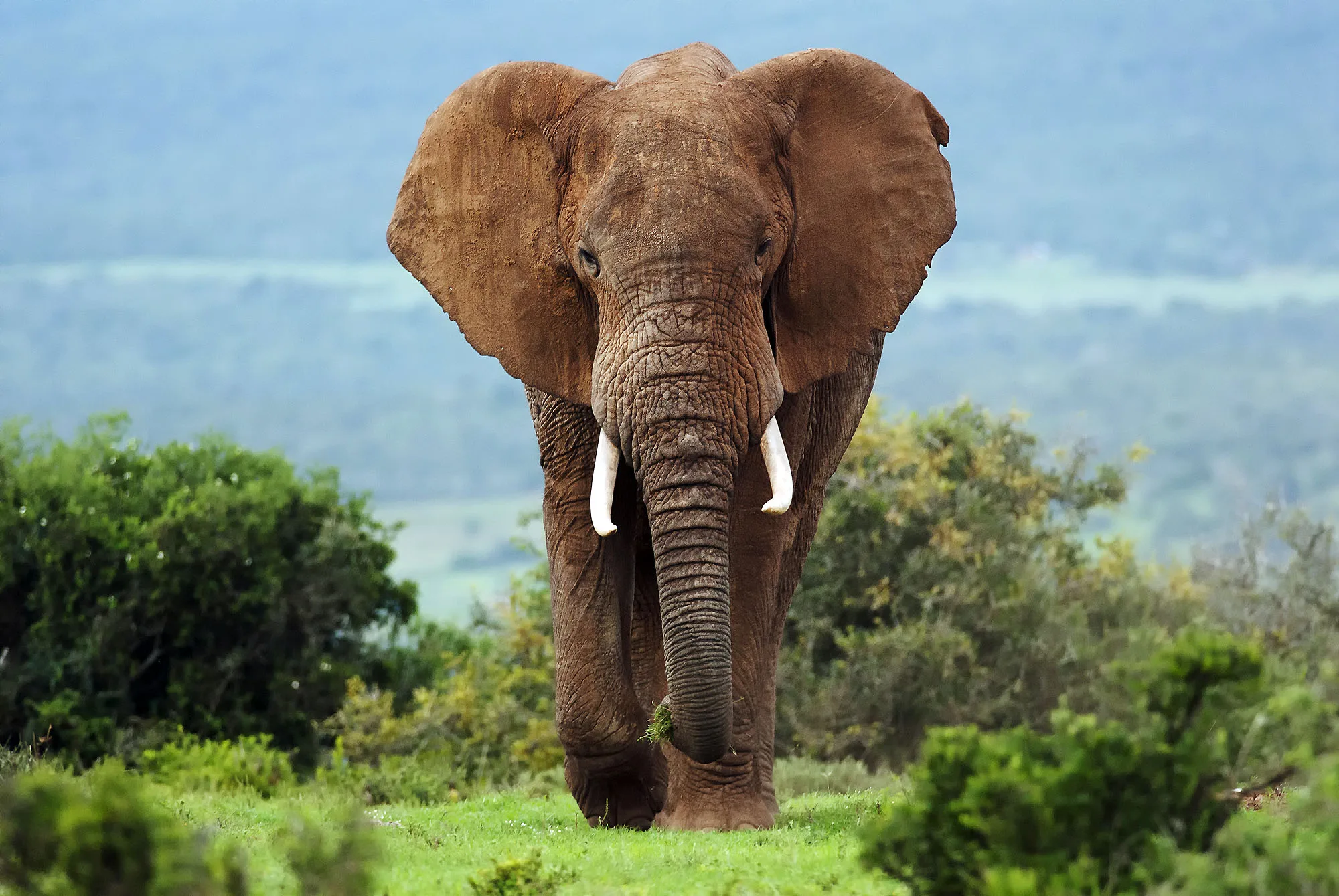
- 1. African Bush Elephant (Loxodonta africana): The undisputed titan of terrestrial animals. Roaming the open savannahs of Sub-Saharan Africa, adult bulls can reach 4 meters in shoulder height and weigh up to 7 tons. Both males and females carry massive ivory tusks that curve gracefully outward, and their colossal ears span over 2 meters in length [2].
- 2. African Forest Elephant (Loxodonta cyclotis): Inhabiting the dense equatorial rainforests of the Congo Basin, this species is genetically and morphologically distinct from the bush elephant. Smaller and more compact (weighing 2 to 4 tons), it has darker skin, rounded ears, and uniquely straight, pinkish-hued tusks that point vertically downward, enabling swift navigation through dense undergrowth without snagging on tangled vines. The IUCN classifies the forest elephant as Critically Endangered due to intense commercial poaching and deforestation [3].
- 3. Asian Elephant (Elephas maximus): Distributed across fragmented tropical forests in India, Sri Lanka, and Southeast Asia. Asian elephants are smaller than their African bush cousins, weighing 3 to 5.5 tons. They feature twin cranial domes, ears with outer margins folded downward, and a single prehensile finger at the trunk tip. Crucially, functional ivory tusks are restricted primarily to male bulls; females carry tiny rudimentary incisors known as ‘tushes’ [2].
| Biological Feature | African Bush Elephant (Loxodonta africana) | African Forest Elephant (Loxodonta cyclotis) | Asian Elephant (Elephas maximus) |
|---|---|---|---|
| Conservation Status | Endangered (IUCN Red List) | Critically Endangered (IUCN) | Endangered (IUCN Red List) |
| Adult Weight | 4,000 to 7,000 kg (Up to 7 tons) | 2,000 to 4,000 kg (Up to 4 tons) | 3,000 to 5,500 kg (Up to 5.5 tons) |
| Ear Morphology | Enormous fan-shaped ears shaped like African continent | Oval, rounded ears with distinct venous heat exchangers | Smaller ears with outer margins folded downward |
| Trunk Tip Anatomy | Two distinct finger-like prehensile opposing lips | Two prehensile grasping lips with fine motor control | Single upper prehensile finger-like projection |
| Tusk Morphology | Present in both males and females; long and curved outward | Present in both sexes; slender, pinkish, and pointing downward | Primarily present in males; females typically have small tushes |
| Head Profile | Smooth, single-domed sloping forehead | Compact, rounded cranial structure | Prominent twin-domed forehead with indented central crease |
Sources: IUCN African and Asian Elephant Specialist Groups; WWF Wildlife Conservation Data.
Social Complexity and Matriarchal Governance
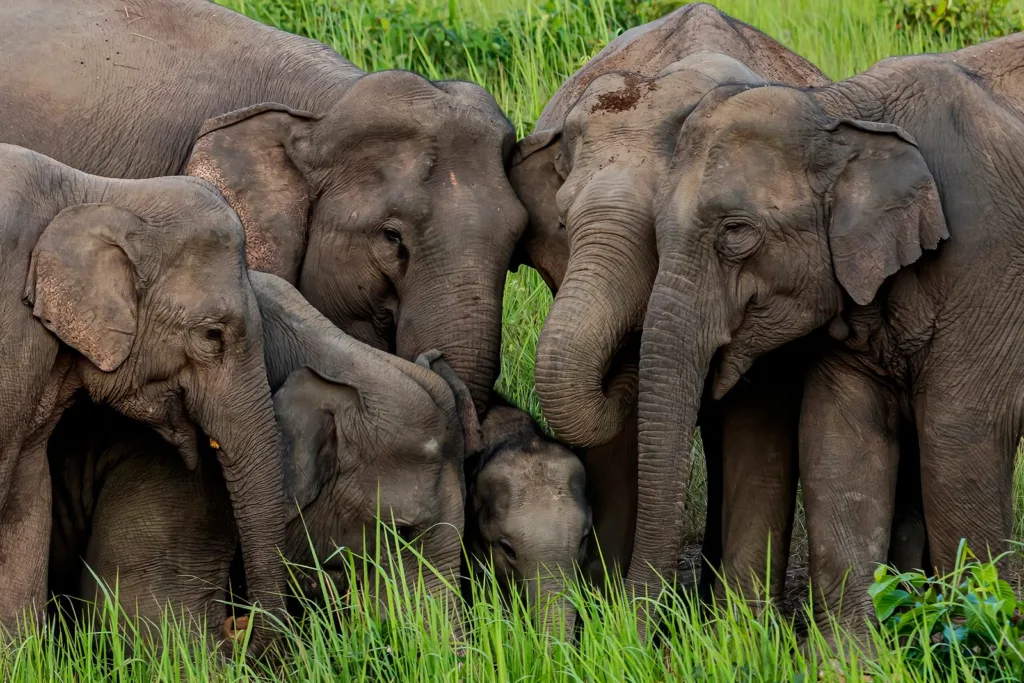
Elephant society represents one of the most sophisticated cooperative social systems in the animal kingdom. Elephant herds are strictly matriarchal, composed of related mothers, daughters, sisters, and immature calves led by the oldest, most experienced female matriarch [2].
The survival of the entire family group hinges upon the cognitive library preserved in the matriarch’s brain. Long-term memory consolidation in large mammals depends upon specialized hippocampal neurogenesis and synaptic plasticity, evolutionary mechanisms closely mirrored in our neuroscience investigation of memory consolidation and cognitive resilience. Because elephants live for over six decades, the matriarch carries institutional memory of rare, catastrophic droughts that occurred decades earlier. When water holes vanish and vegetation withers, she leads the herd across hundreds of kilometers of perilous terrain directly to subterranean springs and perennial rivers [2]. Research demonstrates that herds led by older matriarchs exhibit significantly higher calf survival rates during severe climatic crises.
Calf rearing is a communal cooperative effort known as allomothering. When a mother gives birth after an arduous 22-month gestation, juvenile and adult females throughout the herd assist in shielding the newborn from predators, guiding it through steep riverbanks, and reassuring it through gentle trunk caresses. Adult male bulls, by contrast, leave the herd upon reaching sexual maturity (around 12 to 15 years of age), living solitary lives or forming temporary, loose bachelor coalitions [2].
The Multimodal Sensory Architecture of the Elephant
Seismic Communication: Decoding Infrasound Across Kilometers
In addition to audible trumpets and squeaks produced through the trunk, elephants communicate primarily through infrasonic acoustic rumbles at frequencies ranging from 14 to 20 Hertz—well below the lower threshold of human hearing [4]. These low-frequency acoustic waves suffer remarkably little atmospheric attenuation, enabling airborne calls to travel 4 to 5 kilometers across open plains.
Even more extraordinary is their seismic communication capacity. When an elephant produces an infrasonic rumble in its vocal cords, the acoustic vibrations resonate down through its massive skeletal frame and enter the ground as seismic Rayleigh surface waves [4].
Elephants standing up to 10 kilometers away detect these subterranean vibrations through specialized mechanoreceptive nerve endings called Pacinian corpuscles packed densely within the spongy fibroelastic fat pads of their feet [4]. By freezing in place and pressing their sensitive trunk tip against the soil, they triangulate the exact distance and direction of approaching predators, thunderclouds, or distant reproductive mates [4].
| Feature | African Bush Elephant (Loxodonta africana) | Asian Elephant (Elephas maximus) |
|---|---|---|
| Primary Habitat | Open savannahs, arid grasslands, and river basins across Sub-Saharan Africa | Tropical rainforests, scrublands, and moist deciduous forests across South Asia |
| Body Dimensions | Largest living land mammal; shoulder height up to 3.5 to 4 meters | Moderately smaller; shoulder height typically 2.5 to 3.2 meters |
| Dorsal Spine Contour | Concave, dipped back profile with high shoulder and hip crests | Convex, arched dorsal back creating an elevated dome profile |
| Toenail Distribution | Front feet have 4 nails; rear feet have 3 nails | Front feet have 5 nails; rear feet have 4 nails |
| Thermoregulation | Huge surface area ears dissipate massive heat loads through vasodilation | Smaller ears supplemented by frequent water bathing and mud plastering |
| Matriarchal Leadership | Led by the oldest matriarch with vast geographic knowledge of trans-continental routes | Guided by experienced matriarch through fragmented forest corridors and seasonal riverbeds |
Sources: Sukumar R, Oxford University Press; Current Biology.
Classical Ethnozoological Lexicography: Sangam Literature’s Elephant Taxonomy
In ancient South Asia, particularly within Tamil Sangam literature dating back over two millennia, classical scholars and forest trackers observed elephant ecology with astonishing granularity. Ancient lexicons recorded over sixty specialized descriptive terms, categorizing elephants according to exact age, anatomical traits, and behavioral temperaments [2]:
- Kaliru: The mature, dominant male tusker renowned for martial strength and solitary forest dominance.
- Pidi: The revered female elephant, especially the matriarch who guides the herd and nurtures calves.
- Kalabham / Pothakam: The playful nursing elephant calf under the vigilant protection of the family herd.
- Vezham: The majestic bull elephant characterized by imposing physical proportions and sweeping ivory tusks.
- Madakayam: The powerful bull elephant undergoing seasonal musth, characterized by surging testosterone and temporal gland secretion.
- Kaimma: The evocative anatomical term describing the elephant as ‘the creature possessing a fifth hand’—referencing the prehensile motor dexterity of the trunk.
Urgent Conservation Imperatives: Habitat Corridors and Coexistence
Despite their cultural majesty and keystone ecological role as ‘ecosystem engineers’—who carve forest paths, dig mineral waterholes, and disperse the seeds of over 100 tree species—wild elephants face unprecedented anthropogenic perils [2] [3].
Across Africa, poaching for illegal ivory trade and expanding agricultural settlements have devastated forest and savannah populations, reducing African elephant numbers from several million in the twentieth century to approximately 400,000 today [3]. In Asia, where wild populations are estimated between 40,000 and 50,000 individuals—with India protecting approximately 28,000—the primary crisis is severe habitat fragmentation. As linear infrastructure (highways, railways, hydroelectric dams, and tea plantations) bisects historical migratory corridors, human-elephant conflict inevitably escalates [2] [3].
Securing functional ecological corridors, integrating acoustic early-warning sensors, and supporting local community stewardship—principles aligned with broader ecosystem stewardship explored in our environmental sustainability and habitat guide—are critical to ensuring that Earth’s greatest terrestrial giants continue to walk their ancient migratory paths for centuries to come [2] [3].
Frequently Asked Questions About Elephant Science (FAQ)
How does an elephant's memory work across decades?
Elephants have an exceptionally developed temporal lobe and hippocampus. Matriarchs retain detailed spatial maps of seasonal watering holes, safe migration trails, and individual vocalizations of dozens of family groups across 40 to 50 years, ensuring herd survival during catastrophic droughts.
Why are an elephant's ears so large?
Elephant ears function as highly sophisticated bio-radiators. A vast network of capillary blood vessels lines the thin skin of the ears. When elephants flap their ears in hot climates, warm blood is rapidly cooled by circulating air, lowering systemic core body temperature by several degrees Celsius without sweating.
Can elephants really communicate through the ground using their feet?
Yes. Elephants produce infrasonic rumbles at frequencies below 20 Hertz (inaudible to human ears). These acoustic waves travel through the atmosphere and resonate through the Earth’s crust as seismic surface waves. Specialized mechanoreceptors in elephant footpads and the sensitive tip of the trunk detect these ground vibrations up to 10 kilometers away.
Why are Asian elephant numbers declining rapidly?
The primary threat facing Asian elephants is habitat fragmentation caused by human encroachment, agricultural expansion, linear infrastructure (roads, railway lines, canals), and human-elephant conflict. Protecting biological migration corridors is essential for their long-term survival.
Glossary
Scientific terms used in this article
- Muscular HydrostatSkeletal-Free Muscular Organ
- A biological organ composed entirely of muscle tissue without skeletal support, such as the elephant trunk or human tongue.
- InfrasoundLow-Frequency Acoustic Wave
- Sound frequencies below the human hearing threshold (under 20 Hz) capable of traveling immense distances with minimal dissipation.
- MatriarchyFemale-Led Social Structure
- A social organization where the oldest, most experienced female leads the herd and directs migratory foraging.
- AllomotheringCommunal Calf Rearing
- The collective care, protection, and nurturing of elephant calves by multiple females within the extended family group.
Elephant trunk neuroanatomy and biomechanical versatility
- Journal
- Current Biology
- Study Type
- Lab
- Year
- 2021
DOI10.1016/j.cell.2021.11.022
References
- ↩ Kaufmann R, et al. Elephant trunk neuroanatomy and biomechanical versatility. Current Biology. 2021;31(24):5478-5489
- ↩ Sukumar R. The Living Elephants: Evolutionary Ecology, Behaviour, and Conservation. Oxford University Press. 2003
- ↩ IUCN Red List of Threatened Species. African and Asian Elephant Conservation Status Assessment. Nature Ecology & Evolution. 2021;5:745-758
- ↩ Poole JH, et al. Elephant communication by seismic and airborne infrasound. Journal of the Acoustical Society of America. 2008;124(4):2548

No comments yet. Be the first to join the conversation.