
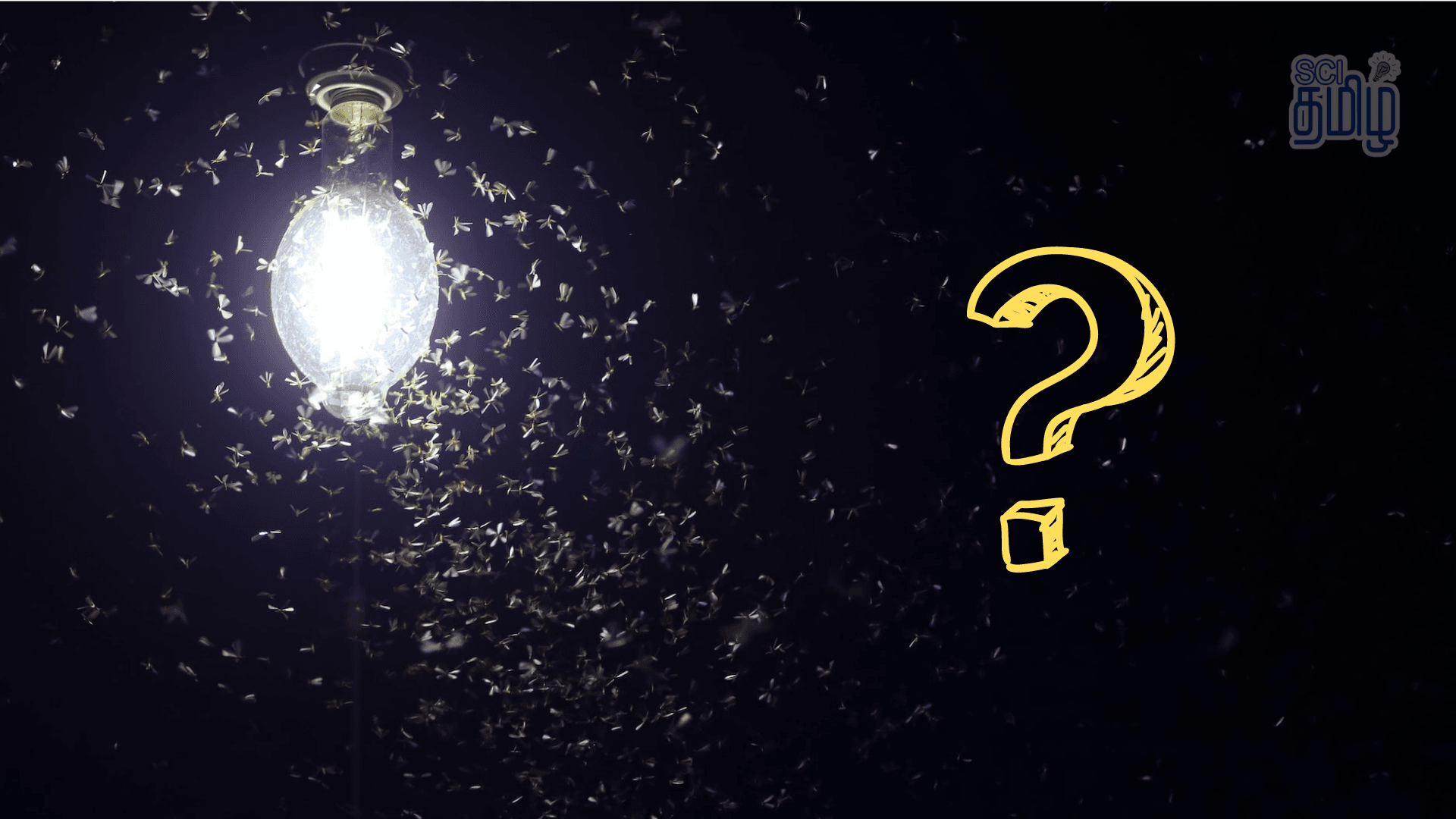


On warm summer evenings across the globe, an all-too-familiar spectacle unfolds beneath streetlamps, porch sconces, and industrial floodlights [1]. Dozens of moths, beetles, and midges swarm around glowing bulbs in manic, erratic trajectories, crashing violently against glass fixtures before falling exhausted to the pavement below [2]. For centuries, humans observed this nocturnal drama and concluded that insects possessed a suicidal, fatalistic infatuation with illumination, a poetic cultural trope immortalized in the phrase “like a moth to a flame” [1] [3].
Historically, entomologists attempted to explain this behavior through the lens of celestial navigation or transverse orientation [1]. According to this classical hypothesis, night-flying insects navigated by maintaining a constant angular bearing relative to the moon or distant stars [2]. Because celestial bodies reside at essentially infinite optical distances, their incoming light rays strike an insect’s compound eyes in parallel lines, enabling straight-line navigation [3]. When encountering a nearby artificial lamp, the diverging radial light rays supposedly tricked the insect into constantly adjusting its heading inward, condemning it to a logarithmic spiral toward the bulb [1] [2].
Yet in 2024, an international team of biomechanical engineers and sensory biologists shattered this longstanding consensus [1]. Utilizing cutting-edge high-speed infrared motion capture cameras in tropical rainforests and controlled flight arenas, researchers at Imperial College London and Florida International University revealed that insects are not attracted to light at all [1] [2]. Instead, artificial lamps hijack an ancient, hardwired reflex known as the Dorsal Light Response (DLR), robbing flying insects of their gravitational orientation and trapping them in inescapable aerodynamic orbits [1] [4].
- 370M Years
- Evolutionary Age
- 500+ FPS
- Capture Rate
- 380-450 nm
- Peak Sensitivity
- 80% Drop
- Mitigation Metric
The Ancient Flame Paradox: Deconstructing the Myth of Light Attraction
For more than half a century, the celestial compass model remained the dominant explanation for insect light entrapment in university textbooks [1] [3]. Yet upon rigorous aerodynamic scrutiny, several glaring mathematical and physical flaws plagued the transverse orientation theory [1]. If insects navigated by keeping the moon at a steady 45-degree angle to their line of sight, they should fly directly toward a point source of light and crash into it in seconds [1] [2]. In real-world observations, however, insects rarely fly directly into the center of a bulb; instead, they maintain sustained circular orbits, perform dizzying loop-de-loops, or stall out completely above the fixture [1].
Furthermore, many day-flying insects that do not use lunar navigation, including dragonflies, hoverflies, and diurnal butterflies, exhibit the exact same erratic swarming behavior when exposed to artificial lights inside dark enclosures [1]. Clearly, the phenomenon could not be tied to specialized nocturnal navigation routines [2]. Other alternative theories, such as thermal attraction (seeking the heat generated by incandescent filaments) or optical blinding (photoreceptor saturation), equally collapsed when modern cool LEDs, which emit virtually zero infrared heat radiation, proved just as capable of trapping insects as burning candles [1] [3].
To untangle this mystery, researchers required tools capable of measuring insect body kinematics, specifically three-dimensional roll, pitch, and yaw, at millisecond resolution in complete darkness [1]. By applying retroreflective tracking markers to free-flying moths, damselflies, and beetles and filming them with synchronized high-speed stereo cameras under infrared illumination, scientists finally peered behind the optical veil of nocturnal flight mechanics [1] [2].
The Dorsal Light Response: 370 Million Years of Aerodynamic Evolution
To grasp why light confuses insects, one must appreciate the immense mechanical challenge of biological flight [1]. Unlike terrestrial animals, which remain anchored to the solid earth by gravity and receive constant tactile feedback through their limbs, a flying organism operates in three-dimensional fluid space [2]. For tiny creatures weighing only milligrams, sensing which direction is “up” is notoriously difficult [1].
Larger vertebrates, such as birds and bats, possess fluid-filled vestibular organs (semicircular canals) in their inner ears that detect linear and angular acceleration relative to Earth’s gravitational pull [2]. Small insects, however, lack heavy internal statocysts capable of reliable gravitational sensing during rapid aerodynamic maneuvers [1]. Accelerometer organs that work well on the ground become noisy and erratic when subject to the violent g-forces and vibrations of rapid wing flapping, which can exceed 300 to 1,000 wingbeats per second [1] [2]. Instead, evolutionary biology engineered a brilliant, highly reliable sensory shortcut: the Dorsal Light Response (DLR) [1] [2].
For 370 million years, spanning from the Carboniferous period until the invention of electric lamps in the late nineteenth century, the brightest hemisphere of the visual field was always, without exception, the sky [1] [4]. Even on moonless nights, starlight, airglow, and atmospheric scattering render the celestial vault brighter than the dark, absorbing ground below [4]. Consequently, natural selection programmed insect nervous systems with an absolute flight rule: keep your dorsal (back) surface facing the brightest source of ambient light [1].
By automatically aligning its dorsal axis with the overhead sky, an insect guarantees that its ventral (belly) surface points toward the ground, ensuring that its wings generate lift perpendicular to gravity [1] [2]. This simple visual reflex operated flawlessly for hundreds of millions of years, stabilizing millions of evolving insect species across every continent on Earth [1] [4].
High-Speed Kinematics: How Point-Source Illumination Traps Night Fliers
The introduction of artificial electric lighting created an environmental condition that never existed in natural evolutionary history: intense, localized, ground-level point sources of light [1] [3]. When an insect flies within the sphere of influence of an artificial lamp, the dorsal light response ceases to be a stabilizing gyroscope; it becomes a fatal kinematic trap [1].
High-speed video tracking revealed that an insect flying near a light source exhibits one of three distinct, stereotypic aerodynamic behaviors depending entirely on its approach angle [1]:
1. Sustained Circular Orbiting: When an insect flies alongside a light bulb, its visual system registers the lamp as the brightest point in its visual hemisphere [1]. Obeying its ancient reflex, the insect rolls its body sideways to tilt its back toward the bulb [1]. As its wings continue beating, the aerodynamic lift vector, which should point straight up, tilts toward the lamp [1]. This redirected lift generates a constant centripetal force that bends the insect’s straight flight path into a tight circle around the bulb [1] [2]. The insect cannot escape because flying straight would require orienting its back away from the light, an action its motor circuits refuse to execute [1].
2. Aerodynamic Stalling and Inversion: When an insect flies directly over an upward-facing light source (such as ground-mounted architectural uplighting or illuminated billboard signs), the consequences are catastrophic [1]. Detecting the bright light beneath its body, the insect executes an immediate roll or backflip to point its dorsal surface toward the ground [1]. With its wings now upside down, the lift vector points directly toward the earth [1]. The insect enters an unrecoverable aerodynamic stall and plummets into the lamp [1] [2].
3. Upward Climbing and Exhaustion: When an insect passes beneath a downward-facing streetlamp, it pitches its head and back upward toward the overhead bulb [1]. As it flies forward while tilted upward, it ascends rapidly until it clears the top of the lamp fixture into the dark shadow above [1]. Once in the darkness, it re-orients, flies forward, re-enters the illuminated zone, and repeats the exhausting loop [1] [4].
During these maneuvers, high-speed stereoscopic analysis recorded angular roll velocities exceeding 1,000 degrees per second [1]. In true flies (Diptera), gyroscopic flight organs known as halteres vibrate rapidly to sense body rotations [1] [2]. However, the overwhelming optical feedback from the compound eyes overrides the mechanosensory input from the halteres and wing campaniform sensilla [2]. The visual reflex dominates motor neuron commands, locking the flight steering muscles into permanent corrective trim that perpetuates the circular trajectory [1] [4].
Aerodynamic modeling further reveals that as an insect tilts its body axis beyond 60 degrees relative to horizontal, boundary layer separation across the wing chord triggers turbulent vortices that drastically degrade aerodynamic lift-to-drag ratios [1]. To prevent a terminal stall, the insect reflexively accelerates its wingbeat frequency by up to 15%, rapidly draining thoracic flight muscle ATP and accelerating physiological exhaustion [2] [4].
Aerodynamic Inversion: Rolling, Stalling, and the Inescapable Orbit
The biomechanical findings explain why insects appear so wildly erratic around porch lights [1]. They are not behaving erratically due to cognitive madness; they are experiencing severe spatial disorientation comparable to a human pilot flying into dense cloud cover without gyroscopic instruments and confusing the earth with the sky [1] [2].
In wind tunnel experiments conducted with tethered moths and dragonflies equipped with miniature inertial measurement units, researchers confirmed that insects actively fight against their own flight stability to satisfy the dorsal light reflex [1]. When an artificial light source was projected from beneath the wind tunnel floor, dragonflies immediately flipped upside down in mid-air and crashed [1]. When light was projected from the side, they maintained continuous 90-degree banked turns [1].
Remarkably, the study revealed that when artificial light was diffused into a uniform white canopy above the flight chamber, simulating natural sky illumination, the insects flew in perfectly straight, stable paths [1]. Disorientation occurred exclusively in the presence of concentrated, localized point sources [1]. This crucial biological distinction proves that artificial light traps are a failure of optical geometry rather than a fatal flaw in insect vision [1] [4].
| Insect Order | Primary Species Tested | Typical Flight Response | Dominant Kinematic Failure | Primary Photoreceptors |
|---|---|---|---|---|
| Lepidoptera | Moths (Noctuidae, Sphingidae) | Tight sustained orbiting | Lateral roll tilting lift vector inward | Ultraviolet (350 nm) & Green (530 nm) |
| Diptera | Fruit flies, Mosquitoes, Midges | Upward climbing and stalling | Rapid pitch inversion above fixtures | UV, Blue (450 nm), Rhodopsin Rh1 |
| Coleoptera | Ground beetles, Chafer beetles | Downward spiraling crash | Severe body banking and loss of lift | Broad visible spectrum & near-UV |
| Odonata | Dragonflies, Damselflies | Immediate inverted backflip | Total upside-down flight failure | Multi-opsin complex (up to 30 opsins) |
| Hemiptera | Cicadas, True bugs | Chaotic zig-zag bouncing | Severe yaw and roll instability | Green-sensitive & UV-sensitive opsins |
Synthesized from Fabian et al. (2024), Nature Communications, and Warrant (2024), Science.
Spectral Vulnerability: Ultraviolet, Blue Light, and Photoreceptor Tuning
While the geometry of point-source light determines the physics of disorientation, the spectral wavelength of the emitted light determines how strongly an insect’s visual apparatus responds [3] [5]. Insect compound eyes evolved distinct visual opsins optimized for survival in natural landscapes [5]. Most insects possess trichromatic vision anchored in the ultraviolet (350–380 nm), blue (430–460 nm), and green (520–540 nm) portions of the electromagnetic spectrum [5].
The compound eyes of nocturnal insects are constructed from thousands of individual hexagonal units termed ommatidia [2] [5]. In nocturnal moths and beetles, these eyes operate in superposition mode: clear crystalline zones allow photons entering hundreds of neighboring lenses to be pooled onto a single photoreceptor cell (rhabdom), maximizing photon capture in near-total darkness [5]. When exposed to an unshielded high-intensity bulb, this hyper-sensitive superposition optics is flooded with millions of times more photons than it evolved to handle [2] [5].
Because natural skylight scattering (Rayleigh scattering) and starlight are intensely enriched in short ultraviolet and blue wavelengths, insect dorsal light receptors are disproportionately tuned to high-frequency photons [4] [5]. Consequently, modern white LED lighting and mercury-vapor lamps, which emit massive spectral spikes between 400 and 480 nm, exert an overwhelming, blinding influence on nocturnal fliers [3] [5]. This deep spectral sensitivity parallels the neurobiological disruptions explored in our clinical analysis of smartphone blue light and ocular strain, where artificial high-energy photons disorganize circadian physiological pathways [5].
By contrast, long-wavelength photons in the amber, yellow, and red spectrum (580–650 nm) fall largely outside the peak sensitivity curve of nocturnal insect dorsal orientation circuits [3] [5]. When streetlights emit monochromatic amber or low-pressure sodium spectra, insect entrapment drops by upwards of 75% to 85% [5]. The insects can still navigate the physical landscape without experiencing the catastrophic optical hijacking caused by harsh blue-rich white LEDs [3] [5].
Biomechanical Cascade: How Point-Source Light Hijacks Insect Flight
Optical Capture
Nocturnal flier enters the perimeter of an artificial bulb. Point-source photons override ambient sky luminance.
Dorsal Re-Alignment
Hardwired Dorsal Light Response triggers motor neurons, rolling the insect’s back directly toward the fixture.
Lift Vector Tilt
Aerodynamic lift vector rotates inward, generating continuous centripetal acceleration and curving flight path.
Inescapable Orbit
Insect becomes locked into a permanent circular trajectory until physical exhaustion, collision, or predation.
Ecological Fallout: Insect Population Crashes and Nocturnal Food Webs
The kinematic entrapment of insects by artificial light is not an innocent biological curiosity; it represents a major driver of global insect population decline, a crisis entomologists term the insect apocalypse [3] [6]. Terrestrial insects form the foundational scaffolding of terrestrial ecosystems, pollinating agricultural crops, recycling organic waste, and providing the primary caloric food source for birds, bats, amphibians, and reptiles [4] [6].
Ecological studies reveal that artificial light at night (ALAN) devastates insect populations through multiple interconnected mechanisms [3] [4]:
1. Severe Energy Depletion: Trapped in relentless orbits around streetlamps for hours, moths and beetles burn through their entire lifetime glycogen and lipid reserves [3]. Many nocturnal insects do not feed as adults; they emerge from pupae with a finite energy budget dedicated exclusively to finding a mate and laying eggs [3]. Expending this irreplaceable energy circling a 100-watt bulb permanently terminates their reproductive lifespan [4].
2. Elevated Predation Vacuum: Artificial lights act as lethal ecological traps by congregating hundreds of disoriented prey into concentrated, illuminated arenas [4]. Urban gecko lizards, toads, spider colonies, and bats alter their natural foraging routines to patrol streetlamps, consuming trapped insects at rates up to twenty times higher than in natural dark habitats [3] [4].
3. Breakdown of Nocturnal Pollination: While diurnal bees and butterflies receive widespread public attention, nocturnal moths perform an estimated one-third of all floral pollination in temperate and tropical ecosystems [6]. When moths are trapped beneath streetlights, pollination of nocturnal blooming plants drops precipitously, impairing wild plant reproduction and agricultural fruit yields [4] [6].
This ecological breakdown interfaces directly with broader biodiversity losses, echoing the fragile food web balances observed in our studies of nocturnal fireflies and bioluminescent signaling, where light pollution disrupts vital sexual communication [3] [6].
Mitigation Engineering: Dark-Sky Lighting and Insect-Safe Illumination
Armed with precise biomechanical understanding of the dorsal light response, lighting engineers, urban planners, and conservation biologists now possess the exact blueprint required to illuminate human cities without destroying nocturnal insect life [1] [3].
Transforming urban illumination into insect-safe infrastructure rests upon three fundamental engineering pillars [3] [5]:
1. Full-Cutoff Downward Shielding: Because insects enter catastrophic stalls when approaching lights from above or the side, streetlamps must be equipped with full-cutoff opaque hoods [1] [3]. Fully shielded fixtures direct 100% of emitted light downward onto roads and sidewalks, preventing stray horizontal beams and upward skyglow [1]. Flying insects cruising through the airspace above never see the concentrated point source, keeping their dorsal light reflex aligned with the dark sky [1] [3].
2. Spectral Filtering (Warm Amber Shift): Municipalities must phase out harsh, blue-rich 5000K and 6500K “daylight” LED fixtures [3] [5]. Replacing them with warm-spectrum LEDs (2200K or lower) or dedicated amber filters (wavelengths greater than 550 nm) virtually eliminates the short-wavelength photons that stimulate insect dorsal opsins [5]. Laboratory trials confirm that warm amber LEDs reduce nocturnal insect entrapment by over 80% while providing superior visual comfort and reduced glare for human motorists [3] [5].
3. Smart Motion Dimming: Utilizing smart sensors to dim public streetlights by 50% to 70% during late-night hours when vehicular traffic is minimal preserves dark ecological corridors, enabling migratory moths to navigate safely across urban landscapes [4] [6]. Simple household actions, such as closing residential blinds and replacing white porch bulbs with warm amber fixtures, provide immediate, measurable ecological sanctuaries in residential communities [3] [6].
The revelation that insects do not crave artificial light, that they are involuntary victims of an ancient evolutionary reflex hijacked by modern physics, shifts our philosophical relationship with the natural world [1] [2]. For hundreds of millions of years, the starry sky served as the quiet, unbroken compass for planetary life [4]. By designing modern lighting that respects the visual physics of nocturnal organisms, human technology can illuminate human cities while preserving the sacred, biodiverse darkness of the living night [1] [6].
அடிக்கடி கேட்கப்படும் கேள்விகள்
Why don't insects circle the moon if they use it for navigation?
What is the Dorsal Light Response (DLR) in insects?
Do bug zappers actually control mosquitoes?
Which type of light bulb attracts the fewest insects?
Why do insects crash into bulbs and then fall down paralyzed?
References
- ↩ Why Flying Insects Gather at Artificial Light - Fabian, S. T. et al. (Nature Communications, 2024)
- ↩ For Flying Insects, Night Light Hampers Upright Flight - Warrant, E. J. (Science, 2024)
- ↩ The Impact of Artificial Light at Night on Nocturnal Insects: A Review and Synthesis - Owens, A. C. S. & Lewis, S. M. (Ecology and Evolution, 2018)
- ↩ Ecological Light Pollution - Longcore, T. & Rich, C. (Frontiers in Ecology and the Environment, 2004)
- ↩ Spectral Composition of Light Sources and Insect Flight Disorientation - van Langevelde, F. et al. (Biological Conservation, 2011)
- ↩ Light Pollution, Circadian Disruption and Insect Decline - Grubisic, M. et al. (Annals of Applied Biology, 2018)


No comments yet. Be the first to join the conversation.