



Key Findings
- The landmark DiRECT clinical trial proved that type 2 diabetes is not necessarily an irreversible lifetime sentence, achieving remission in 46 percent of participants.
- Targeted weight loss strips ectopic triacylglycerol from hepatic and pancreatic beta cells, restoring endogenous first-phase insulin secretion.
- Consuming fiber and protein ten minutes prior to carbohydrates significantly dampens postprandial glucose excursions and insulin spikes.
- Prioritizing carbohydrate quality through low glycemic index whole foods outperforms strict carbohydrate elimination in long-term metabolic compliance.
For more than half a century, conventional medical doctrine treated type 2 diabetes as an incurable, progressive condition. Patients diagnosed with elevated fasting glucose were routinely advised that their pancreatic beta cells were permanently deteriorating, necessitating an escalating regimen of oral hypoglycemic agents, followed inevitably by daily insulin injections. This fatalistic perspective cast diabetes as an inescapable lifetime sentence that patients could manage, but never truly overcome [1].
However, an extraordinary revolution in metabolic medicine has overturned this dogmatic consensus. Groundbreaking pathophysiology research and rigorous randomized controlled trials, most notably the landmark DiRECT study published in The Lancet, demonstrate that type 2 diabetes is fundamentally a reversible metabolic disorder driven by ectopic fat accumulation [1] [4]. With calibrated nutritional interventions, structural weight management, and nutrient sequencing, patients can reactivate dormant pancreatic cells and achieve complete, drug-free diabetes remission [2].
Beyond Lifetime Medication: The Modern Paradigm of Type 2 Diabetes Remission
In 2021, an international consensus panel including the American Diabetes Association, the European Association for the Study of Diabetes, and Diabetes UK established an official clinical definition for diabetes remission. An individual is in remission when their glycated hemoglobin (HbA1c) remains below 6.5 percent (48 mmol/mol) for a minimum of three months in the total absence of any glucose-lowering medications [3].
This definition marked a monumental paradigm shift. Remission does not mean an individual is permanently cured and free to return to habits that provoked the disease; genetic susceptibility remains. Instead, it signifies that the underlying pathophysiological processes, severe hepatic insulin resistance and beta-cell dedifferentiation, have been reversed, restoring physiological normoglycemia and halting the progression of diabetic microvascular and macrovascular complications [1] [3].
The Twin Cycle Hypothesis: Ectopic Fat in Liver and Pancreatic Tissue
To understand how dietary modification reverses diabetes, one must look at the revolutionary “Twin Cycle Hypothesis” formulated by Professor Roy Taylor at Newcastle University. For decades, researchers assumed that high blood glucose stemmed simply from the body producing too little insulin. Taylor’s magnetic resonance spectroscopy investigations revealed a radically different reality [4].
Every individual possesses a personal fat threshold, the maximum capacity of their subcutaneous adipose tissue to safely store triglycerides. Once a person consumes calories beyond this genetic threshold, excess fat overflows from safe subcutaneous depots into visceral organs where it does not belong, establishing two vicious pathological cycles [4]:
In the first cycle, ectopic triacylglycerol accumulates in liver parenchyma (non-alcoholic fatty liver disease). Saturated with fat, hepatocytes become unresponsive to insulin, failing to suppress nocturnal hepatic gluconeogenesis. The liver continuously pumps unwanted glucose into the bloodstream while packaging excess fat into very-low-density lipoproteins (VLDL). In the second cycle, circulating VLDL deposits fat directly into the pancreas. Over time, lipid accumulation chokes the delicate islets of Langerhans, causing pancreatic beta cells to enter a dormant, dedifferentiated state where first-phase insulin secretion is extinguished. By clearing just one single gram of ectopic fat from the pancreas, beta cells wake up and resume insulin production [1] [4].
The Landmark DiRECT Clinical Trial: Proof That Remission Is Achievable
The theoretical mechanics of the Twin Cycle Hypothesis were put to the ultimate clinical test in the Diabetes Remission Clinical Trial (DiRECT), funded by Diabetes UK and published in The Lancet. The trial enrolled 298 adults diagnosed with type 2 diabetes within the previous six years across general practices in the United Kingdom [1].
Participants in the intervention group ceased all antidiabetic and antihypertensive medications on day one and underwent a structured weight-loss program, followed by gradual whole-food reintroduction and behavioral maintenance. The outcomes astonished the medical establishment: forty-six percent of participants achieved complete diabetes remission at twelve months without taking any medications [1].
Remission rates correlated directly with the magnitude of weight loss achieved. Among participants who lost fifteen kilograms (thirty-three pounds) or more, an astounding eighty-six percent entered full clinical remission. Advanced MRI imaging confirmed that weight loss selectively melted ectopic triglycerides from the liver and pancreas, permanently restoring beta-cell function and insulin secretion in patients whose disease had lasted up to six years [1] [4].
Glycemic Index and Glycemic Load: Carbohydrate Quality Over Blind Restriction
In popular culture, dietary advice for diabetes often devolves into aggressive, unsustainable carbophobia. However, long-term metabolic health does not require eliminating carbohydrates entirely; it demands understanding carbohydrate physiology. The biological metric governing blood sugar impact is the Glycemic Index (GI), which measures how rapidly fifty grams of available carbohydrate in a food elevates blood glucose relative to pure glucose [3].
High-GI foods, such as white rice, refined wheat flour (maida), instant noodles, and sugary breakfast cereals, break down within minutes in the upper duodenum, provoking steep glycemic spikes and overwhelming hepatic clearance. Conversely, low-GI foods (GI under 55), including intact whole grains, legumes, lentils, chickpeas, and non-starchy vegetables, possess complex amylose starch structures and fiber matrices that resist rapid enzymatic hydrolysis [2] [3].
Furthermore, Glycemic Load (GL) factors in both carbohydrate quality and actual portion volume. Choosing foods with low glycemic load promotes gradual glucose entry into systemic circulation, giving basal insulin secretion ample time to clear fuel into peripheral muscle tissues without demanding exhausting compensatory insulin spikes [3].
Food Sequencing: The Power of Eating Vegetables and Protein Before Carbohydrates
One of the most powerful, evidence-based behavioral hacks discovered in modern nutritional endocrinology is nutrient sequencing. Clinical studies published in Diabetes Care reveal that the exact order in which you consume components of the identical meal exerts a staggering impact on postprandial glucose and insulin trajectories [5].
In landmark trials conducted by Weill Cornell Medical College, participants with type 2 diabetes consumed a meal consisting of chicken breast, salad, and ciabatta bread on separate days in different orders. When participants consumed the fiber-rich vegetables and protein ten minutes before eating the carbohydrates, their post-meal glucose spikes were reduced by over fifty percent, and insulin surges decreased by nearly forty percent compared to eating carbohydrates first [5].
The physiological mechanisms behind this phenomenon are twofold: first, soluble fibers coat the intestinal brush border, creating a physical viscous barrier that retards glucose diffusion. Second, protein and lipid transit stimulates the secretion of glucagon-like peptide-1 (GLP-1) and peptide YY from neuroendocrine L-cells in the ileum, delaying gastric emptying and priming the pancreas for measured insulin release [5].
Dietary Approaches Compared: Low-GI Whole Foods Versus Refined Carbohydrates
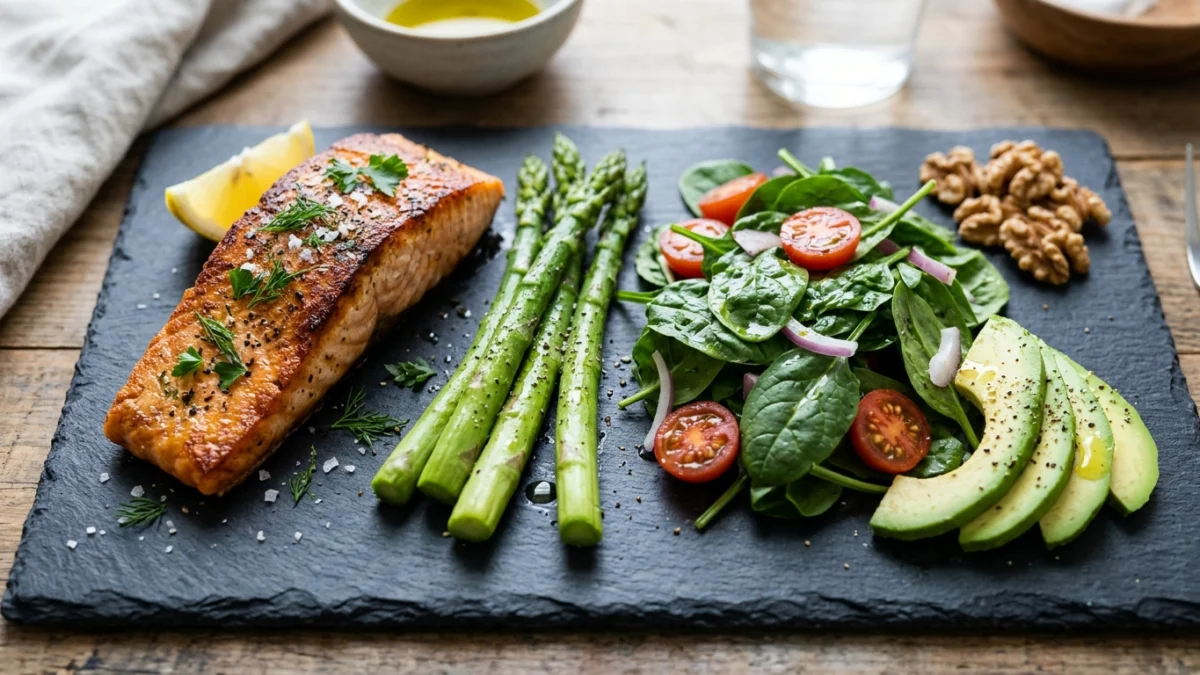
Comparing traditional refined convenience diets against clinical, low-glycemic, Mediterranean-style nutrition illustrates the precise metabolic advantages that foster diabetes remission:
Dietary Strategies in Diabetes Management
Metabolically Protective (Low-GI Whole Foods)
Primary Carbohydrates: Legumes, steel-cut oats, millets, green vegetables, and seeds with intact fibrous bran.
Gastric Transit: Slow gastric emptying rate; smooth and blunted postprandial glucose curves.
Insulin Sensitivity: Enhances peripheral GLUT-4 translocation in skeletal muscle; clears ectopic liver fat.
Clinical Target: HbA1c under 6.5% achieved without pharmacotherapy; sustainable diabetes remission.
Metabolically Damaging (Refined & Ultra-Processed)
Primary Carbohydrates: White flour (maida), polished white rice, sweetened beverages, and packaged snack crisps.
Gastric Transit: Rapid enzymatic hydrolysis in upper gut; severe postprandial glycemic excursions.
Insulin Sensitivity: Fuels hyperinsulinemia, ectopic pancreatic lipid deposition, and beta-cell exhaustion.
Clinical Target: Progressive escalation of medications, increasing visceral adiposity, and organ fatigue.
Dietary Fiber, Microbiome Ecology, and Insulin Sensitivity
Dietary fiber is not merely inert roughage that facilitates bowel motility; it serves as essential metabolic fuel for trillions of symbiotic microbes inhabiting the human large intestine. When dietary fiber intake reaches twenty-five to thirty-five grams daily, colonic anaerobes ferment these polysaccharides into short-chain fatty acids, predominantly acetate, propionate, and butyrate [3].
These short-chain fatty acids exert profound metabolic benefits. Butyrate preserves intestinal tight junction proteins, preventing endotoxemia (the leakage of bacterial lipopolysaccharides into portal circulation), which is a primary driver of subclinical hepatic inflammation and insulin resistance. Propionate travels directly to the liver, where it downregulates gluconeogenic enzymes and stimulates hepatic insulin sensitivity. Consequently, a high-fiber diet directly lowers systemic inflammation while improving whole-body glucose disposal [2] [3].
In addition to standard soluble and insoluble fibers, resistant starches, found in cooled boiled potatoes, overnight oats, and cooled legumes, play a uniquely therapeutic role. Resistant starches resist digestion in the upper gastrointestinal tract, arriving intact in the cecum and colon where they undergo slow bacterial fermentation. Clinical trials show that regular consumption of resistant starch enhances insulin sensitivity by up to thirty-three percent, lowers fasting glucose, and suppresses inflammatory cytokines in individuals with impaired glucose tolerance [3].
Practical Meal Planning and Sustainable Metabolic Maintenance
Translating the science of diabetes reversal into everyday life requires practical, culturally compatible kitchen habits that fit naturally into family routines [2].
Adopt the “Plate Method” for every main meal: dedicate fifty percent of your plate to non-starchy leafy greens, cruciferous vegetables, or cucumbers; twenty-five percent to lean protein sources like eggs, lentils, tofu, paneer, or fish; and the remaining twenty-five percent to complex whole grains like brown rice or millet. Always eat the vegetable and protein portions first, reserving starches for the final third of your dining time [5].
Furthermore, align meal timing with your body’s circadian rhythms, an emerging field known as chrononutrition. Human insulin sensitivity naturally peaks during morning hours and steadily declines as evening approaches. Shifting caloric intake toward breakfast and lunch while keeping dinners light and early significantly improves overnight glycemic stability. Avoid late-night eating, which impairs melatonin signaling and provokes morning hyperglycemia [2] [3].
Complement meal sequencing with ten to fifteen minutes of light walking immediately following dinner. Contracted leg muscles take up circulating glucose directly via insulin-independent pathways, clearing postprandial surges before they stress pancreatic beta cells. By aligning modern nutritional science with deliberate lifestyle habits, type 2 diabetes transforms from an intimidating diagnosis into a reversible condition, empowering you to reclaim vibrant, medication-free metabolic health [1] [2].
Frequently Asked Questions (FAQ)
What is type 2 diabetes remission?
Type 2 diabetes remission is clinically defined as maintaining a glycated hemoglobin (HbA1c) level below 6.5 percent (48 mmol/mol) for at least three consecutive months without using any diabetes-lowering pharmacotherapy.
What is the Twin Cycle Hypothesis in diabetes?
Proposed by Professor Roy Taylor, the Twin Cycle Hypothesis explains that chronic caloric excess causes fat overflow into the liver, driving hepatic insulin resistance. Excess fat then exports to the pancreas, choking beta cells and halting insulin secretion. Losing ectopic organ fat reverses both cycles.
What is food sequencing and how does it lower blood sugar?
Food sequencing involves eating fiber-rich vegetables and protein before starches or carbohydrates during a meal. The fiber forms a viscous barrier in the small intestine, and protein stimulates incretin hormones (GLP-1), slowing gastric emptying and reducing post-meal glucose spikes by up to seventy percent.
Can people with type 2 diabetes eat fruit?
Yes. Patients can safely consume whole fruits with low glycemic index and high fiber content, such as guava, green apples, berries, and pomegranates. However, fruit juices and dried fruits should be avoided due to rapid fructose absorption without intact cellular fiber.
Are artificial sweeteners healthy for diabetes management?
While non-nutritive sweeteners do not directly elevate acute blood glucose, emerging clinical evidence suggests that frequent consumption can disrupt gut microbiome composition, potentially exacerbating peripheral insulin resistance over time. Whole, unsweetened foods are superior.
References and Research Citations
Primary care-led weight management for remission of type 2 diabetes (DiRECT)
- Journal
- The Lancet
- Study Type
- Journal Article
- Year
- 2018
DOI10.1016/s0140-6736(17)33102-1
Reduction in the Incidence of Type 2 Diabetes with Lifestyle Intervention
- Journal
- New England Journal of Medicine
- Study Type
- Journal Article
- Year
- 2002
DOI10.1056/nejmoa012512
Dietary Approaches for the Prevention and Management of Type 2 Diabetes: An Evidence-Based Clinical Review
- Journal
- The Lancet Diabetes & Endocrinology
- Study Type
- Review
- Year
- 2023
DOI10.1016/S2213-8587(23)00120-X
Type 2 diabetes: etiology and reversibility
- Journal
- Diabetes Care
- Study Type
- Review
- Year
- 2013
DOI10.2337/db12-1805
Food order has a significant impact on postprandial glucose and insulin levels
- Journal
- Diabetes Care
- Study Type
- Journal Article
- Year
- 2015
DOI10.2337/dc15-0429
References
- ↩ Primary care-led weight management for remission of type 2 diabetes (DiRECT)
- ↩ Reduction in the Incidence of Type 2 Diabetes with Lifestyle Intervention
- ↩ Dietary Approaches for the Prevention and Management of Type 2 Diabetes: An Evidence-Based Clinical Review
- ↩ Type 2 diabetes: etiology and reversibility
- ↩ Food order has a significant impact on postprandial glucose and insulin levels

No comments yet. Be the first to join the conversation.