


For over a century, the four-stroke internal combustion engine (ICE) fueled by liquid petroleum reigned supreme as the unchallenged heart of personal transportation. From the early Model T to modern turbocharged multi-valve engines, refining crude petroleum into mechanical kinetic energy shaped global geopolitics, urban highway design, and industrial economies. Today, that century-old paradigm is facing its most profound technological disruption as Battery Electric Vehicles (BEVs) surge into the mainstream automotive market [1, 2].
Driven by rising fossil fuel costs, stringent urban emission regulations, and unprecedented advancements in electrochemistry, consumers are increasingly asking a fundamental question: Is an electric vehicle truly superior to a traditional petrol car? While automotive enthusiasts praise the instantaneous torque and whispering silence of electric motors, prospective buyers remain hesitant regarding purchase premiums, real-world driving range, battery replacement costs, and public charging accessibility [1, 2].
Mechanical engineers, thermodynamicists, and environmental systems analysts emphasize that evaluating electric vehicles against petrol cars requires looking beyond showroom marketing to examine fundamental physics, electrochemical battery lifecycles, and whole-lifecycle emissions accounting [1, 3]. Landmark research published in Nature Sustainability and Transportation Research Part D demonstrates that electric vehicles convert over eighty-five percent of electrical grid energy directly into wheel rotation, compared to a meager twenty percent for petrol combustion engines [1, 2]. Here is the definitive scientific and economic comparison of electric vehicles and petrol cars, analyzing powertrain physics, lithium cell chemistry, charging dynamics, lifetime emissions, and total cost of ownership.
- 85% – 90%
- EV Energy Efficiency
- 20% – 25%
- Petrol Thermal Efficiency
- 3,000+
- LFP Battery Cycles
- -65%
- Lifecycle CO2 Reduction
The Automotive Energy Transition: Internal Combustion vs Electrochemical Traction
To understand why the electric vehicle represents an evolutionary leap rather than an incremental upgrade, one must contrast the mechanical complexity of an internal combustion engine with the simplicity of an electric drivetrain. A contemporary petrol car is an astonishingly intricate assembly of more than 2,000 moving parts: reciprocating pistons, connecting rods, camshafts, intake and exhaust valves, timing chains, fuel injectors operating at hundreds of bar, and complex multi-gear transmissions [1, 2].
In stark contrast, a pure electric vehicle eliminates almost all of this mechanical friction. The entire propulsion system consists of fewer than twenty moving parts: an onboard traction battery pack, an electronic power inverter, a single-speed reduction transmission, and a permanent-magnet or induction electric motor. There are no engine spark plugs, no engine oil filters, no drive belts, no catalytic converters, and no complex exhaust systems [1, 2].
This fundamental architectural reduction transforms vehicle packaging. Without a massive cast-iron engine block occupying the front compartment, electric vehicles utilize ‘skateboard’ chassis platforms where heavy battery packs sit flat between the axles beneath the passenger floor. This design drops the vehicle’s center of gravity dramatically, enhancing rollover resistance, cornering stability, and cabin passenger volume [1, 3]. Understanding how distributed energy systems and circular resource flows transform daily living, as detailed in our comprehensive urban home waste management and sustainability guide, highlights how localized electrification reshapes consumer resource dependency.
Aerodynamic efficiency and rolling resistance represent another critical engineering domain where electric vehicles differ from internal combustion platforms. Because electric drivetrains operate with such high mechanical efficiency, external aerodynamic drag accounts for over fifty percent of energy expenditure at highway speeds. Automotive designers optimize electric vehicle profiles using flush motorized door handles, completely enclosed flat aerodynamic underbody panels, and active grille shutters that open only when the battery cooling radiator requires airflow. Concurrently, tire manufacturers engineer specialized low-rolling-resistance tires utilizing advanced synthetic silica compounds and reinforced sidewalls, minimizing rolling hysteresis to maximize range while handling the heavier curb weights of battery packs [1, 2].
Energy Efficiency Physics: Thermodynamic Losses vs Electric Motor Conversion
The most compelling scientific argument in favor of electric mobility is governed by the laws of thermodynamics [1, 3].
Thermodynamic analysis reveals a stark contrast between chemical combustion and electro-magnetic induction:
- Petrol Engine Losses: Liquid gasoline contains an immense chemical energy density (approximately 34.2 MJ per liter). However, when a spark plug ignites a fuel-air mixture inside a metal cylinder, fundamental Carnot cycle thermodynamics dictate that the vast majority of this energy cannot be converted into work. Approximately 60% of fuel energy is lost as radiant thermal heat through the cooling radiator and glowing exhaust gases. Another 15% to 20% is consumed by engine friction, pumping resistance, and transmission driveline drag. Ultimately, only 20% to 25% of the fuel energy reaches the wheels to propel the vehicle forward [1, 3].
- Electric Motor Conversion: Electric traction motors do not rely on combustion or thermal expansion. Instead, they exploit Lorentz force interactions: magnetic fields generated by stator electromagnetic windings exert physical rotational torque upon the motor’s rotor. Electric motors routinely achieve electrical-to-mechanical conversion efficiencies between 90% and 95% [1, 2].
- Regenerative Energy Recapture: When a petrol car brakes, 100% of its kinetic energy is permanently dissipated into the atmosphere as friction heat across the brake rotors. An electric vehicle reverses its motor into a generator during deceleration, recapturing 70% to 80% of momentum energy and converting it back into chemical potential energy inside the battery pack [1, 3].
Consequently, in heavy stop-and-go city traffic where petrol cars suffer their worst fuel efficiency due to constant idling and friction braking, electric vehicles achieve their peak operating efficiency [1, 2].
Battery Chemistry and Longevity: LFP vs NMC Degradation Science
The single greatest source of consumer apprehension surrounding electric vehicles centers on traction battery durability: Will the battery require multi-thousand-dollar replacement after five years? The answer lies in modern lithium battery electrochemistry [2, 3].
Automotive manufacturers utilize two primary commercial lithium-ion chemistries:
- Lithium Nickel Manganese Cobalt Oxide (NMC): NMC cells feature high volumetric and gravimetric energy density (200-250 Wh/kg), making them ideal for long-range performance vehicles. They deliver 1,200 to 1,500 full charge-discharge cycles before degrading to 80% capacity, translating to roughly 300,000 to 400,000 kilometers of driving [2].
- Lithium Iron Phosphate (LFP): Increasingly dominating affordable and mass-market electric vehicles, LFP cells utilize olivine crystal structures that are chemically and thermally stable up to 500°C, virtually eliminating thermal runaway risks. Furthermore, LFP chemistry tolerates daily 100% charging and delivers 3,000 to 4,000+ full cycles. In real-world driving, an LFP battery pack easily surpasses 500,000 kilometers, outlasting the mechanical lifespan of the vehicle’s chassis [2, 3].
Battery degradation is not a sudden cliff where the vehicle stops functioning; rather, it is a gradual, predictable loss of maximum driving range (typically 1% to 2% annually). Liquid thermal management systems actively circulate coolant around cells, preventing high-temperature degradation during rapid highway travel and DC fast charging [2, 3]. Exploring advanced lithium electrochemical management, as documented in our analysis of smartphone technology and lithium battery systems, illustrates how active thermal regulation and charge-state limits prevent dendritic crystallization and preserve long-term electrode health.
Looking toward next-generation battery breakthroughs, electrochemical laboratories are advancing all-solid-state batteries (SSBs) and sodium-ion (Na-ion) chemistry. Solid-state architectures replace volatile flammable liquid electrolytes with solid ceramic or polymer ion conductors, allowing pure lithium metal anodes that push gravimetric energy density beyond 400 Wh/kg while permitting ultra-fast 10-minute recharges with zero fire hazard. Concurrently, abundant sodium-ion batteries provide low-cost, cobalt-free alternatives with superior sub-zero performance, ensuring that future electric vehicle battery packs will be cheaper, safer, and ecologically benign [2, 3].
Charging Infrastructure and Energy Transfer Mechanics (AC vs DC Fast Charging)
Refueling an electric vehicle differs fundamentally from visiting a traditional petrol fueling station [1, 2].
Electric vehicle charging is categorized into three standardized tiers:
- Level 1 / Domestic AC Charging (1.5 – 3.3 kW): Utilizing a standard household wall socket, domestic AC charging delivers 10 to 15 kilometers of range per hour of charging. While slow, it is sufficient for plug-in two-wheelers and overnight top-ups for low-mileage city drivers [2].
- Level 2 / Dedicated Residential Wallbox (7.4 – 11 kW): The primary charging method for private EV owners. A dedicated wallbox installed in a home garage or apartment parking bay charges a typical 40 to 60 kWh battery from 10% to 100% in 5 to 7 hours overnight while the owner sleeps, utilizing cheaper off-peak electricity tariffs [1, 2].
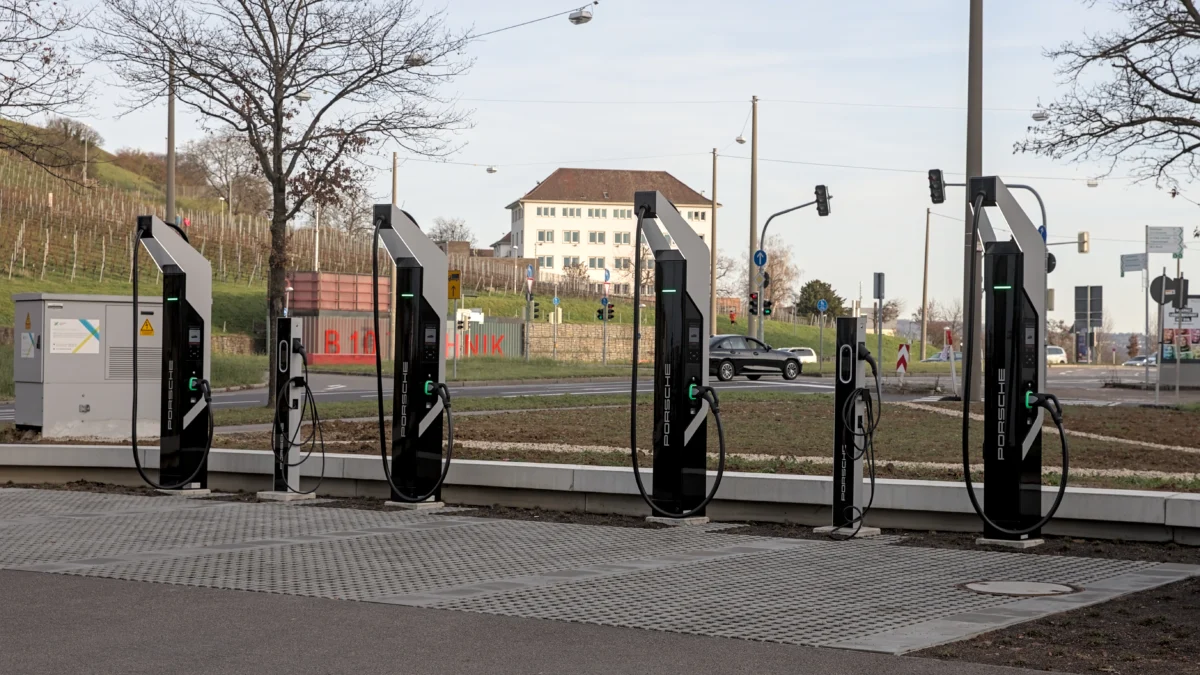
- Level 3 / High-Power DC Fast Charging (50 – 350 kW): Designed for highway travel corridors. DC fast chargers bypass the vehicle’s onboard AC-to-DC converter, pumping direct high-voltage current directly into the battery pack. High-power DC chargers replenish 20% to 80% of battery capacity within 25 to 40 minutes, aligning with standard highway rest stops [1, 2].
While a petrol driver must make deliberate weekly detours to commercial gas stations, an EV driver with home charging starts every morning with a ‘full tank,’ drastically reducing aggregate time spent refueling over a year [1, 2].
An emerging technological breakthrough unique to electric drivetrains is bidirectional charging, encompassing Vehicle-to-Home (V2H) and Vehicle-to-Grid (V2G) capabilities. Because a typical 60 kWh electric vehicle battery stores enough electrical energy to power an average single-family home for three to five full days, an EV parked in a residential garage doubles as a giant home energy storage system. During grid blackouts or natural storms, bidirectional onboard inverters automatically back up household circuits; during peak afternoon grid demand, vehicles can sell stored solar energy back to the utility, transforming personal cars into active revenue-generating decentralized power nodes [1, 2].
Lifetime Lifecycle Emissions: The ‘Long Tailpipe’ Myth Debunked
A persistent criticism leveled against electric vehicles is the ‘long tailpipe’ argument: skeptics claim that because electricity is frequently generated from coal or natural gas, and battery manufacturing requires intensive mineral mining, EVs are no cleaner than petrol cars [1, 3].
Comprehensive Life Cycle Assessments (LCAs) published in Nature Sustainability have systematically debunked this claim:
- Cradle-to-Gate Manufacturing Debt: Constructing an electric vehicle–specifically mining lithium, nickel, cobalt, and manufacturing battery cells in high-temperature dry rooms–generates approximately 30% to 40% more greenhouse gas emissions during production than building an equivalent petrol car [1, 3].
- The Breakeven Horizon: Once deployed on the road, the electric vehicle’s overwhelming operational energy efficiency quickly amortizes this initial manufacturing carbon debt. On average global electricity grids, an EV breaks even with a petrol car within 15,000 to 25,000 kilometers of driving (typically 12 to 18 months of ownership) [1, 3].
- Clean Grid Compounding: Crucially, as national electricity grids progressively integrate solar, wind, and nuclear energy, existing electric vehicles become cleaner every year without any mechanical modifications. A petrol car, conversely, emits the exact same volume of CO2 per liter burned on its final day of operation as it did on its first [1, 3].
Running Costs and Total Cost of Ownership: Kilowatt-Hours vs Gallons of Fuel
| Comparison Metric | Battery Electric Vehicle (BEV) | Petrol ICE Vehicle | Economic / Engineering Advantage |
|---|---|---|---|
| Energy Cost per 100 km | 15 – 18 kWh (Approx. $2.00 – $3.50) | 7 – 9 Liters (Approx. $8.00 – $12.00) | Decisive EV Win (65% to 75% lower energy cost) |
| Scheduled Service Costs | Cabin air filter, brake fluid, coolant inspection | Engine oil, oil filters, spark plugs, belts, transmission fluid | EV Win (40% to 50% lower maintenance overhead) |
| Powertrain Responsiveness | Instantaneous maximum torque from 0 RPM (single-speed) | Torque curve builds with RPM; transmission shift lag | EV Win (seamless, lag-free acceleration) |
| Refueling Speed | 25 – 40 minutes (DC fast charge 20-80%) | 3 – 5 minutes at any gas station | Petrol Win (universal, instant refueling convenience) |
| Extreme Cold Weather Impact | 15% – 30% range reduction (battery heating & cabin HVAC) | Minor 5% – 10% efficiency drop (uses waste engine heat) | Petrol Win (waste heat warms cabin freely) |
| Purchase Capital Premium | Higher initial cost due to battery pack expense | Lower initial showroom purchase price | Petrol Win (lower initial capital barrier) |
The economic calculus of electric vehicles hinges upon operating mileage:
- Running Cost Economics: An electric car consuming 15 kWh per 100 kilometers on home electricity costs roughly one-fourth to one-fifth the running cost of a petrol car consuming 8 liters per 100 kilometers. For a driver logging 15,000 to 20,000 kilometers annually, fuel savings alone amount to $1,500 to $2,500 every single year [1, 2].
- Drastically Reduced Routine Maintenance: Because an electric vehicle has no reciprocating pistons, engine oil, or spark plugs, annual maintenance is largely confined to checking tires, windshield wipers, cabin air filtration, and brake fluid. Furthermore, regenerative braking preserves brake pads for 100,000 kilometers or more, eliminating frequent rotor replacements [1, 2].
Within three to four years of regular driving, the accumulated savings in fuel and avoided mechanical servicing routinely wipe out the initial showroom price differential, resulting in substantially lower net ownership costs over the vehicle’s lifespan [1, 2].
Technical Powertrain Comparison: Electric Drivetrain vs Petrol ICE
Beyond financial economics, the daily driving experience of an electric vehicle diverges sharply from that of an internal combustion car [1, 2].
Automotive engineers highlight several dynamic attributes:
- Instant Torque Delivery: A petrol engine must rev up to 2,500 to 4,000 RPM before reaching its peak torque band, accompanied by gear-hunting delays from an automatic transmission. An electric motor delivers 100% of its rated torque from zero RPM, offering immediate, exhilarating overtaking acceleration at city speeds [1, 2].
- Acoustic Refinement and NVH: Internal combustion engines inherently generate noise, vibration, and harshness (NVH) from reciprocating pistons and combusting gases. An electric vehicle operates in near-total silence, eliminating powertrain vibration and significantly reducing driver fatigue during daily commutes [2].
- Smart Thermal Pre-Conditioning: Electric vehicles allow drivers to remotely heat or cool the cabin via smartphone apps while still plugged into home chargers. This ensures a comfortable cabin while preserving full battery range for driving [2].
Comprehensive Buyer Decision Framework: Is an EV Right for Your Driving Needs?
Determining whether an electric vehicle or a petrol car best serves your household depends on your personal driving routine, housing architecture, and geographic travel frequency [1, 2].
Automotive industry experts recommend evaluating four primary criteria:
- Home Charging Access: If you own a dedicated parking space, garage, or driveway where a 7.4 kW Level 2 wallbox can be installed, an EV is a transformative convenience and an unmatched financial winner [1, 2]. If you live in an apartment without assigned charging infrastructure and must rely entirely on expensive public chargers, a petrol car or strong hybrid remains more practical.
- Daily Driving Distance: If your daily commute spans 30 to 120 kilometers, an EV will deliver massive monthly fuel savings while easily operating within a single overnight charge [1, 2].
- Long-Distance Highway Frequency: If you frequently take unplanned 600+ kilometer road trips through remote rural routes with sparse charging networks, petrol cars offer unmatched convenience. However, if long-distance journeys occur occasionally along major highway corridors equipped with fast-charging plazas, an EV handles highway road trips with minor planning [1, 2].
- Secondary Family Vehicle Role: In multi-car households, replacing the primary city commuter car with an electric vehicle while retaining a petrol car for remote road trips represents the optimal transitional household strategy [2].
The transition from petrol cars to electric vehicles is not a temporary marketing trend; it is a fundamental thermodynamic and technological evolution. Just as smartphones displaced landline telephones through superior digital functionality and integrated convenience, electric vehicles are redefining personal mobility with superior efficiency, whisper-quiet performance, lower operating costs, and cleaner skies for future generations [1, 2].
Frequently Asked Questions (FAQ)
Do EV batteries really degrade and require replacement after a few years?
No. Modern Lithium Iron Phosphate (LFP) and NMC batteries with active liquid cooling are engineered to deliver 2,000 to 4,000 charge cycles, easily exceeding 300,000 to 500,000 kilometers of driving with minimal degradation.
How much does it cost to charge an electric car at home?
Charging a typical 40 to 60 kWh EV battery at residential domestic electricity rates costs approximately one-fourth to one-fifth the cost of filling an equivalent petrol tank, providing massive fuel savings.
Can an electric vehicle be safely driven and charged in heavy rain?
Yes, absolutely. Electric vehicle batteries, high-voltage wiring, and charging connectors are hermetically sealed and certified to IP67 or IP68 waterproof standards, preventing electrical leakage even during severe rains or wading through standing water.
Are electric cars really greener if electricity comes from coal power plants?
Yes. Because electric motors are more than 85 percent efficient while petrol engines waste over 75 percent of fuel as heat, lifecycle studies confirm that an EV on a fossil-heavy grid still emits 20 to 30 percent less CO2 than a petrol car.
Sources and Research References
Net emission reductions from electric cars and heat pumps in 59 world regions
- Journal
- Nature Sustainability
- Study Type
- Research
- Year
- 2020
DOI10.1038/s41893-020-0488-7
Energy consumption and emissions in transport
- Journal
- Transportation Research Part D: Transport and Environment
- Study Type
- Research
- Year
- 2015
DOI10.1016/j.trd.2016.03.003
Comparative life cycle greenhouse gas emissions of a passenger car
- Journal
- Environmental Science & Technology
- Study Type
- Research
- Year
- 2013
DOI10.1021/acs.est.0c04236
Glossary
Scientific terms used in this article
- Battery Electric Vehicle (BEV)
- A vehicle propelled entirely by electric traction motors powered by an onboard rechargeable battery pack, with zero tailpipe emissions.
- Lithium Iron Phosphate (LFP)
- A lithium-ion battery chemistry celebrated for exceptional thermal stability, safety, and long cycle lifespan exceeding 3,000 cycles.
- Regenerative Braking
- An energy recovery mechanism that converts kinetic momentum back into electricity during deceleration, recharging the battery.
- Thermal Runaway
- An uncontrolled exothermic reaction within a battery cell where internal heat accelerates chemical decomposition, prevented by active cooling.
- Level 2 Charging
- Dedicated 240V AC charging utilizing an installed residential wallbox (7.4 to 11 kW) capable of fully charging an EV overnight in 5 to 7 hours.
References
- ↩ Knobloch, F., Hanssen, S. V., Lam, A., et al. (2020). Net emission reductions from electric cars and heat pumps in 59 world regions. Nature Sustainability, 3(6), 437-447.
- ↩ Bauer, C., Hofer, J., Althaus, H. J., et al. (2015). Energy consumption and emissions in transport. Transportation Research Part D: Transport and Environment, 40, 1-18.
- ↩ Hawkins, T. R., Singh, B., Majeau-Bettez, G., et al. (2013). Comparative life cycle greenhouse gas emissions of a passenger car. Environmental Science & Technology, 47(1), 589-600.
No comments yet. Be the first to join the conversation.