


Key Findings
- Canines possess up to 300 million olfactory receptor neurons, compared to roughly 5 to 6 million in humans, providing an olfactory sensitivity up to 100,000 times greater.
- Canine nostrils utilize dual airflow aerodynamics: one stream channels air for alveolar respiration, while a dedicated upper stream directs odorants into the ethmoid turbinate recess.
- Bilateral stereo olfaction allows dogs to detect infinitesimal time differences in odor molecules reaching each nostril, mapping the direction, source, and chronological age of a scent.
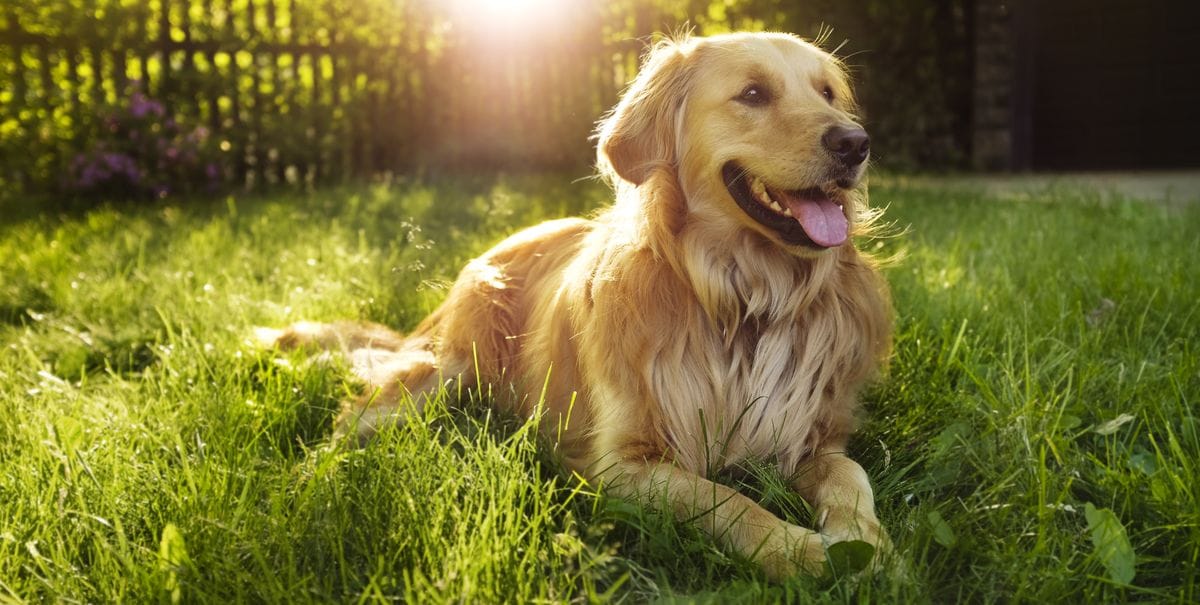
To human beings, the external world is perceived predominantly as a visual spectacle. Our large, forward-facing eyes, trichromatic color vision, and extensive visual cortex render our environment through vibrant light, shapes, and distances. However, for domestic dogs (Canis lupus familiaris) and their wild canid ancestors, reality is experienced through a completely different sensory modality: an intricate, rich, and high-definition universe of chemical scents [1] [2].
When a dog lifts its snout to the breeze or lowers its nose to an unremarkable patch of soil, it is not merely smelling; it is reading an expansive, chronological history of its environment. Canines can detect which individual walked by hours earlier, decipher emotional states such as fear or calmness through hormonal perspiration, and even track the physical health status of other animals. Across evolutionary biology, fluid dynamics, and sensory neuroscience, the canine olfactory apparatus represents one of the most exquisite bio-detection mechanisms on Earth [1] [3].
The Evolutionary Scent Engine: How Canines Experience the World
The evolutionary divergence between primates and canids shaped radically divergent sensory landscapes. As ancestral primates adapted to life in arboreal tree canopies, selective evolutionary pressure favored stereoscopic trichromatic vision and manual dexterity, causing our olfactory receptor gene repertoire to progressively atrophy through pseudogenization. In contrast, ancestral canids evolved as cursorial pack predators and scavengers roaming vast terrestrial landscapes, where prey was frequently hidden beneath dense foliage, underground, or obscured by darkness [4].
Natural selection relentlessly refined the canine olfactory genome, expanding functional olfactory receptor (OR) genes into an extraordinary sensory repertoire. Where a typical human possesses roughly 5 to 6 million olfactory receptor neurons, domestic dogs possess between 100 million and over 300 million receptor cells, depending on the breed (such as the Bloodhound or German Shepherd). Furthermore, the canine brain devotes approximately forty times more neurological real estate to analyzing odors than the human brain, allowing canines to isolate, categorize, and recall thousands of volatile compounds simultaneously [1] [4].
Nasal Aerodynamics: The Dual Airway Fluid Mechanics of Sniffing
The astonishing scent detection ability of dogs begins with high-performance fluid mechanics. When humans inhale, we breathe air in and out through the same physical channel; incoming odor molecules and outgoing carbon dioxide collide, disrupting olfactory sampling during exhalation. The canine snout solves this aerodynamic limitation through an ingenious anatomical separation of airflow [3].
Using high-speed magnetic resonance imaging (MRI) and computational fluid dynamics (CFD) modeling, researchers discovered that a specialized tissue fold, termed the alar fold, divides incoming airflow into two distinct respiratory pathways:
- Respiratory Airway: Approximately 88% of inspired air travels directly down the ventral meatus through the pharynx and into the lungs to maintain alveolar gas exchange.
- Olfactory Airway: The remaining 12% of air is diverted into an upper, dorsal recess that houses the delicate, scroll-like ethmoid turbinate bones, where it bypasses lung transit entirely.
Equally remarkable is the mechanics of canine exhalation. When a dog exhales, air does not exit forward out of the front nostril opening. Instead, it is expelled laterally through side slits in the nostrils (the alar sulcus). This lateral jet of outgoing air creates a dynamic low-pressure vortex in front of the dog’s nose, pulling new, undisturbed odor molecules from the ground straight into the next inhalation. Canines can sniff continuously at an astounding frequency of 5 to 7 cycles per second without hyperventilating, maintaining an uninterrupted stream of fresh chemical data [3].
The Olfactory Labyrinth: 300 Million Receptors vs Human Anatomy
Once air enters the dorsal olfactory chamber, it encounters a vast anatomical labyrinth. While human olfactory epithelium occupies a flat, modest patch of roughly 3 to 4 square centimeters on the roof of the nasal cavity, canine olfactory epithelium covers an intricately folded labyrinth of ethmoturbinate bones spanning between 150 and 200 square centimeters, an area roughly equivalent to the size of a handkerchief [1] [4].
This massive surface area is blanketed by hundreds of millions of ciliated olfactory receptor neurons embedded in a specialized, protective mucus layer. The canine nose is naturally moist and cold (rhinarium), allowing volatile organic compounds suspended in the air to dissolve rapidly into surface fluid for delivery to receptor proteins. Olfactory receptors operate through a ‘combinatorial code’: a single odorant molecule can activate multiple distinct receptor subtypes, while a single receptor can bind multiple related chemical structures. The canine olfactory bulb translates this firing pattern into a precise molecular fingerprint, enabling dogs to detect single substances diluted down to parts per trillion (ppt) [1] [3].
Stereo Olfaction: Navigating Space and Time Through Scent Directionality
Just as humans possess stereoscopic binocular vision to perceive physical depth, and binaural hearing to locate sounds in space, dogs possess ‘stereo olfaction’ [3].
Because canine nostrils are physically separated and can flare and sample air independently, the dog’s olfactory cortex receives two slightly distinct chemical inputs. When tracking a scent trail, the brain detects microsecond differences in the arrival time and chemical concentration of odorant molecules entering the left versus the right nostril. If the concentration is slightly higher in the left nostril, the dog instantly pivots to the left. This bilateral sensory processing allows a dog to determine the direction of travel of a running animal or a lost human simply by sniffing two adjacent footsteps to determine which footprint was placed first [1] [3].
Moreover, for canines, smell is a temporal sense. Odor molecules naturally decay and evaporate over time. A strong, concentrated scent indicates a recent event; a faint, dispersed scent represents the distant past. Canines thus perceive the passage of time through the gradual degradation of chemical molecules across their territory [1].
The Vomeronasal Organ: Decoding Chemical Pheromone Communication
In addition to the primary olfactory epithelium, dogs possess an entirely separate chemical sensing apparatus: the vomeronasal organ (VNO), or Jacobson’s organ [5].
Located on the floor of the nasal cavity just above the hard palate, the VNO opens through small ducts directly behind the canine upper incisors. Unlike the main olfactory system, which detects airborne, volatile molecules, the vomeronasal organ is specialized to detect non-volatile chemical pheromones and biological fluid markers. When a dog curls its upper lips and chatters its teeth (the flehmen response), it pumps liquid pheromones from urine, feces, or skin secretions directly into the vomeronasal ducts [5].
Nerves from the vomeronasal organ bypass the higher cognitive cerebral cortex entirely, projecting directly into the accessory olfactory bulb and wiring straight into the limbic system, specifically the amygdala and hypothalamus. This provides instantaneous, subconscious emotional and social intelligence: identifying an animal’s sex, reproductive readiness, social hierarchy, stress levels, and emotional state without requiring visual or auditory contact [5].
Medical Scent Detection: Sniffing Volatile Organic Compounds (VOCs) and Disease
The extraordinary sensitivity of canine olfaction has crossed over from tracking lost hikers and detecting explosives into the frontiers of modern human medicine. Every biological disorder, whether infectious, metabolic, or oncological, alters cellular metabolism and gene expression, causing cells to shed distinct volatile organic compounds (VOCs) into exhaled breath, sweat, and urine [1] [2].
Sensory & Anatomical Comparison: Dogs vs Humans
Receptor Architecture
Olfactory Cells: Canines possess 100 to 300 million receptor neurons; humans possess 5 to 6 million.
Epithelial Surface: Dogs possess 150 to 200 sq cm of folded turbinates; humans possess 3 to 4 sq cm.
Detection Limit: Canines detect 1 part per trillion; humans detect parts per million.
Aerodynamic Mechanics
Nasal Flow: Dogs separate respiration (88%) from dorsal olfactory sampling (12%).
Exhalation Jets: Lateral alar slits create low-pressure vortices pulling continuous ground odors.
Sniff Frequency: Continuous rapid bursts of 5 to 7 sniffs per second without respiratory fatigue.
Specialized Scent Processing
Stereo Sensing: Bilateral nostril processing measures microsecond latency to pinpoint vector sources.
Pheromone Organ: Fully functional VNO (Jacobson’s organ) dedicated to non-volatile social chemistry.
Brain Allocation: 40x greater neurological real estate dedicated to olfactory discrimination.
In peer-reviewed clinical trials published in Cancer Investigation, trained medical detection dogs consistently identified early-stage ovarian, colorectal, lung, and prostate cancers from urine and breath samples with sensitivity and specificity exceeding 90% to 95%, frequently outperforming current chemical biomarkers. Similarly, medical alert service dogs provide life-saving alerts for diabetic individuals by detecting isoprene and acetone shifts in sweat minutes before severe hypoglycemia occurs, and alert epileptic patients to impending seizures [1] [2].
Biomimetic Technology: Engineering the Future of Electronic Noses
Despite decades of advances in analytical chemistry and gas chromatography-mass spectrometry (GC-MS), human engineers have been unable to match the speed, portability, and sensitivity of the canine nose. Traditional GC-MS machines are bulky, expensive, require hours to process a single sample, and lack real-time discrimination [1] [3].
Biomedical engineers are now actively copying canine biology to develop biomimetic ‘electronic noses’ (e-noses). By 3D-printing artificial nasal cavities that mirror canine turbinate aerodynamics and embedding microfluidic sensors coated with recombinant mammalian olfactory receptors, researchers are creating handheld diagnostic devices capable of detecting cancer biomarkers, foodborne pathogens, and chemical toxins in real time [1] [4].
The canine nose is a humbling reminder of nature’s evolutionary genius. By honoring and decoding this marvelous biological organ, humanity not only deepens its bond with humankind’s oldest companion, but unlocks revolutionary frontiers in medical diagnostics and sensory engineering [1] [2] [3].
Frequently Asked Questions
Common reader questions about this study
How many times more sensitive is a dog's sense of smell compared to a human?
Depending on the breed, a dog's olfactory apparatus is 10,000 to 100,000 times more sensitive than a human's. Canines can detect diluted chemical odorants at concentrations as low as one part per trillion, equivalent to detecting a single drop of liquid diluted into twenty Olympic-sized swimming pools.
What is stereo olfaction and how does it function in dogs?
Stereo olfaction is the ability to perceive distinct chemical signals independently through each nostril. Because a dog's nostrils sample air separately, the brain compares the subtle differences in scent intensity and arrival time between the left and right nostrils, allowing the dog to instantly pinpoint the direction and origin of a scent trail.
What is the function of the vomeronasal organ (Jacobson's organ) in dogs?
The vomeronasal organ is an auxiliary olfactory sense organ located above the roof of the mouth behind the upper incisors. It is dedicated to detecting non-volatile chemical pheromones, conveying critical social, emotional, and reproductive signals directly to the amygdala and hypothalamus without interference from environmental odors.
Can trained medical detection dogs identify human diseases like cancer?
Yes. Malignant tumors and metabolic disorders alter cellular metabolism, releasing distinct volatile organic compounds (VOCs) into human breath, sweat, and urine. Peer-reviewed clinical trials confirm that trained medical scent-detection dogs can identify early-stage lung, ovarian, prostate, and breast cancers with over 90% accuracy.
References
- ↩ Cancer Investigation: Canine Olfaction and VOCs: Detection of Cancer Biomarkers in Biological Fluids
- ↩ Journal of Veterinary Behavior: Detection of volatile organic compounds (VOCs) in cancer diagnosis by trained detection dogs
- ↩ Chemical Senses: Aerodynamics of the Canine Scent Detection: Fluid Mechanics of Sniffing
- ↩ Nature Communications: Functional architecture of the mammalian olfactory system and canine olfactory receptor diversity
- ↩ Frontiers in Veterinary Science: The Canine Vomeronasal System: Structure, Function, and Chemical Communication


No comments yet. Be the first to join the conversation.