

Key Findings
- Tardigrades can enter cryptobiosis, expelling up to 99% of cellular water and halting metabolic activity to survive otherwise lethal environments.
- Unique intrinsically disordered proteins (TDPs) vitrify inside desiccatng tardigrade cells, forming a protective bioglass matrix that immobilizes delicate enzymes.
- The tardigrade-exclusive Dsup (Damage Suppressor) protein forms a physical electrostatic blanket over chromatin, shielding DNA from ionizing and ultraviolet radiation.
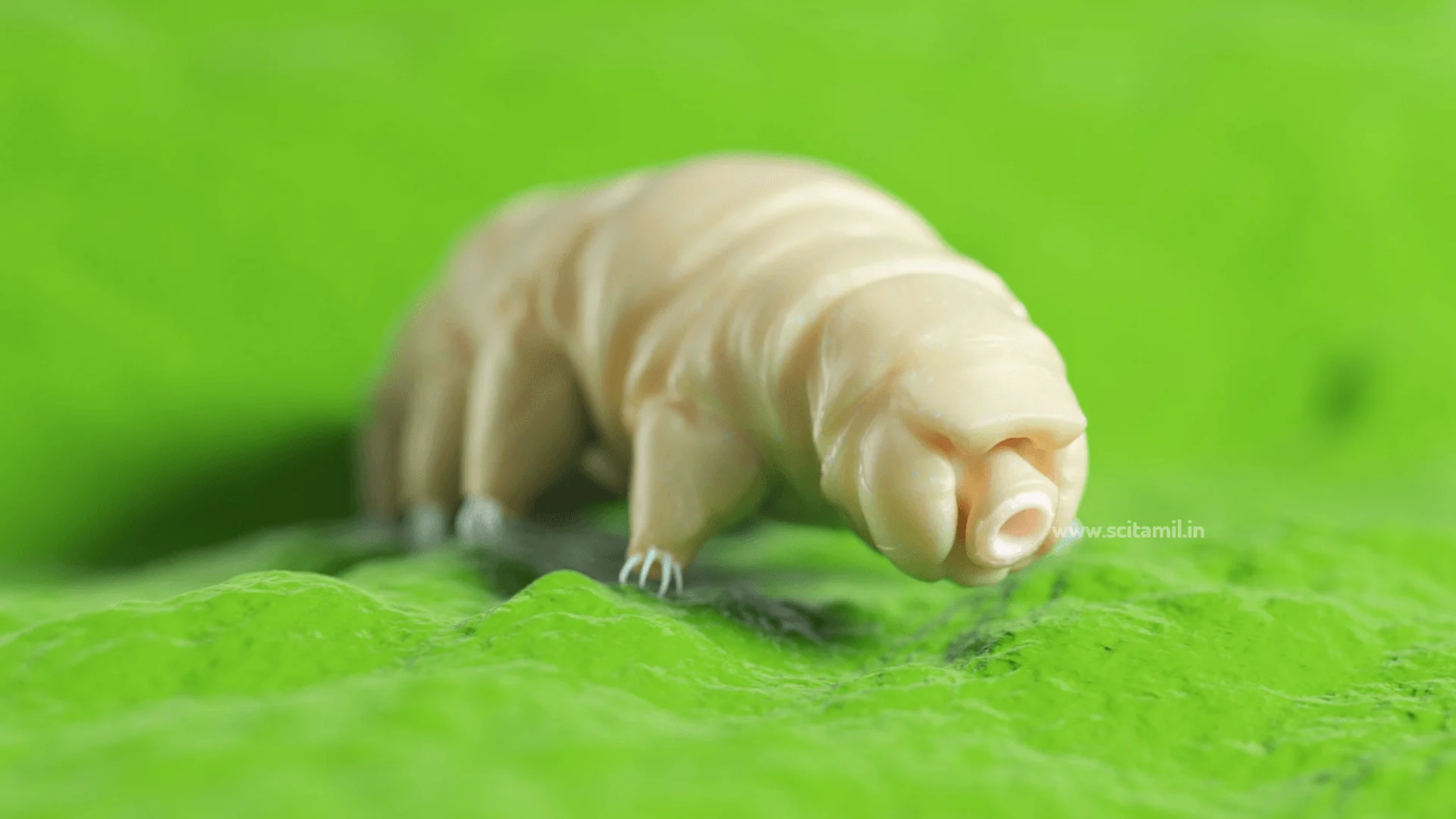
In the vast tapestry of earthly biology, nature has produced creatures of astonishing resilience. Yet none compare to the microscopic marvels known colloquially as ‘water bears’ or ‘moss piglets’. Measuring between 0.1 and 1.5 millimeters in length, tardigrades belong to their own distinct phylum, Tardigrada. First discovered by German zoologist Johann August Ephraim Goeze in 1773, these eight-legged, clawed invertebrates possess survival adaptations so extraordinary that they challenge our fundamental definitions of biological mortality [1] [2].
While most animal species perish when exposed to moderate fluctuations in temperature, dehydration, or radiation, tardigrades can endure conditions that would instantly annihilate human cells. They have survived exposure to temperatures near absolute zero, searing heat above 150 degrees Celsius, pressures six times greater than the deepest ocean trenches, lethal doses of gamma radiation, and even the hostile vacuum of outer space. Understanding the molecular machinery behind these extreme survival capabilities is revolutionizing biotechnology, planetary astrophysics, and biostabilization [1] [3].
The Microscopic Extremophile: Anatomy and Evolutionary History
Tardigrades represent an ancient evolutionary lineage dating back more than 500 million years to the Cambrian explosion. Fossil specimens preserved in mid-Cretaceous amber demonstrate that water bear morphology has remained remarkably stable across geological epochs. Despite surviving all five major global mass extinction events, including the catastrophic asteroid impact that wiped out non-avian dinosaurs, tardigrades have retained their core anatomical architecture [1] [5].
Anatomically, a tardigrade possesses a cylindrical body composed of four distinct segments, each equipped with a pair of unjointed legs terminating in four to eight sharp chitinous claws. Their heads feature a tubular mouth armed with pierce-and-suck stylets used to penetrate plant cells, algae, nematodes, and rotifers to ingest nutrient fluids. They lack specialized respiratory and circulatory systems; oxygen and nutrients diffuse freely throughout their fluid-filled body cavity (hemocoel). A non-chitinous, flexible cuticular exoskeleton covers their exterior, which they periodically molt as they grow [1].
However, what sets tardigrades apart from other micro-animals is their cellular constitution. Many tardigrade species exhibit eutely, a phenomenon in which every adult individual of a species possesses the exact same number of somatic cells (typically between 1,000 and 40,000 cells). Instead of growing by continuous cellular division, tardigrade cells simply expand in volume as the organism matures [5].
Cryptobiosis: The Physics of Anhydrobiosis and Suspended Animation
When environmental conditions become inhospitable, tardigrades do not attempt to maintain normal homeostasis. Instead, they activate an astonishing evolutionary strategy known as cryptobiosis. Coined from the Greek words for ‘hidden life’, cryptobiosis is a reversible physiological state wherein all detectable metabolic processes, including cellular respiration, protein synthesis, and enzymatic reactions, grind to a complete standstill [2] [4].
The most widely studied form of cryptobiosis is anhydrobiosis, or life without water. Because tardigrades are aquatic organisms that require a thin film of water around their cuticles to feed and reproduce, they frequently face desiccating winds on moss cushions or rocky cliffs. As ambient moisture evaporates, the tardigrade initiates a coordinated physiological contraction. It withdraws its eight limbs, folds its head into its body, and condenses into a barrel-shaped, wrinkled pellet called a ‘tun’ [4].
During tun formation, the tardigrade systematically expels up to 97% to 99% of its intracellular and extracellular water content. Its metabolic rate plummets to less than 0.01% of normal levels, effectively hovering at zero. In this state of suspended animation, the organism enters a realm of physical stability governed by biophysics rather than active biochemistry. Specimens preserved in desiccated tuns for decades have been rehydrated with a single drop of water, walking away and feeding within hours as if no time had passed [1] [4].
Tardigrade Disordered Proteins (TDPs): The Glass Matrix of Life
For decades, researchers assumed that tardigrades survived severe desiccation using trehalose, a disaccharide sugar utilized by desert resurrection plants, nematodes, and brine shrimp to stabilize cellular structures. However, genomic sequencing revealed that many extremotolerant tardigrade species, such as Hypsibius exemplaris and Ramazzottius varieornatus, contain negligible or completely undetectable levels of trehalose. How, then, do tardigrades prevent their delicate proteins and phospholipid membranes from denaturing and clumping into toxic aggregates during water loss [1] [4]?
In a landmark breakthrough published in eLife, biophysicists discovered that tardigrades produce a unique class of proteins called Tardigrade Intrinsically Disordered Proteins (TDPs). These proteins include Cytoplasmic-Abundant Heat-Soluble (CAHS) proteins, Secretory-Abundant Heat-Soluble (SAHS) proteins, and Mitochondrial-Abundant Heat-Soluble (MAHS) proteins [4].
In hydrated cells, TDPs possess no fixed, rigid three-dimensional structure; they float as flexible, undulating molecular chains. However, as water molecules evaporate during dehydration, TDPs undergo a phase transition called molecular vitrification. The proteins condense and self-assemble into a non-crystalline, biological glass matrix that permeates the entire interior of the cell. This biological glass physically immobilizes proteins, organelles, and enzymes like insects trapped in amber. By preventing molecular collisions, protein unfolding, and cell membrane collapse, TDPs preserve cellular integrity until water returns to dissolve the glass matrix [4] [5].
The Dsup (Damage Suppressor) Protein: A Physical DNA Radiation Shield
Beyond extreme dehydration, tardigrades possess unprecedented tolerance to ionizing radiation. A human being exposed to an absorbed dose of 5 to 10 grays (Gy) of gamma radiation will suffer lethal hematopoietic and gastrointestinal failure within weeks. In contrast, extremotolerant tardigrades can withstand doses exceeding 5,000 grays of gamma rays and heavy ions, more than 500 times the lethal human threshold [1] [2].
In 2016, researchers at the University of Tokyo deciphered the molecular secret behind this radiation resistance while sequencing the genome of Ramazzottius varieornatus. They identified a novel, tardigrade-unique gene encoding a protein named Damage Suppressor, or Dsup [1].
Subsequent biochemical and structural analyses revealed how Dsup works. Dsup is an intrinsically disordered, basic protein enriched with positively charged amino acids. These positive charges allow Dsup to bind electrostatically along the negatively charged sugar-phosphate backbone and minor groove of chromatin fibers inside the tardigrade nucleus. Rather than acting as an enzymatic repair mechanism that fixes broken DNA after the fact, Dsup serves as a physical molecular shield [1] [2].
When high-energy ionizing radiation or ultraviolet rays strike the cell, they split water molecules into cytotoxic hydroxyl free radicals (reactive oxygen species). The Dsup protein coat acts as a radical scavenger and physical barrier, absorbing the impact and preventing these reactive radicals from cleaving DNA strands. Astonishingly, when scientists genetically inserted the tardigrade Dsup gene into human embryonic kidney cells in vitro, the engineered human cells exhibited up to a 40% reduction in DNA breaks following lethal X-ray irradiation [1].
Surviving the Vacuum of Space: The FOTON-M3 Mission Findings
The convergence of anhydrobiosis and Dsup radiation defense led astrobiologists to ponder an audacious question: could tardigrades survive the lethal environment of outer space without a spacesuit? In 2007, the European Space Agency launched the TARDIS (Tardigrades in Space) experiment aboard the Russian FOTON-M3 robotic spacecraft [3].
Desiccated specimens of two tardigrade species, Richtersius coronifer and Milnesium tardigradum, were mounted onto exposure platforms and placed outside the spacecraft in low-Earth orbit. For ten days, the animals were directly exposed to the open vacuum of space (10^-6 Pascals), absolute zero temperatures, and unfiltered cosmic radiation [3].
Upon return to Earth, researchers rehydrated the space-traveling tardigrades in laboratory petri dishes. Miraculously, over 68% of specimens exposed solely to space vacuum and cosmic rays revived completely, resumed active crawling, and laid viable eggs that hatched healthy offspring. While exposure to intense solar ultraviolet radiation (UV-A and UV-B) lowered survival rates among some cohorts, tardigrades became the first complex multicellular animals in recorded history proven capable of surviving simultaneous exposure to space vacuum and ionizing cosmic radiation [3].
From Deep Sea Trenches to Glacial Peaks: Planetary Distribution
Thanks to their near-indestructible survival adaptations, tardigrades have colonized virtually every ecological niche on planet Earth. They are cosmopolitan organisms found from the icy slopes of the Himalayan mountains at altitudes above 6,000 meters to the abyssal depths of the Mariana Trench below 4,000 meters under the ocean [1] [5].
Tardigrade Physiological Tolerance Envelopes
Thermal Extremes
Tolerance Range: From minus 272 degrees Celsius (near absolute zero) up to 151 degrees Celsius.
Mechanism: Cellular vitrification via TDP bioglass prevents ice crystal perforation and heat denaturation.
Duration: Months in deep cryopreservation; hours at boiling temperatures.
Hydrostatic Pressure
Tolerance Range: Up to 6,000 atmospheres (600 megapascals).
Mechanism: Intracellular water evacuation prevents compressive phase shifts in lipid bilayers.
Comparison: Six times greater than the deepest ocean trench floor.
Ionizing Radiation
Tolerance Range: Up to 5,000 to 6,000 grays of gamma radiation.
Mechanism: Dsup electrostatic chromatin shielding and robust downstream DNA repair enzymes.
Comparison: Over 500 times the lethal radiation dose for human beings.
Their ubiquitous presence is facilitated by wind dispersal. When tardigrades enter cryptobiotic tuns, they are as light as fine dust particles. Gusts of atmospheric wind loft these microscopic dormant barrels across mountain ranges, oceans, and continents, allowing them to populate moss cushions on city sidewalks as easily as Antarctic ice sheets [5].
Biomedical and Spaceflight Applications: Human DNA Protection and Vaccine Stabilization
The molecular biophysics of the water bear is far more than an academic curiosity; it offers practical solutions to some of humanity’s most pressing medical and technological challenges. Currently, billions of dollars are spent annually maintaining cold-chain refrigeration networks to preserve perishable biologics, including mRNA vaccines, monoclonal antibodies, and blood plasma [4] [5].
By synthesizing recombinant tardigrade CAHS and SAHS proteins, biomedical engineers have succeeded in dry-stabilizing fragile pharmaceuticals at warm ambient temperatures. When mixed with therapeutic enzymes or viral vector vaccines, tardigrade proteins form protective microscopic vitrified enclosures that shield active ingredients from thermal degradation without requiring liquid nitrogen or dry ice [4].
Furthermore, in the emerging era of deep-space exploration, cosmic radiation represents the greatest biological barrier to human voyages to Mars and beyond. Integrating Dsup-derived peptides or utilizing genetic therapies inspired by tardigrade radioprotection could shield astronauts from galactic cosmic rays and solar particle events. From terrestrial oncology treatments that protect healthy tissues during radiation therapy to interstellar space travel, the tiny water bear illuminates the boundless frontiers of biological resilience [1] [2] [3].
Frequently Asked Questions
Common reader questions about this study
What is cryptobiosis and how do tardigrades enter this state?
Cryptobiosis is a reversible metabolic state where an organism halts all measurable physiological and chemical processes. During environmental desiccation, tardigrades retract their eight legs, expel up to 99% of internal water, and curl into a shriveled structure called a 'tun'. In this vitrified state, they withstand conditions that instantly destroy active biological cells.
How does the tardigrade Dsup protein protect DNA from radiation?
The Damage Suppressor (Dsup) protein is an intrinsically disordered protein with basic positive charges that bind along the minor groove of DNA. It acts as a physical molecular shield, suppressing reactive oxygen species (ROS) and preventing ionizing radiation from cleaving phosphodiester bonds.
Can tardigrades truly survive in the open vacuum of space?
Yes. In the European Space Agency's FOTON-M3 space mission (TARDIS experiment), desiccated tardigrades were exposed directly to the low-Earth orbit vacuum, absolute zero cold, and cosmic radiation for 10 days. Upon return to Earth and rehydration with liquid water, a substantial percentage revived and successfully reproduced.
How can tardigrade biology benefit human medical technology?
Scientists are utilizing tardigrade intrinsically disordered proteins to stabilize fragile mRNA vaccines, blood products, and antibody therapeutics at ambient room temperatures without expensive cold-chain refrigeration. Furthermore, human cell cultures engineered with Dsup exhibit up to 40% greater survival against X-ray irradiation.
References
- ↩ Nature Communications: Extremotolerant tardigrade genome and Dsup
- ↩ Cells: Mitigation of UV-B Radiation Stress by Tardigrade Dsup
- ↩ Astrobiology: Tardigrades in Space (TARDIS): Survival of tardigrades under open space conditions
- ↩ eLife: Tardigrades use intrinsically disordered proteins to survive desiccation
- ↩ PNAS: Mechanisms of tardigrade resistance to extreme environmental stress
No comments yet. Be the first to join the conversation.