



Key Findings
- Colorectal cancer has tripled in young adults under fifty, driven by changes in the modern exposome, ultra-processed foods, and bacterial genotoxins.
- Symptoms like rectal bleeding and persistent bowel changes are frequently dismissed as hemorrhoids, causing critical 6-to-9 month diagnostic delays.
- Routine screening is now recommended starting at age 45, and any young adult experiencing unexplained rectal bleeding should undergo prompt colonoscopy.
For more than half a century, clinical textbooks categorized colorectal cancer as an archetypal disease of aging. Medical students were taught that malignancies of the colon and rectum developed predominantly in individuals celebrating their sixtieth or seventieth birthdays, spurred by decades of cumulative DNA mutations and cellular wear [1] [5]. Across older demographics, widespread screening colonoscopies and polypectomies have successfully driven down incidence rates over the past thirty years. Yet, oncologists across Australia, North America, Europe, and urban India are witnessing a terrifying epidemiological paradox: while bowel cancer declines among senior citizens, it is surging dramatically among young men and women in their twenties, thirties, and early forties [1] [2]. In several developed nations, colorectal cancer has become the number one cause of cancer-related mortality in men under fifty and the second leading cause in young women [1] [5]. Why is a disease historically reserved for the elderly striking fit, young adults at unprecedented rates, and what biological mechanisms explain this global health crisis [2] [4]?
The Alarming Global Epidemiological Surge
Epidemiological registries tracking millions of cancer patients reveal stark cohort patterns. In a seminal multinational investigation published in The Lancet Oncology, researchers analyzed cancer registries across 36 countries, observing a relentless birth-cohort effect [1]. Individuals born after 1990 have approximately double the risk of developing colon cancer and nearly quadruple the risk of developing rectal cancer compared to individuals born in 1950 at the exact same chronological age [1] [5].
In Australia, young adult bowel cancer rates have surged by more than 180 percent since the mid-1990s. In the United States, one in every five newly diagnosed colorectal cancer cases now occurs in an individual under age fifty-five [5]. This phenomenon, clinically termed Early-Onset Colorectal Cancer (EO-CRC), cannot be explained by inherited genetic syndromes alone. Classical hereditary conditions, such as Lynch syndrome and Familial Adenomatous Polyposis (FAP), account for only 15 to 20 percent of early-onset cases [2]. The remaining 80 percent of young patients present with sporadic disease, lacking any identifiable familial genetic mutation, pointing directly toward profound environmental, dietary, and microbiome alterations [2] [4].
The Westernized Exposome: Diet and Ultra-Processed Foods
Planetary health researchers attribute the rapid generational rise in EO-CRC to shifts in the modern “exposome”, the totality of environmental exposures accumulated from infancy through young adulthood [2]. The most dramatic transformation in the human environment over the last forty years has occurred upon our dinner plates.
Generations born since the 1980s were the first cohort raised on diets heavily dominated by ultra-processed foods (UPFs) [2] [4]:
• Dietary Fiber Depletion: Traditional whole grains, legumes, and tubers have been displaced by refined carbohydrates, stripping the gastrointestinal tract of protective viscous fibers. Fiber speeds intestinal transit time; when fiber is lacking, toxic metabolic by-products linger in prolonged contact with colonic epithelial cells [2] [4].
• Synthetic Emulsifiers and Food Additives: Ubiquitous additives like carboxymethylcellulose and polysorbate-80, widely used in commercial packaged foods, degrade the protective mucosal layer lining the colon, allowing luminal bacteria to penetrate epithelial borders and incite chronic low-grade inflammation [2].
• High-Fructose Corn Syrup (HFCS): Pre-clinical rodent models demonstrate that daily consumption of liquid high-fructose corn syrup directly fuels intestinal tumor growth, accelerating adenomatous polyp progression independent of obesity [2].
• Processed and Red Meats: High intakes of processed deli meats containing chemical nitrates and heme iron accelerate endogenous formation of N-nitroso compounds and reactive lipid peroxides, inducing alkylating DNA damage in colonic crypts [2] [5].
Early-Onset Colorectal Cancer Risk Drivers vs. Evidence-Based Preventative Interventions
| Risk Factor Category | Biological Carcinogenic Mechanism | Clinical Hazard Impact | Preventative Action |
|---|---|---|---|
| Ultra-Processed Diet | Synthetic emulsifiers degrade mucosal gel; absence of fermentable fiber | Loss of barrier integrity, chronic crypt inflammation | Consume 30+ grams of dietary fiber daily from legumes and vegetables |
| Microbial Genotoxins | Colibactin-producing pks+ E. coli and Fusobacterium nucleatum | Double-strand DNA crosslinks, oncogenic driver mutations | Cultivate rich microbiome diversity via fermented whole foods |
| Visceral Adiposity | Hyperinsulinemia, elevated IGF-1, chronic pro-inflammatory cytokines | Upregulates cellular proliferation, inhibits natural apoptosis | Maintain waist-to-height ratio under 0.5 through aerobic exercise |
| Early Antibiotic Use | Repeated pediatric broad-spectrum courses disrupt keystone taxa | Depletes butyrate producers, leaves niche for oncogenic pathogens | Judicious antibiotic stewardship, targeted post-treatment recovery |
| Diagnostic Delay | Symptoms dismissed as hemorrhoids or IBS for 6 to 9 months | Stage progression from localized polyp to metastatic Stage III/IV | Prompt colonoscopy for any unexplained rectal bleeding |
Gut Dysbiosis and Microbial Genotoxins
One of the most consequential discoveries in contemporary molecular oncology is the identification of bacterial genotoxins that directly mutate human intestinal DNA [4].
Strains of Escherichia coli carrying the pks genomic island synthesize a virulent secondary metabolite called colibactin [4]. Colibactin is a chemical genotoxin capable of alkylating DNA bases and producing lethal double-strand breaks in human chromosomes. Molecular geneticists sequencing early-onset colorectal tumors have identified a distinct “mutational signature” (Signature SBS88) characterized by specific adenine-to-thymine transversion mutations that can only be generated by colibactin [2] [4]. These findings provide empirical proof that specific bacterial toxins contracted during childhood or early adulthood can initiate oncogenic transformation decades later [4].
Simultaneously, oral and intestinal pathogens such as Fusobacterium nucleatum adhere to colonic epithelial cells through their FadA surface adhesin, triggering beta-catenin oncogenic signaling pathways and inhibiting antitumor T-cell and natural killer (NK) cell responses, shielding developing tumors from immune surveillance [4].
Critical Red Flag Warning Signs in Young Adults
The tragedy of early-onset bowel cancer lies not merely in its biological aggressiveness, but in widespread diagnostic delay [2] [5]. Because colorectal cancer has traditionally been viewed as an elderly person’s condition, both young patients and primary care physicians frequently dismiss early warning signs for six to nine months, attributing symptoms to benign conditions [1] [2].
Young adults must recognize the following non-negotiable clinical red flag warning signs:
• Rectal Bleeding (Hematochezia): Bright red or dark maroon blood in the stool or on the toilet paper. Never automatically assume rectal bleeding is just piles or hemorrhoids. Any rectal bleeding requires thorough clinical examination [2].
• Persistent Change in Bowel Habits: New-onset diarrhea, worsening constipation, or progressive thinning of stool diameter (pencil-thin stools) lasting longer than three weeks [2].
• Unexplained Iron Deficiency Anemia: Men and non-menstruating women should never have unexplained iron deficiency. Growing tumors cause microscopic chronic blood loss, resulting in unexplained fatigue, shortness of breath, and pale conjunctiva [2].
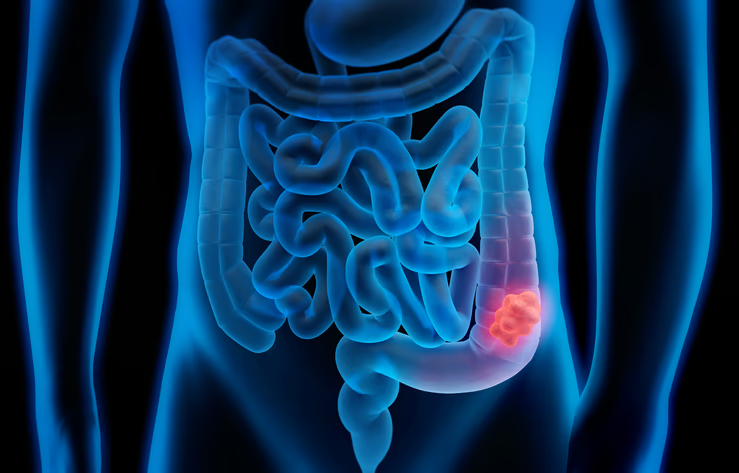
• Persistent Abdominal Pain and Cramping: Chronic dull aching or severe crampy abdominal discomfort, often localized to the lower left abdomen where early-onset tumors frequently arise [1] [2].
• Unexplained Weight Loss: Losing significant body weight without changes in diet or physical exercise [2].
Screening Guidelines and Modern Diagnostics
In response to overwhelming epidemiological evidence, major medical organizations, including the American Cancer Society, the US Preventive Services Task Force (USPSTF), and the American College of Gastroenterology, officially lowered the recommended starting age for average-risk colorectal cancer screening from age 50 down to age 45 [3].
Screening modalities span two primary approaches [3]:
1. Colonoscopy (The Gold Standard): Visualizes the entire length of the large intestine. Crucially, a colonoscopy is both diagnostic and therapeutic: if gastroenterologists discover precancerous adenomatous polyps, they can remove them immediately during the procedure, effectively preventing cancer before it starts [3].
2. Non-Invasive Stool Tests (FIT & Cologuard): The Fecal Immunochemical Test (FIT) detects occult microscopic blood, while multi-target stool DNA tests analyze mutated human DNA shedding from colorectal tumors [3].
However, for any individual experiencing warning symptoms or possessing a first-degree relative diagnosed with colorectal cancer before age sixty, screening must begin at age forty, or ten years earlier than the youngest family member’s diagnosis [2] [3].
Evidence-Based Prevention Strategies for Young Adults
While oncologists continue investigating the precise genetic and environmental cross-talk driving early-onset cancers, individuals can adopt decisive, evidence-based lifestyle behaviors to dramatically reduce their lifetime risk [2] [3]:
• Prioritize Intact Prebiotic Dietary Fiber: Aim for a minimum of 30 to 35 grams of diverse dietary fiber daily from whole legumes, lentils, chickpeas, oats, barley, and fresh vegetables to maximize colonic butyrate synthesis [2].
• Eliminate Sugar-Sweetened Beverages and UPFs: Replace sodas, energy drinks, and heavily emulsified processed foods with whole water, herbal infusions, and clean home-cooked meals [2].
• Engage in Daily Physical Activity: Aerobic exercise stimulates gut motility, shortens intestinal transit time, lowers circulating fasting insulin, and suppresses systemic inflammatory cytokines [1] [3].
• Demand Medical Advocacy: If you experience persistent changes in bowel habits or rectal bleeding, never accept casual reassurance. Advocate for a diagnostic referral to a gastroenterologist for an endoscopic evaluation [2] [3].
Frequently Asked Questions
Primary Sources and References
Global patterns and trends in colorectal cancer incidence in young adults
- Journal
- The Lancet Oncology
- Study Type
- Epidemiology
- Year
- 2019
DOI10.1016/S1470-2045(19)30545-8
References
- ↩ Global patterns and trends in colorectal cancer incidence in young adults
- ↩ Etiology and pathogenesis of early-onset colorectal cancer
- ↩ Colorectal cancer screening: updated guidelines from the American College of Gastroenterology
- ↩ The gut microbiome and early-onset colorectal cancer: Microbial genotoxins and immune evasion
- ↩ Rising incidence of early-onset colorectal cancer in young adults: A global epidemiology review

No comments yet. Be the first to join the conversation.