


Key Findings
- Vitrification prevents ice crystal formation during cooling, but non-uniform rewarming previously caused lethal thermal cracking and devitrification.
- Magnetic nanowarming excites perfused biocompatible iron oxide nanoparticles via radiofrequency coils, achieving uniform heating exceeding 100°C per minute.
- Post-transplantation trials demonstrated full recovery of renal filtration in animal models, paving the way for indefinite organ banking and global HLA matching.
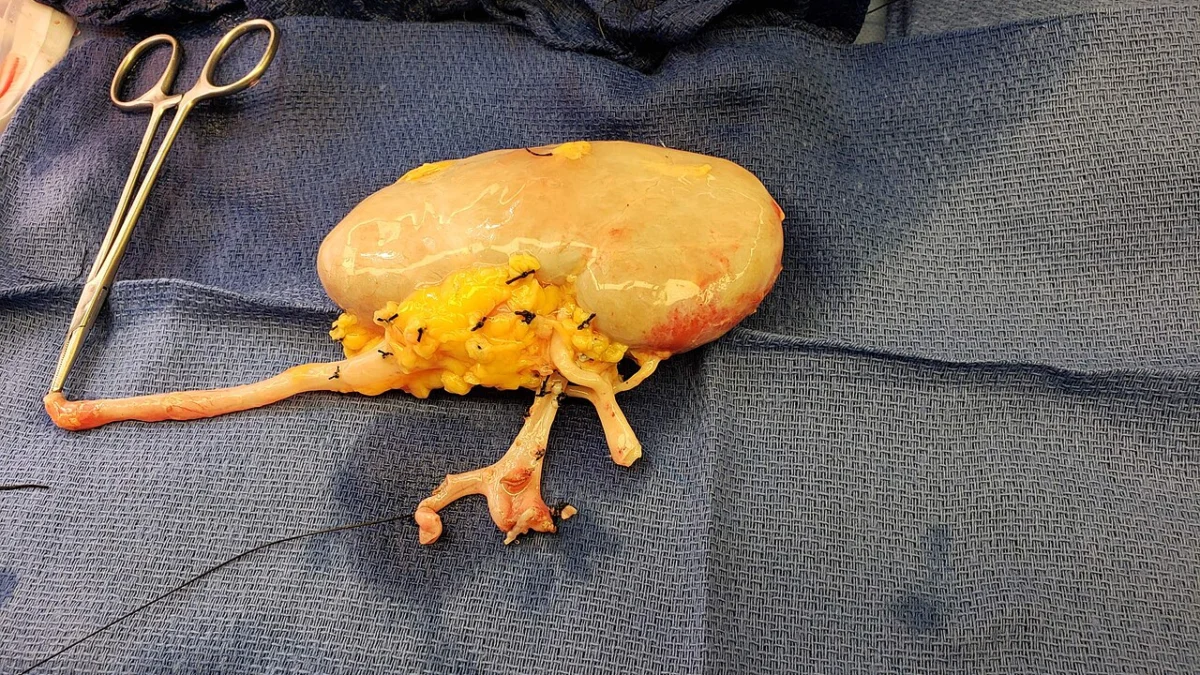
In modern transplant medicine, time is an uncompromising adversary. From the instant a surgeon clamps the renal vessels of an organ donor, a relentless biological countdown begins. Human kidneys preserved in standard ice-cold preservation solution begin to suffer irreversible ischemic cell death within twenty-four to thirty-six hours [1]. Because of this razor-thin temporal window, matching complex human leukocyte antigens (HLA) across distant cities is an agonizing logistical gamble. Every year, over twenty percent of donated kidneys worldwide are discarded because donor-recipient logistics cannot be coordinated in time, while hundreds of thousands of patients with end-stage renal disease languish on chronic hemodialysis [1] [2]. For more than forty years, cryobiologists dreamed of a medical revolution: freezing donor organs indefinitely in biobanks until a genetically ideal recipient is found. Yet, every attempt to freeze and thaw whole organs ended in catastrophic tissue destruction [1]. Now, a breakthrough published by researchers at the University of Minnesota in Nature Communications has conquered this four-decade barrier using an astonishing nanotechnology: magnetic nanowarming [1] [3].
The 40-Year Cryopreservation Challenge
To understand why whole organs could not previously be preserved in cold storage, one must examine the physical properties of freezing water [1]. Individual cells, such as human sperm, unfertilized oocytes, and early embryonic blastocysts, are routinely frozen and stored in liquid nitrogen tanks for decades. However, an intact kidney is not a loose slurry of cells; it is a dense, three-dimensional vascular organ containing over one million microscopic filtration units called nephrons, interconnected by delicate capillary loops and delicate tubular membranes [1] [2].
When an organ containing water freezes under conventional conditions, water molecules assemble into sharp, hexagonal crystalline lattices [1]. These expanding ice crystals act like microscopic surgical blades, puncturing cell walls, shearing capillary beds, and shredding glomerular basements. When such an organ is thawed, it turns into non-viable tissue incapable of vascular perfusion [1] [4].
To prevent ice crystallization, cryobiologists developed vitrification, cooling tissue so rapidly in the presence of concentrated cryoprotective agents (such as dimethyl sulfoxide and ethylene glycol) that water molecules freeze into an amorphous, glass-like solid without forming crystalline ice [1]. Vitrification solved the problem of cooling. However, rewarming the organ presented an even more lethal physiological barrier [1] [2].
The Twin Dilemma: Thermal Cracking and Devitrification
For four decades, the fatal flaw of cryopreservation occurred not during cooling, but during warming [1]. When an organ cooled to minus 150 degrees Celsius is immersed in a warm water bath, heat penetrates slowly from the external capsule inward toward the deep renal medulla [1] [3]. This slow, non-uniform warming triggers two catastrophic failures:
1. Thermal Stress Fractures (Cracking): Because the exterior warm tissue expands while the deep interior remains contracted in frozen glass, violent thermal expansion differentials generate immense mechanical stress. The organ literally cracks open, similar to dropping an ice cube into boiling water [1].
2. Devitrification (Recrystallization): As vitrified water warms through the critical temperature zone between minus 120 and minus 60 degrees Celsius, thermodynamically unstable water molecules suddenly reorganize into ice crystals. This flash-crystallization shreds the reviving nephrons within seconds [1] [5].
To survive the transition from vitrified glass to viable biological tissue, an entire whole organ must be warmed uniformly throughout its entire volume at an astonishing rate of at least 100 degrees Celsius per minute [1] [4]. Conventional external heating methods could never achieve this speed without cooking the organ’s outer surface [1].
How Magnetic Nanowarming Works
The University of Minnesota bioengineering team bypassed external heat conduction entirely by developing magnetic nanowarming, a technique that heats the organ from the inside out using biocompatible iron oxide nanoparticles excited by alternating radiofrequency magnetic fields [1] [3].
The magnetic nanoparticles consist of nanoscale iron oxide (Fe3O4) cores, measuring roughly 10 to 30 nanometers in diameter, chemically coated with protective silica or dextran shells to ensure complete biological inertness [1]. When suspended in a vitrification solution and perfused through the renal artery, these microscopic magnetic particles circulate through the renal vasculature, distributing evenly into every glomerular tuft and peritubular capillary network [1] [4].
Once the organ is vitrified and banked at cryogenic temperatures (minus 150 degrees Celsius), it remains preserved in a state of suspended animation indefinitely [1]. When needed for transplantation, the vitrified organ is placed inside an electromagnetic copper induction coil [1] [5].
The coil generates an alternating radiofrequency magnetic field operating at hundreds of kilohertz [1]. While human tissues, water, and proteins are completely transparent to magnetic fields and experience zero direct heating, the iron oxide nanoparticles react instantly. Through physical mechanisms known as Néel and Brownian relaxation, the magnetic dipoles of the nanoparticles oscillate furiously, converting magnetic energy into uniform thermal energy [1] [3]. Every cubic millimeter of the kidney warms simultaneously at over 100 degrees Celsius per minute, blazing through the dangerous crystallization temperature zone without a single ice crystal forming [1].
Conventional Cold Storage vs. Vitrification with Magnetic Nanowarming
| Preservation Dimension | Conventional Hypothermic Ice Storage | Vitrification & Magnetic Nanowarming |
|---|---|---|
| Maximum Preservation Time | 24 to 36 hours maximum before ischemic necrosis | Months to years (indefinite cryobanking at –150°C) |
| Physical State of Water | Liquid water at 4°C with active cellular metabolism | Ice-free amorphous glass state (zero metabolic degradation) |
| Heating Mechanism | Passive surface perfusion with warm recipient blood | Radiofrequency excitation of internal iron oxide nanoparticles |
| Rewarming Rate | 1°C to 5°C per minute (convective surface heating) | Exceeds 100°C per minute uniformly across entire tissue volume |
| HLA Matching Scope | Limited to local and regional emergency recipients | Global algorithmic HLA matching across international registries |
Nanowarming Step-by-Step Clinical Protocol
The successful protocol validated in laboratory animal models operates through five sequential stages [1]:
• Stage 1: Vascular Nanoparticle Loading: Following donor organ retrieval, the kidney is cannulated. A perfusion pump washes out donor blood and slowly infuses the organ with high-potency vitrification cocktail containing iron oxide nanoparticles, ensuring thorough saturation of all capillary networks [1].
• Stage 2: Cryogenic Vitrification: The organ is cooled at roughly 50 degrees Celsius per minute down to minus 150 degrees Celsius. The liquid transitions into a vitreous glass state without generating crystal nuclei [1] [4].
• Stage 3: Cryobank Storage: The organ is transferred into liquid nitrogen vapor storage, where metabolic activity is arrested to zero. The organ can reside in this state for months or years without aging [1].
• Stage 4: Radiofrequency Nanowarming: The banked organ is positioned within an alternating magnetic field coil. Within ninety seconds, inductive energy raises the organ temperature from minus 150 degrees to physiological warmth [1] [3].
• Stage 5: Nanoparticle Washout: Immediately following warming, the kidney is flushed with normothermic preservation solution. Because the nanoparticles reside purely inside the vascular lumen and do not cross into intracellular parenchyma, over ninety-nine percent of the iron oxide particles are washed out within minutes [1].
Transplantation Success and Renal Function Recovery
Demonstrating rapid warming in a beaker is one thing; proving that a rewarmed mammalian organ can filter blood inside a living animal is the ultimate medical proof [1].
In landmark trials published in Nature Communications, the Minnesota surgical team transplanted rewarmed rat kidneys back into recipient animal subjects whose own native kidneys had been surgically excised [1]. The results were historic: upon unclamping recipient blood vessels, the rewarmed grafts immediately flushed pink with oxygenated arterial blood. Within minutes, the transplanted kidneys began filtering plasma and producing urine [1] [3].
Long-term physiological monitoring across thirty days demonstrated that serum creatinine and blood urea nitrogen (BUN) levels stabilized into healthy physiological ranges. Post-mortem histopathology confirmed intact glomeruli, healthy proximal tubules, and zero signs of nanoparticle toxicity or ischemic infarction [1]. Scaled trials utilizing human-sized porcine kidneys are currently underway, setting the stage for human clinical trials [1] [2].
Global Medical Impact and the Future of Organ Banking
If magnetic nanowarming successfully translates into routine hospital practice, the implications for global public health will be transformative [1] [2]:
First, it will virtually eliminate the discard rate of donated kidneys. Today, hundreds of viable donor kidneys are rejected every weekend because transport flights are delayed or recipient crossmatches take too long [2]. With nanowarming, every retrieved kidney can be vitrified and stored securely until logistics are finalized.
Second, true organ banking will become a reality [1]. Just as blood banks store universal red blood cells, regional organ banks can maintain inventories of vitrified kidneys. Instead of rushing an organ to the nearest compatible patient on an emergency basis, computer algorithms can scan international registries to find a recipient with a 100 percent perfect HLA tissue match [1] [2]. Perfect immunological matching dramatically reduces the dosage of immunosuppressive drugs needed post-transplant, minimizing chronic rejection risks, opportunistic infections, and kidney failure.
Third, the technology is fundamentally modular. The same magnetic nanowarming physics being perfected for kidneys can be extended to human livers, hearts, lungs, and vascularized composite allografts, such as limbs and face transplants [1] [5].
Frequently Asked Questions
Primary Sources and References
Vitrification and Magnetic Nanowarming of Kidneys Restore Renal Function Post-Transplantation
- Journal
- Nature Communications
- Study Type
- Lab
- Year
- 2024
DOI10.1038/s41467-023-38824-8
References
- ↩ Vitrification and Magnetic Nanowarming of Kidneys Restore Renal Function Post-Transplantation
- ↩ Nature Communications: Successful Long-term Cryopreservation and Nanowarming of Renal Grafts
- ↩ Pig kidneys frozen for a year brought back to life
- ↩ Scientists Revive Kidneys Frozen for Extended Periods Using Nanoparticles
- ↩ Magnetic Nanoparticles Rewarm and Restore Organ Function

No comments yet. Be the first to join the conversation.