



Key Findings
- In the landmark STEP-1 clinical trial, participants receiving weekly 2.4 mg semaglutide lost an average of 14.9% of their baseline body weight over 68 weeks.
- Dual-energy X-ray absorptiometry (DXA) sub-studies revealed that 60.8% of weight lost was fat mass, while 39.2% consisted of lean body mass.
- Following drug discontinuation after 68 weeks, participants regained two-thirds (66%) of their lost weight within one year, demonstrating the necessity of permanent lifestyle adaptations.
When adults lose substantial body weight with popular GLP-1 drugs like Ozempic and Wegovy, they do not burn only fat. Approximately 39.2% of the lost weight comes from skeletal muscle tissue. This finding comes from body composition data in the STEP-1 clinical trial, published in the New England Journal of Medicine and Diabetes, Obesity and Metabolism [1]. Weekly injections of 2.4 mg semaglutide helped patients lose an average of 14.9% of their body weight over 68 weeks. However, dual-energy X-ray absorptiometry (DXA) scans showed that nearly 4 out of every 10 kilograms lost consisted of lean tissue. Without resistance training and adequate dietary protein, this muscle loss can depress resting metabolic rate and harm long-term health.
Semaglutide is one of the most widely discussed drugs of our decade. Celebrities, executives, and millions of patients struggling with obesity have adopted these weekly injections for rapid weight loss. Yet scale weight obscures the underlying biological reality: what tissue is the body actually breaking down? Are patients losing dangerous visceral fat, or are they shedding the skeletal muscle that protects longevity, bone strength, and metabolic resilience? To answer this question, researchers conducted the STEP-1 trial across 16 countries with 1,961 participants [2].
Skeletal muscle tissue is not just an engine for physical movement. In human biology, muscle is the main metabolic clearinghouse for blood sugar. It absorbs roughly 80% of post-meal glucose through GLUT-4 transporters. When an individual loses five or more kilograms of muscle during fast weight loss, their body loses a major glucose sink. This drop leaves them vulnerable to erratic blood sugar spikes when they resume normal eating habits [1].
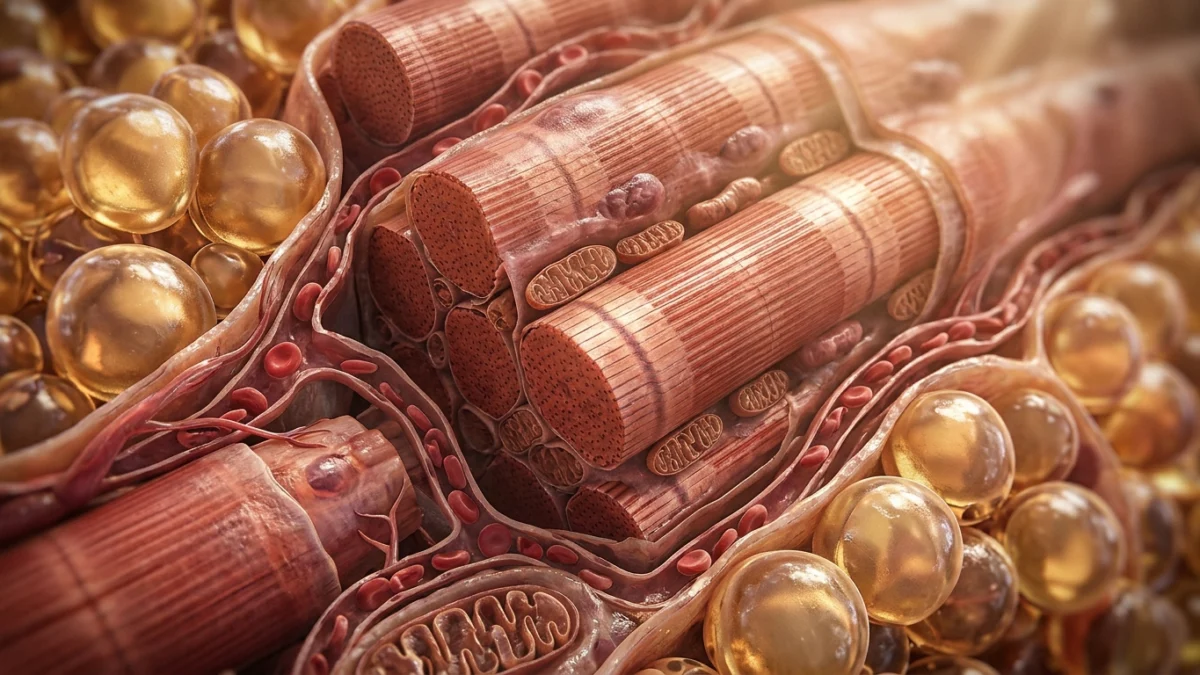
Inside muscle fibers, dense mitochondrial networks clear fatty acids and generate cellular energy. These organelles consume calories continuously, even while we sleep or sit at a desk. When muscle tissue wastes away, the body’s daily energy expenditure shrinks. This metabolic slowdown makes long-term weight maintenance increasingly difficult. Understanding this physiological challenge is essential for anyone considering GLP-1 therapy.
How GLP-1 Rewires Appetite Signaling in the Brain
In a healthy gut, endocrine L-cells in the distal ileum release a natural hormone called glucagon-like peptide-1 (GLP-1) right after a meal. This hormone travels to the pancreas to stimulate insulin release. At the same time, it enters the brain to signal fullness in the hypothalamus. However, natural human GLP-1 lasts only one to two minutes in the blood. An enzyme called dipeptidyl peptidase-4 (DPP-4) breaks it down very quickly.
Semaglutide solves this problem through clever molecular design. Scientists modified the peptide chain with a fatty acid branch. This modification stops rapid breakdown by DPP-4 and extends the drug’s active lifespan to an entire week. In the arcuate nucleus of the hypothalamus, semaglutide activates POMC neurons that create satiety. Meanwhile, it silences NPY neurons that trigger hunger. This action calms intrusive thoughts about eating, commonly known as food noise [1].
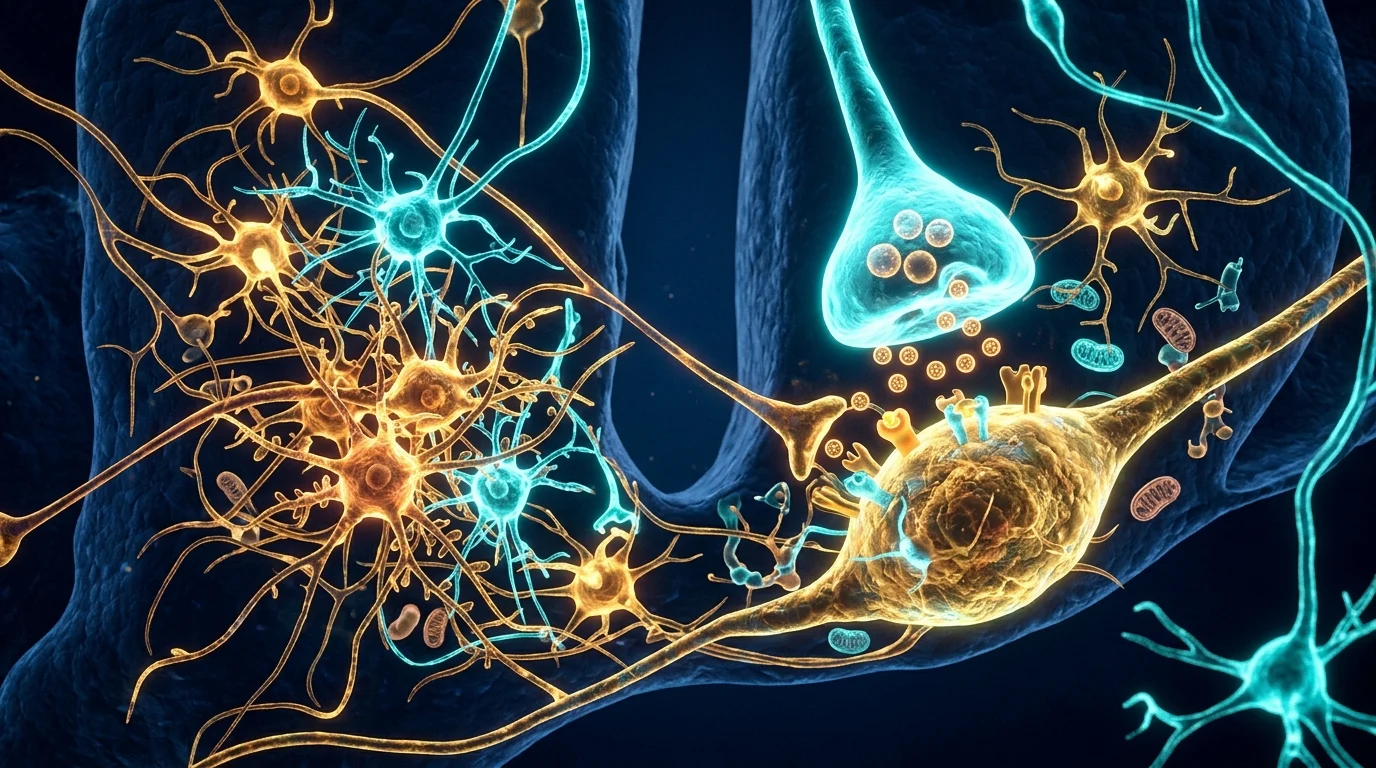
At the same time, semaglutide delays gastric emptying by acting on vagal nerve pathways. It slows the physical rate at which digested food exits the stomach. As a result, even small meals create long-lasting sensations of fullness. Patients naturally cut their daily calorie intake by 24% to 35% without struggling against intense hunger. As highlighted in our guide on how to reverse fatty liver naturally, cutting excess calories triggers powerful metabolic repairs. However, preserving muscular tissue remains essential during this transformation.
GLP-1 receptors also sit throughout the human cardiovascular system, kidneys, and peripheral nervous system. Beyond simple appetite suppression, activating these receptors reduces vascular resistance, enhances endothelial nitric oxide release, and lowers inflammatory markers. This broad biological action explains why semaglutide produces significant cardiovascular protections alongside dramatic weight reduction.
Physiological Cascade of Semaglutide in the Body
- Step 1
1. Receptor Binding
Semaglutide molecules bind tightly to GLP-1 receptors in the hypothalamic arcuate nucleus. - Step 2
2. Satiety Activation
Satiety-promoting neurons activate while hunger-driving NPY neurons are silenced, eliminating food noise. - Step 3
3. Delayed Gastric Emptying
Stomach motility slows significantly, prolonging physical post-meal distension and fullness. - Step 4
4. Caloric Deficit
Daily energy consumption drops by roughly 30% spontaneously, creating a persistent caloric deficit. - Result
5. Tissue Catabolism
The body breaks down stored adipose tissue for fuel, but simultaneously catabolizes skeletal muscle proteins.
How the Study Was Done: STEP-1 Clinical Trial Methodology
To measure the true clinical effects of semaglutide, an international research team designed the STEP-1 trial. Professor John P.H. Wilding of the University of Liverpool and Professor Rachel L. Batterham of University College London led the investigation. This double-blind, randomized, placebo-controlled trial included 122 clinical research sites across 16 countries in Europe, North America, South America, and Asia [1].
The investigators enrolled 1,961 adults with obesity (BMI 30 or greater) or overweight (BMI 27 or greater) with medical complications, excluding individuals with diabetes. Participants were randomized in a 2:1 ratio. 1,306 patients received weekly subcutaneous injections of semaglutide 2.4 mg. Meanwhile, 655 patients received matching placebo injections. To reduce stomach upset, doctors started the drug at 0.25 mg weekly and increased it every four weeks over a 16-week period until reaching 2.4 mg. Both groups received guidance on a 500-kcal daily deficit and 150 minutes of weekly activity [1].
Doctors monitored patient health throughout the 68-week trial. They conducted regular blood panels to track liver enzymes, fasting lipids, glycated hemoglobin, heart rate, and blood pressure. Registered dietitians and nurses also conducted monthly check-ins to reinforce nutrition targets and hydration. This extensive trial provided robust clinical data on modern pharmacologic weight loss.
- 1,961
- Participants 16 countries, 122 clinical sites
- 68 Weeks
- Study Duration Long-term intervention protocol
- -14.9%
- Mean Weight Loss Semaglutide treatment cohort
- 384:989
- NEJM Citation Peer-reviewed clinical benchmark
Did Patients Lose Fat or Muscle? The DXA Scan Evidence
True weight loss is about changing body composition, not just dropping pounds on a scale. To see exactly which tissues disappeared, researchers conducted whole-body dual-energy X-ray absorptiometry (DXA) scans on 140 participants at baseline and at week 68 [2]. DXA machines use two low-dose X-ray beams with different energies. This allows them to measure bone mineral content, fat mass, and lean soft tissue with millimeter accuracy.

The body composition findings published in Diabetes, Obesity and Metabolism revealed clear shifts. Over 68 weeks, participants in the semaglutide group lost an average of 15.3 kg of gross body weight. Within this loss, total fat mass decreased by 8.36 kg, representing a 19.3% drop from baseline. Total lean body mass also declined by 5.26 kg, which represents a 9.7% absolute drop. As shown in Chart 1 and Table 1, roughly 39.2% of the lost weight was lean muscle tissue [2].
The trial also confirmed notable health gains. Visceral adipose tissue, the dangerous fat depot that surrounds internal organs, dropped by 27.4%. Because fat was lost faster than muscle, the proportion of lean mass in participants’ bodies actually rose from 60.7% to 63.7%. As we observed in our research on walking after meals to cut blood sugar, burning visceral fat improves insulin sensitivity and provides major protection against cardiovascular disease [2].
| Biometric Parameter | Placebo Cohort | Semaglutide 2.4 mg Cohort | Clinical Difference |
|---|---|---|---|
| Mean Body Weight Change | -2.4% (-2.6 kg) | -14.9% (-15.3 kg) | -12.5% Additional Weight Loss |
| Total Fat Mass Loss (DXA) | -1.9% (-0.95 kg) | -19.3% (-8.36 kg) | Substantial Adipose Reduction |
| Visceral Adipose Tissue | -3.1% | -27.4% | Marked Cardiovascular Benefit |
| Lean Body Mass Loss | -1.2% (-0.68 kg) | -9.7% (-5.26 kg) | Critical Muscle Loss to Mitigate |
| Waist Circumference Change | -4.1 cm | -13.54 cm | -9.44 cm Greater Reduction |
| Systolic Blood Pressure | -1.1 mmHg | -6.2 mmHg | -5.1 mmHg Blood Pressure Improvement |
All values represent mean changes observed over 68 weeks. Source: Wilding et al., NEJM (2021) & DOM (2021).
Understanding Sarcopenic Obesity: Why Muscle Loss is Dangerous
In clinical medicine, sarcopenia refers to the loss of skeletal muscle mass and strength typically seen in old age. However, when rapid weight loss causes fast muscle wasting in younger adults, it triggers a condition called sarcopenic obesity. In this state, a person’s weight on the scale looks normal, but their body fat percentage remains high while their muscle mass is depleted.
Skeletal muscles contain dense networks of mitochondria. These cellular power plants burn fatty acids and create energy throughout the day and night. When muscle mass drops by nearly 10%, basal metabolic rate drops along with it. As a result, the body burns fewer calories during rest and sleep. Diminished skeletal muscle also strains joints, degrades balance, and hampers physical independence. As shown in research on epigenetic memory in fat cells, protecting your muscle mass is the best defense against metabolic relapse [2].
This risk is especially high for South Asian populations. Genetic and epidemiological studies show that South Asians naturally carry higher visceral fat and lower baseline muscle mass compared to European populations. When South Asian adults lose muscle rapidly, their insulin resistance can worsen even while body weight drops. Therefore, preserving muscle mass is a medical priority, not just a cosmetic preference.
When resting metabolic rate falls, the body also reduces non-exercise activity thermogenesis. Patients unconsciously move less, fidget less, and expend fewer spontaneous calories throughout the day. This compounding biological slowdown traps individuals in an uphill metabolic struggle. It makes sustained fat loss increasingly difficult unless structured physical activity is deliberately prioritized.
What Happens When You Stop the Drug: The Rebound Effect
Many patients believe weight loss injections are a short-term fix. They assume they can stop the drug once they reach their target weight. However, the STEP-1 trial extension study disproved this belief [3].
After 68 weeks of treatment, researchers stopped semaglutide injections. They followed participants for another 52 weeks without medication. Within one year of stopping, participants regained two-thirds (66%) of the weight they had lost. At the same time, blood pressure, fasting glucose, and lipid improvements returned toward baseline levels [3].
This rebound happens because appetite returns full force while metabolic rate remains low due to lost muscle. When a strong appetite meets a body with fewer muscle fibers burning resting calories, energy balance tilts into a surplus. Fat accumulates rapidly. This clinical reality proves that obesity is a chronic metabolic condition. It requires ongoing lifestyle care rather than brief drug courses.
How to Prevent Muscle Loss While Taking Semaglutide
Patients can protect their muscle mass during GLP-1 therapy by following two clear, proven habits:
1. Progressive Resistance Exercise: Light walking alone cannot prevent muscle breakdown during rapid calorie deficits. Patients should perform resistance exercises three to four days per week. Focusing on compound exercises for the legs, chest, and back creates mechanical tension. Compound movements like squats, lunges, chest presses, and rows activate large motor units. This mechanical tension signals the body to preserve muscle fibers even in a caloric deficit.

2. Optimal Protein Nutrition: Because GLP-1 drugs suppress appetite, patients often eat far too little protein. Clinical guidelines recommend consuming 1.2 to 1.6 grams of protein per kilogram of target body weight each day. Eating lean protein sources like eggs, fish, Greek yogurt, tofu, and lentils across three meals supplies the essential amino acids needed to rebuild muscle tissue. Ensuring at least 2.5 grams of leucine per meal helps cross the biochemical threshold for muscle protein synthesis.
Nutrition scientists emphasize the leucine trigger concept during strict caloric restriction. Leucine directly stimulates the sestrin-2 sensor inside muscle cells and switches on the cellular mTOR pathway. In hypocaloric states, adults require a higher leucine threshold to initiate protein synthesis. Consuming whole-food protein sources rich in essential amino acids ensures that dietary nitrogen repairs muscle fibers rather than being burned away for quick energy.
What the Study Cannot Tell Us: Limitations and Open Questions
While the STEP-1 trial was well designed, it had several clear limitations that clinicians must consider when interpreting the results:
First, the DXA body composition sub-study included 140 participants. While this sample was large enough to achieve statistical significance, it represented only a portion of the total 1,961 trial participants. Larger trials across diverse ethnic groups are needed to verify whether muscle loss rates vary across populations.
Second, the STEP-1 protocol did not test structured resistance training. The trial only recommended general walking and lifestyle advice. As a result, the trial cannot show how much muscle loss could be prevented if patients followed a supervised heavy lifting program from day one.
Third, the study excluded adults over the age of 75 and individuals with severe kidney or heart disease. Because elderly individuals already face elevated risks of frailty and falls, the impact of losing five kilograms of muscle in older cohorts requires targeted investigation. Long-term studies lasting five to ten years are still needed to assess whether lean mass stabilizes over time.
Clinical Impact and Future Frontiers in Metabolic Medicine
The findings from STEP-1 have shifted the focus of weight management from simple pounds lost to complete body composition optimization. Endocrinologists now routinely combine GLP-1 prescriptions with body composition monitoring and nutritional counseling.
Pharmaceutical companies are also developing new multi-receptor drugs. Molecules like tirzepatide and retatrutide activate multiple hormone pathways simultaneously. Clinical trials are also evaluating semaglutide alongside myostatin inhibitors to block lean tissue loss directly. Regardless of future drugs, strength training and protein nutrition remain fundamental pillars of human health [1, 2].
Frequently Asked Questions About Ozempic and Muscle Loss
Glossary
Scientific terms used in this article
- GLP-1 (Glucagon-Like Peptide-1)Incretin Hormone
- A natural gut hormone that stimulates insulin secretion and signals satiety in the brain.
- SemaglutideGLP-1 Receptor Agonist
- A synthetic peptide medication that mimics native GLP-1 to suppress appetite and lower blood sugar.
- SarcopeniaMuscle Loss Condition
- The progressive loss of skeletal muscle mass, quality, and physical functional strength.
- DXA ScanDual-Energy X-ray Absorptiometry
- A specialized radiological scan that precisely measures bone density, fat mass, and lean muscle tissue.
- Visceral Adipose TissueDeep Abdominal Fat
- Metabolically active fat surrounding internal abdominal organs associated with cardiovascular disease.
Once-Weekly Semaglutide in Adults with Overweight or Obesity
- Journal
- New England Journal of Medicine
- Study Type
- Primary Clinical Trial
- Year
- 2021
Frequently Asked Questions
Common reader questions about this study
What is the difference between Ozempic and Wegovy?
Both medications contain the same active ingredient, semaglutide. Ozempic is approved for type 2 diabetes management at doses up to 2.0 mg weekly. Wegovy is approved for chronic weight management at a higher dose of 2.4 mg weekly.
How can I tell if I am losing muscle rather than fat on semaglutide?
Warning signs include difficulty climbing stairs, weaker grip strength, chronic fatigue, and skin sagging. An objective test like a DXA scan provides precise confirmation.
Why does weight rebound so quickly after stopping the medication?
Stopping the drug releases the brain's appetite brake while resting metabolic rate remains low due to lost muscle. Normal eating in a body with less muscle leads to rapid fat regain.
Can people without diabetes use semaglutide for weight loss?
Yes. Health agencies approve Wegovy for adults with obesity (BMI 30+) or overweight individuals (BMI 27+) with related conditions like hypertension, under medical supervision.
What are the most common side effects of semaglutide?
Stomach symptoms like nausea, vomiting, diarrhea, constipation, and bloating are most common. Rare but serious risks include pancreatitis and gallbladder issues.


No comments yet. Be the first to join the conversation.