


More than 2,500 meters (8,300 feet) beneath the surface of the North Pacific Ocean lies an alien realm of absolute environmental hostility [1]. In this abyssal bathypelagic wilderness, solar photons have not penetrated for billions of years, ambient water temperatures hover perpetually just above freezing (2°C to 3°C), and hydrostatic pressure exerts an overwhelming crushing force exceeding 250 times atmospheric pressure at sea level [2]. For an unprotected human diver or conventional submersible, this immense pressure, exceeding 25 megapascals, would implode steel bulkheads and pulverize biological tissues in fractions of a second [2, 3].
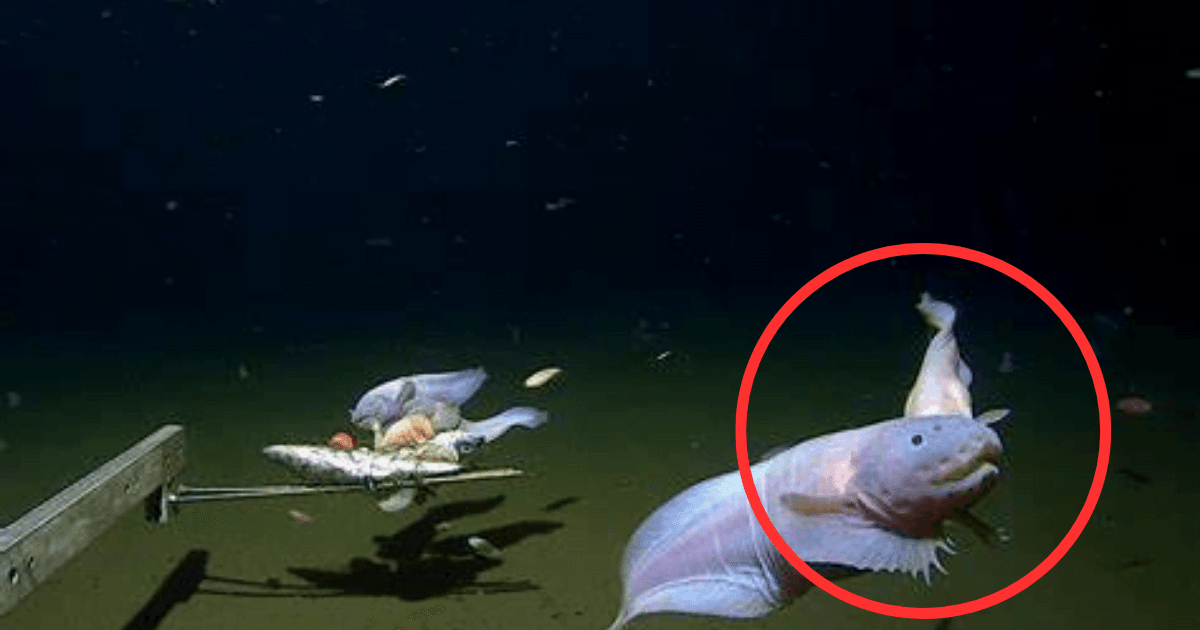
Yet in this frozen, perpetual twilight, evolutionary biology has sculpted some of the most startling anatomical adaptations in the animal kingdom [1]. Among the rarest and most visually baffling organisms inhabiting these crushing depths is Macropinna microstoma, colloquially known as the Pacific barreleye fish [1]. Measuring roughly 15 centimeters in length, this remarkable teleost possesses a physiological architecture that seems lifted from science fiction: a completely transparent, fluid-filled cranial dome that functions like a submarine cockpit, housing a pair of glowing, tubular emerald-green eyes that rotate inside its own head [1, 4].
For nearly seventy years following its taxonomic discovery, the barreleye remained one of marine biology’s most frustrating enigmas [1]. Every specimen hauled to the surface in research trawling nets arrived with its cranial dome crushed, torn, and collapsed into an unrecognizable mush [1, 3]. It was not until the deployment of deep-diving remotely operated vehicles (ROVs) by the Monterey Bay Aquarium Research Institute (MBARI) that marine scientists witnessed the living creature floating motionless in its natural abyssal habitat, unmasking the biophysical secrets of its rotating vision, biochemical pressure shields, and daring predatory tactics [1, 5].
- 8,300 Feet
- Maximum Depth
- 250x Pressure
- Crushing Force
- 90° Rotation
- Ocular Maneuver
- 480 nm Peak
- Bioluminescent Filter
The Twilight Abyss: The Crushing World Beyond Sunlight
To comprehend the evolutionary genius of Macropinna microstoma, one must inspect the severe physical and thermodynamic constraints governing the deep ocean [2]. The ocean water column is divided into distinct photic zones based on light penetration [4]. The epipelagic zone (surface to 200 meters) receives abundant sunlight driving global photosynthesis [4]. Below lies the mesopelagic zone (200 to 1,000 meters), known as the twilight zone, where red, yellow, and orange wavelengths of light are rapidly absorbed within the first 100 meters, leaving only faint, filtered blue-green wavelengths that dim exponentially with depth according to the Beer-Lambert law of optical absorption [4]. Below 1,000 meters stretches the vast bathypelagic zone, an ink-black realm where sunlight is completely extinguished and the only luminescence is produced by living organisms through chemical bioluminescence [4].
At depths between 600 and 2,500 meters, where the barreleye hunts, ambient downwelling sunlight is reduced to less than one-trillionth of its surface intensity [1, 4]. To human eyes, this environment appears pitch-black; however, for specialized abyssal predators, the faint silhouettes of translucent organisms passing overhead cast microscopic shadows against the downwelling celestial glow [4]. Navigating and hunting in this optical borderland demands revolutionary sensory adaptations [1].
Simultaneously, the physical burden of hydrostatic pressure increases linearly by approximately one atmosphere (101.3 kPa) for every 10 meters of depth [2]. At 8,300 feet, the pressure exceeds 250 atmospheres, equivalent to supporting the weight of a heavy locomotive on a human thumbnail [2, 3]. Under such extreme forces, biological membranes freeze into rigid gels, enzymatic catalytic pockets distort, and unspecialized protein complexes undergo catastrophic denaturation [3, 5]. Survival here requires profound molecular restructuring across every cell in the body [2].
Furthermore, ambient temperatures in the deep bathypelagic ocean remain perpetually locked between 1.5°C and 3°C [2]. At near-freezing temperatures, molecular kinetics slow down dramatically, reducing enzyme catalysis rates to a fraction of their surface equivalents [5]. To maintain active metabolic flux without suffering physiological torpor, deep-sea organisms must evolve specialized cold-adapted enzymes featuring flexible catalytic clefts and reduced activation energies [2, 5].
The Anatomical Marvel: Fluid-Filled Domes and Rotating Tubular Eyes
At first glance, casual observers frequently misidentify the barreleye’s facial anatomy [1]. Situated directly above the fish’s small, toothless mouth are two dark, circular indentations that look unmistakably like eyes [1]. In reality, these structures are nares, highly sensitive olfactory pits packed with chemosensory olfactory epithelium used to detect amino acids and chemical scents trailing through the ocean current [1, 2].
The fish’s true eyes are located completely inside its transparent forehead [1]. Encased beneath a tough, flexible, transparent dome of integumentary tissue filled with clear lymph fluid, the barreleye’s eyes are shaped like oversized cylinders or barrels, hence the common name barreleye [1]. These tubular eyes house massive, highly spherical green lenses positioned above deep, multi-layered retinas packed with hundreds of thousands of ultra-dense rod photoreceptors [1, 4].
Until 2008, textbooks claimed that tubular eyes were permanently fixed in an upward-pointing orientation, condemning the fish to a chronic upward tunnel-vision gaze [1]. Marine biologists wondered how an animal with upward-locked eyes could ever catch food with a tiny, forward-facing mouth without crashing into obstacles [1]. In a landmark paper published in Copeia by Dr. Bruce Robison and Kim Reisenbichler, ROV footage proved that the barreleye’s eyes are not fixed; they are suspended within a specialized muscular sling that allows them to rotate smoothly through a full 90-degree arc [1].
The ocular rotation mechanism is driven by hypertrophied superior and inferior oblique muscles coordinated by specialized branches of the oculomotor and trochlear cranial nerves [1, 4]. While hovering motionless in the water column using its broad, wing-like pectoral and pelvic fins, the barreleye points its tubular lenses straight up to scan the twilight ceiling for the silhouettes of drifting prey [1]. Once a target is identified, the fish engages its oblique ocular muscles, rotating its emerald lenses forward and downward until they align directly with its mouth, locking onto the prey with stereoscopic binocular depth perception before lunging forward to feed [1, 4].
Beneath the retina, a dense layer of reflective crystalline platelets forms a biological mirror called the tapetum lucidum [4]. Any photon of light that manages to pass through the rod photoreceptors without triggering a rhodopsin reaction is reflected back through the sensory layer a second time, effectively doubling the eye’s photon capture efficiency in the photon-starved abyss [4].
Molecular Survival: Defeating 250 Atmospheres with TMAO Piezolytes
How does a fragile-looking fish with a delicate transparent head avoid being crushed to death beneath 8,300 feet of oceanic water? The answer lies in fundamental physical chemistry: liquids are virtually incompressible [2]. Because the barreleye’s body, tissues, and cranial dome are composed almost entirely of water and lipid-rich gelatins rather than compressible gas pockets, external water pressure pushes equally against internal fluid pressure, creating perfect hydrostatic equilibrium [1, 3].
Unlike shallow-water fishes that maintain neutral buoyancy using gas-filled swim bladders, Macropinna microstoma completely lacks a functional swim bladder [1, 3]. A gas-filled bladder at 250 atmospheres would be compressed to 1/250th of its surface volume, demanding unsustainable metabolic energy to pump gas against the crushing hydrostatic gradient [3]. Instead, the barreleye achieves neutral buoyancy by reducing heavy bony ossification, producing lightweight cartilaginous bones, and infusing its muscles with low-density lipids and squalene compounds [1, 3].
However, while liquids do not crush, extreme pressure wreaks havoc on biological macromolecules [2, 5]. High hydrostatic pressure compresses the volume of water molecules surrounding proteins, forcing water into internal protein cavities and destabilizing catalytic hydrogen bonds [2]. Furthermore, cellular lipid bilayers become tightly packed, undergoing a phase transition from fluid fluidic membranes into brittle crystalline gels, a process that halts membrane transport and incapacitates ion pump enzymes like Na+/K+-ATPase [5].
To survive this thermodynamic onslaught, deep-sea fishes deploy specialized organic osmolytes known as piezolytes (pressure-resisting molecules) [2]. The most critical piezolyte in bathypelagic vertebrates is Trimethylamine N-oxide (TMAO) [2]. Groundbreaking investigations led by marine physiologist Dr. Paul Yancey revealed that TMAO acts as a molecular chaperone, forming rigid, protective hydration shells around cellular water molecules [2]. By preventing water from invading folded protein cavities, TMAO preserves the structural integrity and catalytic kinetics of essential metabolic enzymes under staggering pressure loads [2, 5].
Remarkably, Yancey’s research demonstrated that the concentration of cellular TMAO in marine fishes increases in direct, linear proportion to oceanic depth [2]. At 8,300 feet, Macropinna microstoma accumulates high concentrations of TMAO alongside elevated ratios of docosahexaenoic acid (DHA) and polyunsaturated fatty acids in its cell membranes [2, 5]. This homeoviscous adaptation keeps neural and retinal membranes completely fluid and functional in near-freezing, high-pressure waters [5].
Sensory Visual Ecology: Green Optical Filters and Bioluminescent Camouflage
The intense emerald-green coloration of the barreleye’s tubular lenses is not decorative; it represents one of the most sophisticated optical filtration systems evolved on Earth [1, 4]. In the twilight depths between 600 and 1,000 meters, visual hunting is complicated by a deceptive phenomenon known as counterillumination [4]. Many mesopelagic animals, such as hatchetfish and lanternfish, possess ventral photophores that emit pale blue bioluminescence matching the exact color and intensity of downwelling sunlight, effectively erasing their downward shadow and rendering them invisible to predators looking up from below [4].
The barreleye’s eyes bypass this camouflage through precision optical physics [1]. Within its tubular lenses, specialized yellow and green accessory pigments absorb downwelling blue sunlight (~470 nm), dimming the background twilight glow to near-black [1, 4]. However, the bright, monochromatic bioluminescent emissions produced by oceanic siphonophores and jellyfish, which operate through luciferin-luciferase catalysis similar to the chemical light pathways detailed in our analysis of firefly bioluminescence and cold light enzymes, penetrate the green filter unimpeded [4].
By stripping away downwelling daylight, the green lenses turn the dark ocean into high-contrast radar [1]. To the barreleye, camouflaged siphonophores and glowing planktonic crustaceans shine like brilliant beacons against an ink-black background [1, 4]. The fish’s massive tubular retinas, containing millions of tightly packed rhodopsin photopigments, maximize photon absorption, granting the animal visual sensitivity unmatched by surface vertebrates [4].
This optical selectivity illustrates how sensory evolution mirrors the physical constraints of deep aquatic niches [4]. While terrestrial animals and humans experience visual fatigue from unnatural blue light emissions, as explored in our clinical overview of smartphone screen emissions and ocular health, the barreleye has evolved physical filters that selectively eliminate high-energy blue scatter to survive in perpetual darkness [1, 4].
| Species / Common Name | Depth Range | Ocular Adaptation | Pressure Shield Mechanism | Primary Prey & Trophic Niche |
|---|---|---|---|---|
| Macropinna microstoma (Barreleye) | 600 to 2,500 m | Rotating tubular eyes in fluid dome | Elevated TMAO & homeoviscous lipids | Siphonophores, small pelagic crustaceans |
| Chauliodus sloani (Viperfish) | 500 to 2,800 m | Massive hinged jaw & forward binocular eyes | Reduced ossification & high gelatinous mass | Mesopelagic fishes, squids |
| Melanocetus johnsonii (Anglerfish) | 1,000 to 3,500 m | Degenerate tubular eyes; bioluminescent esca | Compressible skeletal cartilage & TMAO | Opportunistic ambush of pelagic nekton |
| Bathylagus milleri (Deep-sea Smelt) | 400 to 1,500 m | Large lateral spherical eyes with tapetum | Moderate TMAO osmolyte buffers | Micro-crustaceans, salps, larvaceans |
| Pseudoliparis belyaevi (Hadal Snailfish) | 6,000 to 8,336 m | Greatly reduced vestigial subcutaneous eyes | Maximum theoretical TMAO saturation | Benthic amphipods, polychaete worms |
Synthesized from Robison & Reisenbichler (2008), Yancey et al. (2014), and Jamieson (2015).
Kleptoparasitic Hunting: Stolen Meals from Poisonous Siphonophore Webs
One of the most thrilling revelations stemming from MBARI’s in situ observations is the barreleye’s specialized feeding strategy [1]. In the open bathypelagic water column, food is exceedingly scarce; organisms cannot afford to expend vast energy chasing agile prey [1, 3]. Macropinna microstoma solved this energetic dilemma by evolving into a kleptoparasite, an animal that steals food captured by other predators [1].
Among the barreleye’s primary targets are giant siphonophores belonging to the genus Apolemia and Praya [1]. Siphonophores are colonial cnidarians that drift through the water column trailing curtains of lethal, venomous stinging tentacles measuring up to 30 to 40 meters in length [1, 4]. These curtains capture small fishes, copepods, and euphausiids, entangling them in neurotoxic nematocysts [1]. Each nematocyst capsule discharges a microscopic hypodermic harpoon powered by osmotic pressures exceeding 150 atmospheres, injecting paralyzing peptide toxins into any passing flesh [1, 4].
For ordinary marine fishes, swimming into a siphonophore tentacle curtain means agonizing paralysis and death [1]. For the barreleye, however, the transparent cranial dome serves as an impenetrable bio-armor helmet [1]. Encased safely behind its tough fluid-filled dome, the barreleye maneuvers with pinpoint precision between stinging tentacles [1]. Its tubular green eyes track copepods trapped in the siphonophore’s web; the fish dart forward, deftly plucks the food item from the stinging tentacles with its small, precise beak-like mouth, and backs away unharmed, shielded completely from venomous stings [1, 4].
The fish’s digestive tract is equally fortified [1]. Autopsies of intact captured specimens have revealed thick epithelial linings throughout the esophagus and stomach, along with mucous secretions that coat ingested prey [1, 3]. This gastrointestinal shielding neutralizes any lingering nematocyst toxins that might discharge after the food has been swallowed, completing an airtight evolutionary defense system [1].
Barreleye Predatory Sequence: From Vertical Scan to Precision Strike
Vertical Silhouette Scan
Barreleye hovers motionless. Tubular emerald lenses point straight up, filtering downwelling twilight to spot shadows.
Bioluminescent Lock
Green optical pigments strip away sunlight, isolating glowing copepods caught in drifting siphonophore tentacles.
90° Ocular Rotation
Ocular muscles rotate lenses forward and downward, aligning stereoscopic binocular focus directly with the mouth.
Shielded Extraction
Fish darts forward. Transparent fluid canopy shields eyes from lethal stinging tentacles while mouth snatches prey.
The 1939 Historical Paradox: How Surface Nets Destroyed the Barreleye Dome
The taxonomic history of Macropinna microstoma stands as a sobering cautionary tale in empirical science [1]. When marine biologist Dr. W. M. Chapman first formally described the species in 1939 from specimens caught off California, he published meticulous anatomical sketches depicting a dark, solid-headed fish with bizarre, upward-pointing eyes sitting awkwardly in open sockets [1]. For the next seventy years, every ichthyology textbook, scientific encyclopedia, and museum display faithfully reproduced Chapman’s inaccurate drawing [1, 3].
Scientists were not careless; rather, their sampling tools were inadvertently destructive [1]. In the mid-twentieth century, deep-sea research relied entirely on heavy commercial trawling nets dragged behind surface vessels [3]. As nets were hauled up from 3,000 feet, two catastrophic physical transformations occurred [1, 3]:
1. Mechanical Abrasion and Net Trauma: Within the turbulent vortex of a trawling cod-end, hundreds of kilograms of squirming deep-sea animals, rocks, and rough netting rubbed violently against one another [3]. The barreleye’s delicate, gossamer-thin integumentary dome was instantly ripped away before the net ever breached the surface [1].
2. Rapid Decompression and Osmotic Rupture: Hauling a deep-sea specimen up thousands of feet within a few hours causes rapid decompression [2]. While incompressible fluids do not explode like gas-filled swim bladders, the dramatic pressure drop and temperature surge (from 2°C to 20°C) cause delicate cellular junctions and thin epithelial membranes to rupture [2, 5].
Consequently, generations of marine biologists only ever examined damaged, dehydrated corpses, entirely unaware that the animal possessed a breathtaking transparent canopy in life [1]. It was only when MBARI’s robotic submersibles, equipped with ultra-high-definition cameras and soft suction-samplers, gently captured living barreleyes in undisturbed deep-sea water that science finally beheld the organism as nature designed it [1].
Extraterrestrial Analogs: Ocean Worlds and Extraterrestrial Sub-Ice Life
The discovery of complex, highly adapted vertebrates flourishing under extreme hydrostatic pressure, freezing temperatures, and zero solar illumination has sparked immense excitement among astrobiologists searching for life beyond Earth [6]. For decades, planetary science assumed that complex biological life required sunlight to drive photosynthetic food webs [6]. The deep sea shattered that assumption [2, 6].
Within our solar system, several icy moons harbor vast liquid oceans beneath frozen outer crusts [6]. Jupiter’s moon Europa conceals a global saltwater ocean estimated to be 60 to 150 kilometers deep, containing more than twice the liquid water volume of all Earth’s oceans combined, capped by an icy shell 15 to 25 kilometers thick [6]. Similarly, Saturn’s moon Enceladus harbors a warm, sub-surface ocean warmed by hydrothermal vents spewing molecular hydrogen, methane, and complex organic compounds into the water [6].
At the floor of Europa’s ocean, hydrostatic pressures reach between 130 and 250 megapascals, conditions directly analogous to Earth’s abyssal and hadal ocean trenches [2, 6]. The evolutionary mechanisms perfected by Macropinna microstoma, specifically TMAO piezolyte cellular protection, fluid-balanced bio-domes, and hyper-sensitive chemiluminescent vision, demonstrate that complex multicellular organisms do not merely tolerate extreme pressure; they evolve intricate, thriving ecosystems independently of stellar sunlight [1, 6]. As space agencies prepare missions like NASA’s Europa Clipper and future sub-ice robotic probes, Earth’s barreleye fish provides a living blueprint for the extraterrestrial biologies waiting in the dark oceans of deep space [2, 6].
The deep ocean remains our planet’s final, greatest wilderness [3]. Macropinna microstoma reminds us that what appears grotesque or bizarre from the biased vantage point of dry land is, in truth, an exquisite masterpiece of thermodynamic adaptation [1, 2]. Beneath miles of black ocean, where humanity’s greatest machines struggle to survive, life has reigned with quiet, luminous elegance for hundreds of millions of years [1, 4].
Frequently Asked Questions
Can the barreleye fish be kept in a home or public aquarium?
No. The barreleye cannot survive at surface atmospheric pressure. In shallow aquariums, the hydrostatic pressure is 250 times too low, causing the fish’s cellular membranes and metabolic enzymes to fail. Furthermore, warm surface temperatures rapidly kill the animal. MBARI has temporarily kept specimens in specialized, temperature-controlled pressurized laboratory tanks, but long-term captivity is currently impossible.
Are the green structures inside the barreleye's head really its eyes?
Yes. The two large emerald-green spheres inside the transparent fluid-filled head are the fish’s true tubular eyes. The two dark indentations above the mouth that look like eyes are actually nares (olfactory nostrils) used to smell chemical scents in the water.
How does the transparent head dome not pop under high ocean pressure?
Because liquids are essentially incompressible, the clear fluid filling the barreleye’s cranial canopy matches the exact pressure of the surrounding deep ocean water (around 25 megapascals). Because the internal and external pressures are equal, there is zero net inward force attempting to crush the dome.
What does TMAO do in deep-sea fishes?
Trimethylamine N-oxide (TMAO) is a natural piezolyte molecule that binds tightly to water molecules inside cells. Under high hydrostatic pressure, water normally invades protein structures and distorts their shape. TMAO prevents this water intrusion, maintaining proper protein folding and enzyme function in crushing ocean depths.
How does the barreleye prevent stinging jellyfish tentacles from blinding it?
The barreleye’s transparent fluid-filled dome covers and seals the eyes and olfactory nerves completely inside the skull. When the fish swims into venomous siphonophore tentacles to snatch trapped food, the tentacles brush harmlessly against the tough transparent canopy without touching the delicate eyes or gills.
References
- ↩ Macropinna microstoma and the Paradox of Its Tubular Eyes - Robison, B. H. & Reisenbichler, K. R. (Copeia, 2008)
- ↩ Marine Fish May Be Biochemically Constrained from Inhabiting the Deepest Ocean Depths - Yancey, P. H. et al. (PNAS, 2014)
- ↩ The Hadal Zone: Life in the Deepest Oceans - Jamieson, A. J. (Cambridge University Press, 2015)
- ↩ Visual Adaptations of Deep-Sea Fishes to Bioluminescence and Downwelling Light - Douglas, R. H. et al. (Philosophical Transactions of the Royal Society B, 2016)
- ↩ Adaptations to High Hydrostatic Pressure - Somero, G. N. (Annual Review of Physiology, 1992)
- ↩ Astrobiology and the Potential of Ocean Worlds - Hand, K. P. et al. (Annual Review of Astronomy and Astrophysics, 2009)

No comments yet. Be the first to join the conversation.