



In a Minute
According to Census 2011 data, separated individuals in Tamil Nadu outnumber legally divorced couples by 6.3 times. Chronic in-law boundary friction, unequal household labor, shift work fatigue, and poor conflict habits drive marital breakdown. Long-term research shows daily mutual respect, clear boundaries, and maintaining a five-to-one positive emotional ratio protect lasting partnership.
Key Findings
- According to Census of India Table C-2 data, separated couples in Tamil Nadu outnumber legally divorced individuals by 6.3 times.
- Ordinary disagreements do not dissolve marriages; long-term clinical research proves contempt and silent stonewalling are the primary destroyers.
- Stable couples maintain a minimum ratio of five warm, respectful interactions for every single negative conflict discussion.
No marriage collapses overnight. Years of unaddressed micro-frustrations, unspoken resentments, and emotional withdrawal gradually corrode the foundation of partnership. While Western nations record divorce rates between 40% and 50%, India’s official legal rate stands at just 1.1%. However, 2011 Census data reveals that in Tamil Nadu, separated individuals outnumber legally divorced couples by 6.3 times. Sustainable partnership is neither accidental nor automatic; it requires daily mutual respect, realistic domestic boundary management, and conscious emotional presence.
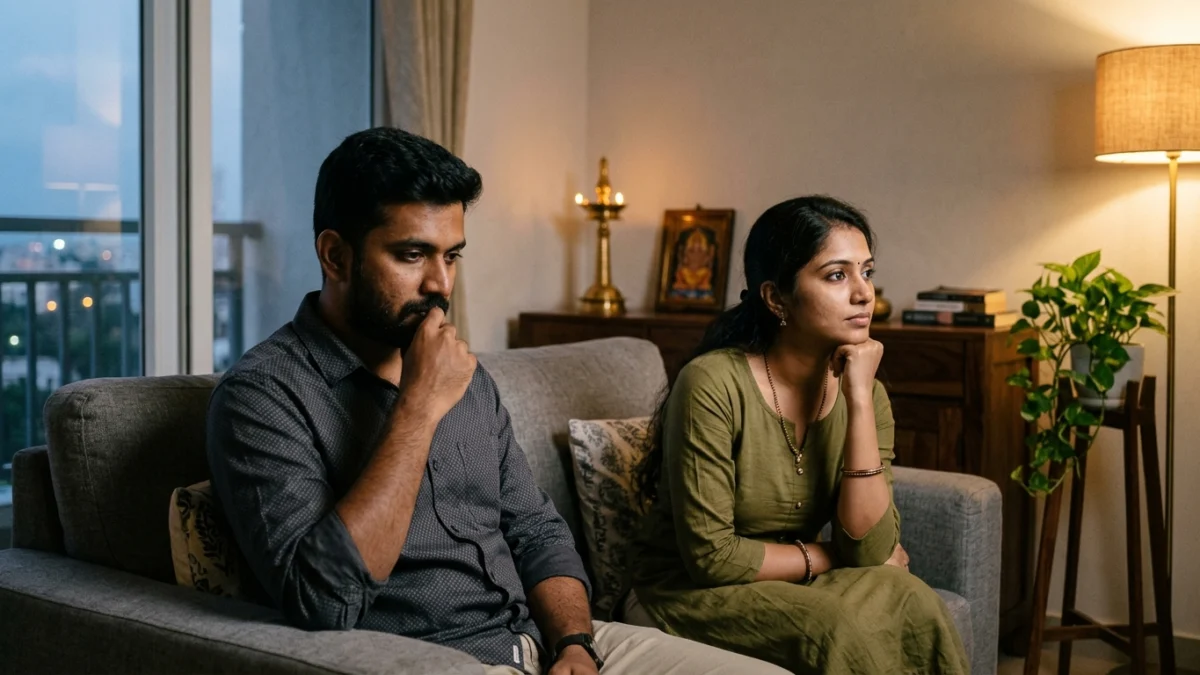
Consider a familiar morning in Chennai or Coimbatore: one spouse rushes through traffic to catch an office bus while the other prepares lunchboxes, organizes school uniforms, and answers early morning work emails. The expansive, affectionate conversations that defined their early years together have slowly narrowed down to logistics, utility bills, tuition payments, and home loan installments. In the evening, both partners sit in opposite corners of the living room, scrolling through handheld screens. They share an address and joint bank accounts, but emotionally, they live as distant housemates [1]. Across South India, the perception that divorce is strictly a distant Western phenomenon is rapidly dissolving as family courts handle record caseloads each month.

Global Divorce Patterns and the Indian Statistical Paradox
Examining global marriage data reveals stark cultural contrasts. In Western Europe and North America, divorce has long been legally streamlined and culturally normalized. Countries such as Portugal (approximately 70%), Spain (65%), France (55%), and the United States (45%) exhibit elevated dissolution rates driven by statutory no-fault divorce laws, robust individual social safety nets, and widespread female financial self-sufficiency. In these societies, choosing to leave an unfulfilling or conflicting marriage carries minimal civic barrier.
In East Asia, nations like Japan and South Korea have observed a distinct demographic phenomenon known as late-life or gray divorce. After adult children leave home for university or employment, women who endured decades of domestic inequality and emotional neglect increasingly choose to dissolve their marriages upon their husbands’ retirement. What kept them tied to the marriage was social convention and child-rearing obligations, not emotional attachment.
India presents an apparent anomaly on the world stage. Official demographic records capture a crude legal divorce rate of roughly 1.1%, representing approximately 13 dissolved marriages per 1,000 unions. However, sociologists caution against interpreting this statistic as proof that Indian marriages are forty times happier than unions elsewhere in the world [1].
Deep-seated social stigma, intense family interference, inadequate independent rental housing for single women, and prolonged court litigation force millions of unhappy spouses to remain tied to dysfunctional unions. Instead of formal legal dissolution, millions of couples transition into permanent informal separation, living independent lives without ever filing paperwork in family court [1].
Census Data Realities: The Widening Gap Between Law and Practice
Table C-2 of the 2011 Census of India classifies marital disruption into two distinct categories: individuals who have obtained a formal court decree of divorce, and those who live permanently separated without legal dissolution [1]. Importantly, this census metric captures the point-in-time stock of the population living in broken unions rather than an annual flow of new filings.
Nationwide, separated individuals outnumber legally divorced citizens by nearly three to one [1]. This pattern is particularly striking across southern states like Tamil Nadu and Kerala compared to northern agrarian regions [1]. Higher female literacy, diversified urban employment, and rising economic agency across southern districts empower women to reject persistent abuse and domestic neglect, even when formal divorce remains socially difficult to pursue [2].
State-by-State Comparison of Marital Disruption
The distribution of broken marriages across Indian states highlights how socioeconomic structures shape relationship choices [1]:
| State | Total Population | Legally Divorced | Living Separated | Total Broken Marriages | Share of Total Population |
|---|---|---|---|---|---|
| Mizoram | 10,97,206 | 17,600 | 11,613 | 29,213 | 2.66% |
| Kerala | 3,34,06,061 | 56,683 | 2,20,987 | 2,77,670 | 0.83% |
| Tamil Nadu | 7,21,47,030 | 62,948 | 3,98,284 | 4,61,232 | 0.64% |
| Gujarat | 6,04,39,692 | 1,92,392 | 1,41,017 | 3,33,409 | 0.55% |
| Uttar Pradesh | 19,98,12,341 | 1,01,753 | 2,48,385 | 3,50,138 | 0.18% |
| Bihar | 10,40,99,452 | 21,627 | 75,805 | 97,432 | 0.09% |
Source: Ministry of Home Affairs, Census of India 2011 (Table C-2). Note: These figures represent the proportion of the total enumerated population living divorced or separated, not an annual crude divorce rate per 1,000 marriages.
As documented in Table C-2, Mizoram records the country’s highest proportion of dissolved unions at 2.66% of its population, influenced by egalitarian tribal social structures and accessible customary separation norms. In Kerala (0.83%) and Tamil Nadu (0.64%), the number of separated individuals dwarfs formal divorce decrees. In contrast, conservative northern states like Uttar Pradesh (0.18%) and Bihar (0.09%) record minimal separation figures, reflecting restrictive social control and financial dependence. In Tamil Nadu alone, 461,232 individuals live away from their spouses; informal separations (398,284) outnumber formal legal divorces (62,948) by 6.33 times [1].
Everyday Drivers of Marital Breakdown in Tamil Nadu
Marital distress in South India reflects practical cultural and economic pressures rather than textbook Western relationship tropes:
Joint Household Realities and Boundary Ambiguity
In metropolitan hubs like Chennai and Coimbatore, living with or near elderly parents is often an economic necessity for shared rental costs and reliable childcare support. However, serious friction develops when elders micromanage daily marital budgets, child discipline, or private spousal decisions. When a husband consistently prioritizes his parents’ opinions over his wife’s dignity, or when a wife turns small disagreements into parental ultimatums by returning to her natal home, the marriage loses its primary autonomy. Healthy couples resolve this not by cutting ties with parents, but by agreeing on clear, private conversational boundaries.
The Dual-Career Reality and Unequal Domestic Labor
Across Tamil Nadu, millions of women contribute equally to family income, corporate careers, and monthly home loan repayments [2]. Yet, after completing an eight-hour professional shift, many return home to shoulder the entire second shift of cooking, dishwashing, and childcare alone. When husbands treat household management as optional assistance rather than equal operational co-ownership, chronic exhaustion transforms into deep-seated resentment. Domestic parity is the bedrock of modern marital stability.
Shift Work Fatigue and Long-Distance Migration
IT and business processing corridors frequently assign spouses to opposing rotational schedules. When one partner works a US or European night shift while the other follows standard local hours, they share a bed without ever sharing waking life. Furthermore, thousands of families across coastal and central Tamil Nadu navigate Gulf migration, where husbands spend two to three years abroad at a stretch. Physical absence, emotional isolation, and the inevitable miscommunications of messaging apps slowly widen emotional fractures.
Intimacy Taboos and Untreated Medical Challenges
Cultural silence around sexual wellness prevents couples from seeking clinical support for treatable anatomical and psychological issues. Conditions such as vaginismus, erectile dysfunction, performance anxiety, or basic libido mismatches are frequently concealed in shame. When physical intimacy remains unaddressed, the resulting emotional alienation surfaces as explosive arguments over money, in-laws, and household chores.
Digital Distraction and Social Media Comparison
The habit of ignoring one’s partner to scroll through a smartphone during meals or bedtime conversations delivers a direct psychological message of unimportance. Furthermore, constantly comparing the messy realities of daily domestic life against curated, romantic highlight reels on social media generates toxic dissatisfaction. Grounding expectations in daily reality preserves relational peace [4].
Substance Abuse, Financial Infidelity, and Abuse
In rural and semi-urban family court dockets, chronic alcohol addiction remains a leading precipitating cause of domestic violence and economic destitution. Similarly, financial infidelity, such as incurring secret credit card debt, lending money to relatives without mutual consent, or hiding assets, destroys foundational trust. When financial transparency disappears, marital security follows.
Exhausting Court Timelines and Legal Exhaustion
Under the Hindu Marriage Act, securing a contested divorce requires proving fault-based grounds like cruelty or desertion [3]. These adversarial proceedings routinely consume five to eight years in family courts. Faced with mounting advocate fees and public humiliation, many couples abandon court proceedings entirely and choose permanent informal separation instead.
Domestic Abuse and Critical Safety Protocol
It is essential to distinguish between standard marital discord and active domestic violence. Clinical relationship counseling, compromise, and mutual repair exercises are effective exclusively in safe relationships grounded in basic good faith and physical security.
If a marriage involves physical battery, dowry extortion, continuous emotional intimidation, or coercive financial deprivation, attempting couples therapy can severely endanger the victim. In abusive relationships, the abuser frequently uses insights gained during therapy to manipulate and intimidate the partner further. In such circumstances, personal safety, legal protection, and independent emergency shelter must take absolute priority.
When physical violence, dowry extortion, or severe coercive threats are present, couples mediation and compromise are dangerous. Physical safety, emergency relocation, and legal intervention must always take absolute precedence.
Chronic Marital Hostility and Physiological Health
Persistent domestic hostility is not merely a psychological burden; it induces measurable systemic physiological damage. Clinical research demonstrates that when chronic bitterness permeates a household, the autonomic nervous system remains locked in a state of sympathetic fight-or-flight hyper-arousal, driving prolonged elevation of circulating cortisol [4].
This neuroendocrine disruption degrades slow-wave sleep architecture and interferes with overnight glymphatic waste clearance in the brain, as examined in our science report on nighttime brain cleaning mechanisms. Furthermore, chronic emotional warfare promotes vascular inflammation and sustained arterial hypertension, detailed in our medical investigation into why heart attacks strike individuals with normal cholesterol. Relentless domestic distress also destabilizes metabolic hormonal regulation, which can be tracked through insights in our guide to continuous glucose monitoring.
Predicting Relational Dissolution: The Four Toxic Patterns
Over four decades of empirical observation at the University of Washington, psychologist Dr. John Gottman analyzed thousands of couples to determine what drives divorce [4]. His findings revealed that couples do not separate because they have disagreements; they separate because of how they conduct their disagreements [4]. Gottman identified four destructive communication habits that predict marital failure with over 90% accuracy:
Criticism vs Gentle Start-up
Criticism attacks the partner’s character rather than a specific actionable behavior. Stating “You never help and you are fundamentally selfish” immediately triggers defensive warfare. The antidote is a gentle start-up: stating personal feelings clearly and requesting a specific action without personal blame. For example: “I am overwhelmed with work deadlines tonight; could you chop the vegetables for dinner?” [4].
Contempt vs Culture of Appreciation
Contempt is the single most lethal predictor of divorce. Manifested through eye-rolling, hostile sneering, mocking sarcasm, and insults, it communicates that one partner is fundamentally superior to the other. Gottman’s laboratory found that high-contempt marriages even suffer higher rates of infectious illness due to immune suppression. The antidote is consciously building a daily habit of noticing small contributions and expressing genuine appreciation [4].
Defensiveness vs Taking Responsibility
Defensiveness involves playing the blameless victim and immediately counter-attacking: “I wouldn’t have forgotten if you reminded me properly.” This escalates the conflict. The antidote is accepting even a minor fraction of valid truth in the partner’s observation: “You are right; I forgot to pick that up on my way home, and I apologize” [4].
Stonewalling vs Physiological Self-Soothing
Stonewalling occurs when one partner emotionally disconnects, stops responding, and leaves the room in cold silence. In approximately 85% of cases, men stonewall because their heart rate exceeds 100 beats per minute during heated confrontation, overwhelming cognitive processing. While the stonewaller attempts to self-protect, the partner experiences the silence as emotional abandonment. The antidote is requesting a structured twenty-minute break to lower physiological arousal before returning to finish the discussion [4].
How Unaddressed Friction Escalates Into Marital Dissolution
- Phase 1
Everyday Grievances and Emotional Withdrawal
Dismissing everyday bids for connection and burying small frustrations due to chronic work and household fatigue. - Phase 2
Character Criticism and Disrespect
Attacking the partner’s character, family, or intelligence rather than addressing specific actionable behaviors. - Phase 3
Emotional Stonewalling and Cold Silence
Shutting down communication entirely, using silence as punishment, and leaving the partner emotionally abandoned. - Phase 4Living as parallel strangers under one roof with zero mutual trust, eventually culminating in separation or litigation.
Practical Strategies to Protect and Rebuild Partnership
Enduring partnerships are built through disciplined daily micro-habits rather than grand occasional gestures. Clinical research confirms five essential operational practices:
Turn Toward Everyday Bids for Connection
Throughout the day, partners make small verbal or non-verbal bids for attention, ranging from sharing an observation while cooking to asking about an email. Gottman’s research revealed that stable couples turn toward these bids 86% of the time by making eye contact and engaging, compared to just 33% among couples who eventually divorced [4]. Setting aside thirty minutes each evening without digital devices strengthens this foundational connection.
Maintain the Five-to-One Emotional Ratio
Conflict is inevitable in any close relationship. However, stable unions maintain a minimum of five positive, warm interactions, such as a reassuring touch, a compliment, shared laughter, or an act of helpfulness, for every single negative interaction [4]. Because the human brain weighs negative criticism five times more heavily than praise, positive moments must be intentionally cultivated.
Establish Financial Transparency and Monthly Reviews
Concealing loans, unilateral expenditures, or hidden financial commitments erodes marital security. Couples should schedule a calm monthly financial review to examine household expenses, upcoming loan payments, emergency savings, and long-term investments together without accusation.
Deploy Conflict De-Escalation Repair Signals
When an argument begins spiraling out of control, emotionally mature couples deploy verbal repair signals: “I spoke too sharply because I am exhausted; let me rephrase that,” or “Let us pause and drink some water before continuing.” Acknowledging and accepting these repair attempts prevents disagreements from turning destructive [4].
Safeguard Children from Parental Crossfire
Children are the most vulnerable victims of persistent parental conflict. Growing up in a household characterized by chronic shouting or icy disrespect induces severe anxiety, poor academic focus, and attachment disorders. Parents must commit to never arguing in front of children, never forcing them to take sides, and maintaining a respectful co-parenting partnership even if separation becomes unavoidable [3, 4].
Know When to Engage Professional Guidance
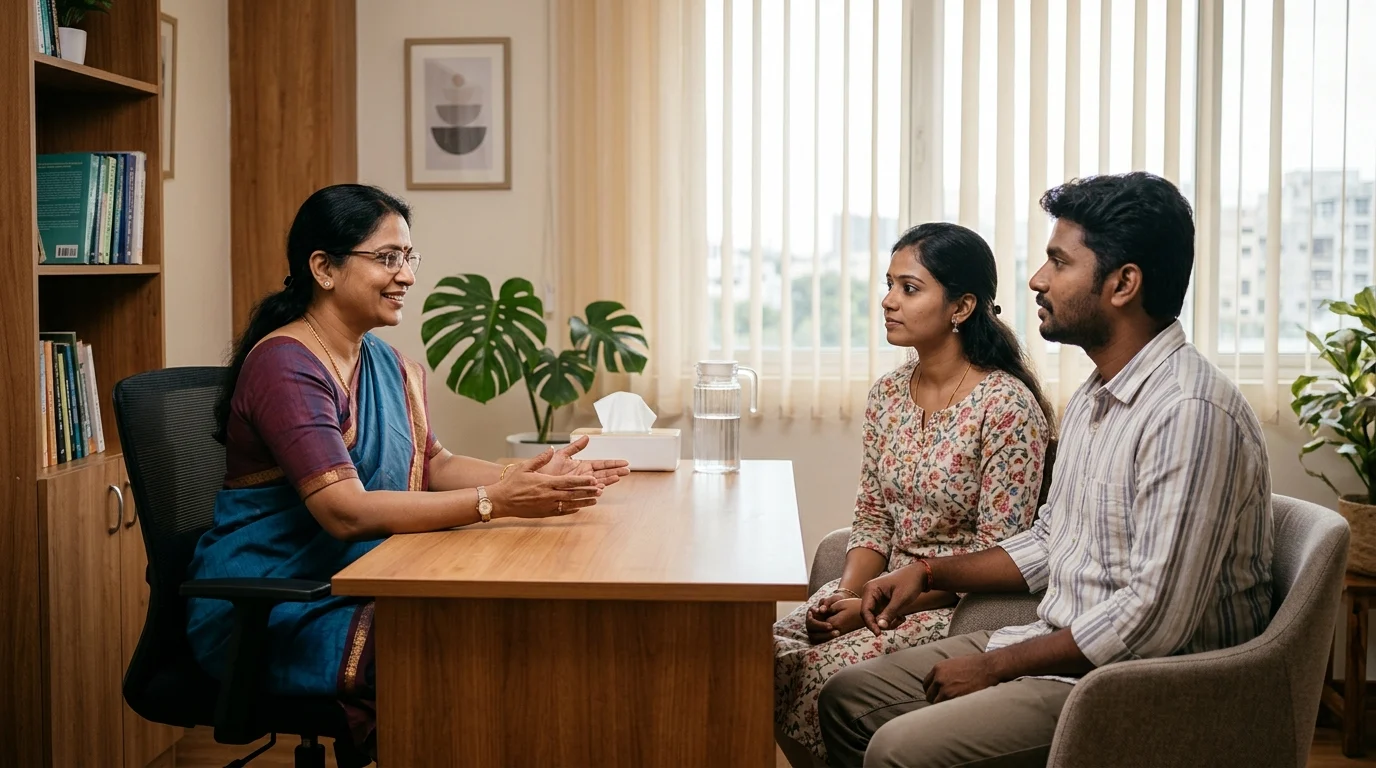
When communication repeatedly reaches an impasse, consulting family elders often polarizes the situation further. Engaging a licensed clinical psychologist or family therapist provides objective boundary evaluation. Individual therapy is suited for personal trauma, depression, or addiction, while couples therapy addresses conversational impasses. When a marriage has reached irretrievable breakdown, pursuing mutual consent dissolution under Article 142 preserves personal dignity and mental peace [3].
Summary of Relational Choices
The operational choices separating enduring partnerships from dissolving marriages are summarized below:
| Feature | Protective Relational Habits | Toxic Destructive Patterns |
|---|---|---|
| Criticism | Stating specific feelings gently with a clear request | Attacking the partner’s core character and personality |
| Appreciation | Noticing daily contributions and offering regular gratitude | Hyper-focusing on flaws through sarcasm and eye-rolling |
| Responsibility | Acknowledging personal mistakes and working toward solutions | Blaming the partner immediately to deflect accountability |
| Anger | Requesting a 20-minute pause to calm physiological arousal | Freezing the partner out through days of retaliatory silence |
| Finances | Discussing monthly budgets, savings, and debts transparently | Concealing secret loans, debts, or unilateral spending |
| Boundaries | Standing together as an autonomous unit with respectful limits | Involving parental interference to intimidate or control |
Source: The Gottman Institute clinical relationship findings.
Frequently Asked Questions
Why do informal separations outnumber legal divorces in Tamil Nadu?
Contested divorce proceedings in Indian family courts frequently drag on for 5 to 8 years, accompanied by substantial legal fees, intense social stigma, and complex maintenance litigation. Consequently, thousands of couples choose to live apart permanently without securing a formal decree.
Does couples therapy work in marriages with active domestic abuse?
Couples therapy is contraindicated in relationships involving physical battery, dowry extortion, or coercive intimidation. In abusive dynamics, joint counseling can place the victim at severe physical risk; priority must be given to immediate personal safety, shelter, and legal protection.
How long does a mutual consent divorce take in India?
Under Section 13B of the Hindu Marriage Act, mutual consent divorce requires an initial six-month cooling-off period. However, following the Supreme Court’s 2023 ruling in Shilpa Sailesh v. Varun Sreenivasan, courts can waive this waiting period under Article 142 if the marriage is demonstrably beyond repair.
How do Indian courts determine child custody following a separation?
Courts evaluate custody decisions primarily through the lens of the child’s psychological, educational, and physical welfare, rather than parental entitlement. While maternal care is typically prioritized for young children under five, older children’s preferences are weighed alongside both parents’ emotional stability.
When should a couple seek professional counseling instead of family mediation?
When everyday conversations consistently devolve into contempt, hostile defensiveness, or days of silence, traditional family mediation often amplifies blame. Consulting a licensed psychologist or family therapist provides objective boundary evaluation before irreversible legal litigation begins.
Glossary
Scientific terms used in this article
- SeparationSeparation
- A marital status where spouses live in separate households without obtaining a formal legal decree of divorce.
- Mutual Consent DivorceMutual Consent Divorce
- A streamlined legal procedure where both spouses jointly petition the court to dissolve their marriage amicably.
- Emotional StonewallingEmotional Stonewalling
- A destructive habit where one partner disengages entirely, refusing to speak or acknowledge the other during conflict.
- Irretrievable BreakdownIrretrievable Breakdown
- A legal condition where a marital relationship has collapsed so completely that no reasonable possibility of reconciliation remains.
- Domestic Violence ActDomestic Violence Act
- Indian legislation enacted in 2005 providing civil and emergency protection against physical, emotional, sexual, and financial abuse.
References
- ↩ Office of the Registrar General & Census Commissioner. Marital Status by Age and Sex (Table C-2). Census of India 2011, Ministry of Home Affairs.
- ↩ International Institute for Population Sciences (IIPS) and ICF. National Family Health Survey (NFHS-5), India Report, 2019-21. Ministry of Health and Family Welfare.
- ↩ Supreme Court of India. Shilpa Sailesh v. Varun Sreenivasan (Civil Appeal No. 2845 of 2023). Constitution Bench on Article 142 and Dissolution of Marriage.
- ↩ Gottman JM, Coan J, Carrere S, Swanson C. Predicting divorce among newlyweds from the first three minutes of a marital conflict discussion. Family Process (1999).



No comments yet. Be the first to join the conversation.