

At a Glance
- English Name
- Sir Isaac Newton
- Born
- 1642-12-25
Woolsthorpe-by-Colsterworth, England - Died
- 1727-03-20
Kensington, London, England - Nationality
- English
- Field
- Physics, Mathematics, Astronomy, Optics
- Known For
- Universal Gravitation, Three Laws of Motion, Calculus, Reflecting Telescope
- Awards & Honors
- President of the Royal Society (1703 to 1727); Knighted by Queen Anne (1705)
Key Findings
- During 1665 to 1667 Cambridge plague closures, Newton drafted foundational ideas for calculus, spectral optics, and universal gravitation [1].
- Newton proved an inverse-square attraction explains both falling earthly objects and elliptical planetary orbits in the 1687 Principia [1, 2].
- Astronomer Edmond Halley personally funded and edited the 1687 first edition after the Royal Society ran short of funds [2, 3].
When bubonic plague shut down Cambridge University in the summer of 1665, a quiet 22-year-old student retreated to his mother’s limestone farmhouse at Woolsthorpe Manor in rural Lincolnshire [1]. Over roughly eighteen months away from university lectures, Isaac Newton transformed science [1, 2]. In cramped private notebooks, he developed early infinitesimal calculus, proved sunlight blends spectral colors, and linked falling apples to the Moon’s orbit [1, 2].
Those solitary notebooks might have stayed locked in a Cambridge study if not for an astronomical puzzle raised twenty years later. In 1684, astronomer Edmond Halley asked Newton what curved path a planet follows under an inverse-square force [2, 3]. Newton replied that he had already solved the proof years earlier: an ellipse [2].
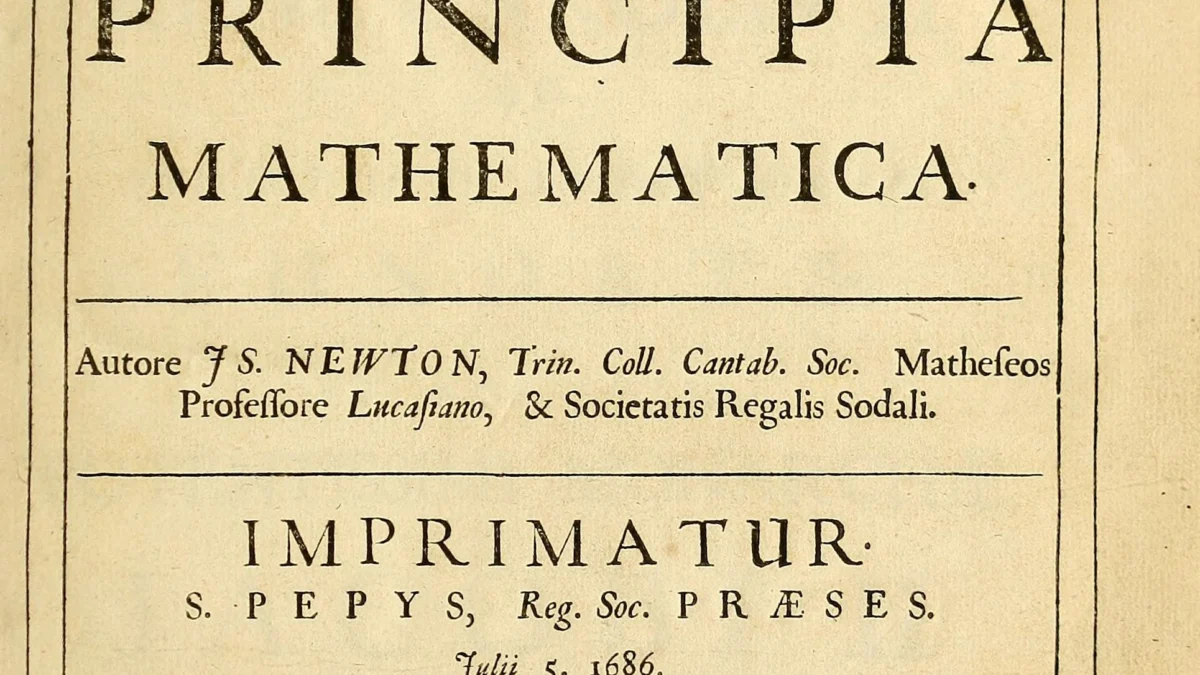
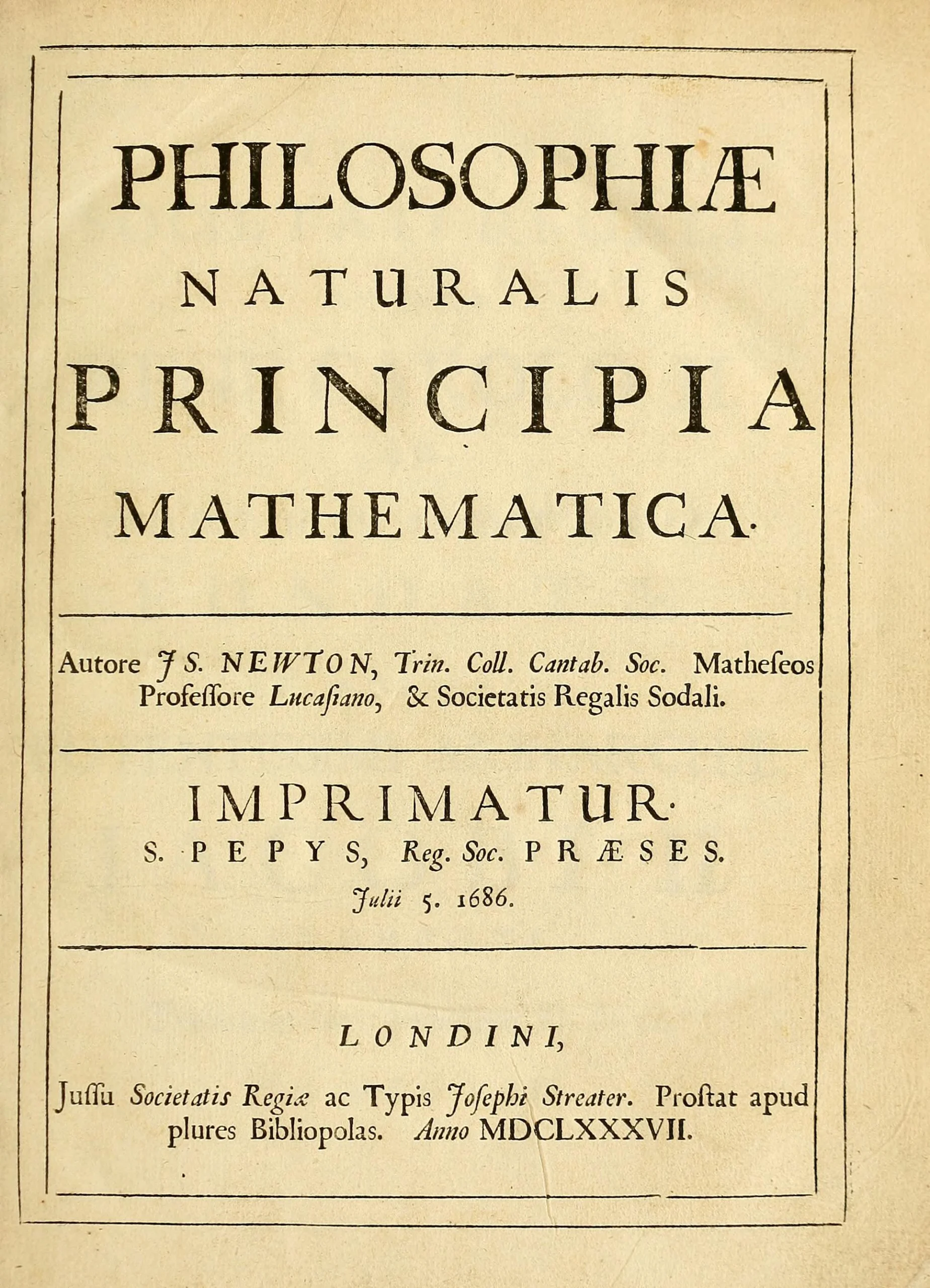
Halley personally financed publication of Newton’s masterwork, Philosophiae Naturalis Principia Mathematica, in July 1687 [2, 3]. With three concise laws of motion and a universal law of gravitation, Newton unified earthly falling objects and distant celestial mechanics under one mathematical physics [1, 2].
- 1665 to 1667
- Woolsthorpe Years Cambridge plague closures sparked Newton's optics, calculus, and gravity work [1]
Why This Matters: Unifying Heaven and Earth Under Mathematics
Before Newton, natural philosophers divided the universe into two incompatible realms. Aristotle’s followers taught that imperfect objects on Earth fall straight downward while heavenly spheres glide effortlessly in eternal circles [1]. No shared physical equation linked a dropped stone on a road with Jupiter circling the Sun [1].
Newton erased that ancient boundary completely. He showed that the exact same mathematical force pulling an apple toward Lincolnshire soil keeps the Moon curving continuously around Earth instead of flying straight out into space [1, 2]. By uniting terrestrial experiments with astronomical tables, he gave scientists universal quantitative laws testable anywhere in the solar system [1, 2].
That unification launched modern engineering, celestial navigation, and space exploration. Even contemporary astrophysics probes like extreme gravitational black holes and modern experimental optics and spectroscopy descend directly from methods Newton established in the seventeenth century [1].
How the Study Was Done: Historical Notebooks and Primary Archives
Historians of science reconstruct Newton’s breakthroughs from digitized seventeenth-century manuscripts rather than later Victorian legends [1, 2, 3]. Trinity College notebooks and Royal Society correspondence document each mathematical step directly [1, 2, 3].
Cambridge University Library preserves Newton’s early “Waste Book” and fluxions notebooks, revealing how he first computed curved motion [1, 3]. Biographer William Stukeley also recorded direct conversations with an elderly Newton walking beneath Woolsthorpe apple trees [1, 2].
Royal Society council minutes and digitized 1687 first editions confirm how Edmond Halley checked orbital proofs [2, 3]. Halley also paid London printing bills personally and ushered the manuscript to press [2, 3]. Comparing drafts against printed pages reveals how Newton refined his geometric logic before publication [1, 2].
The Woolsthorpe Plague Closure and Newton’s Miracle Years
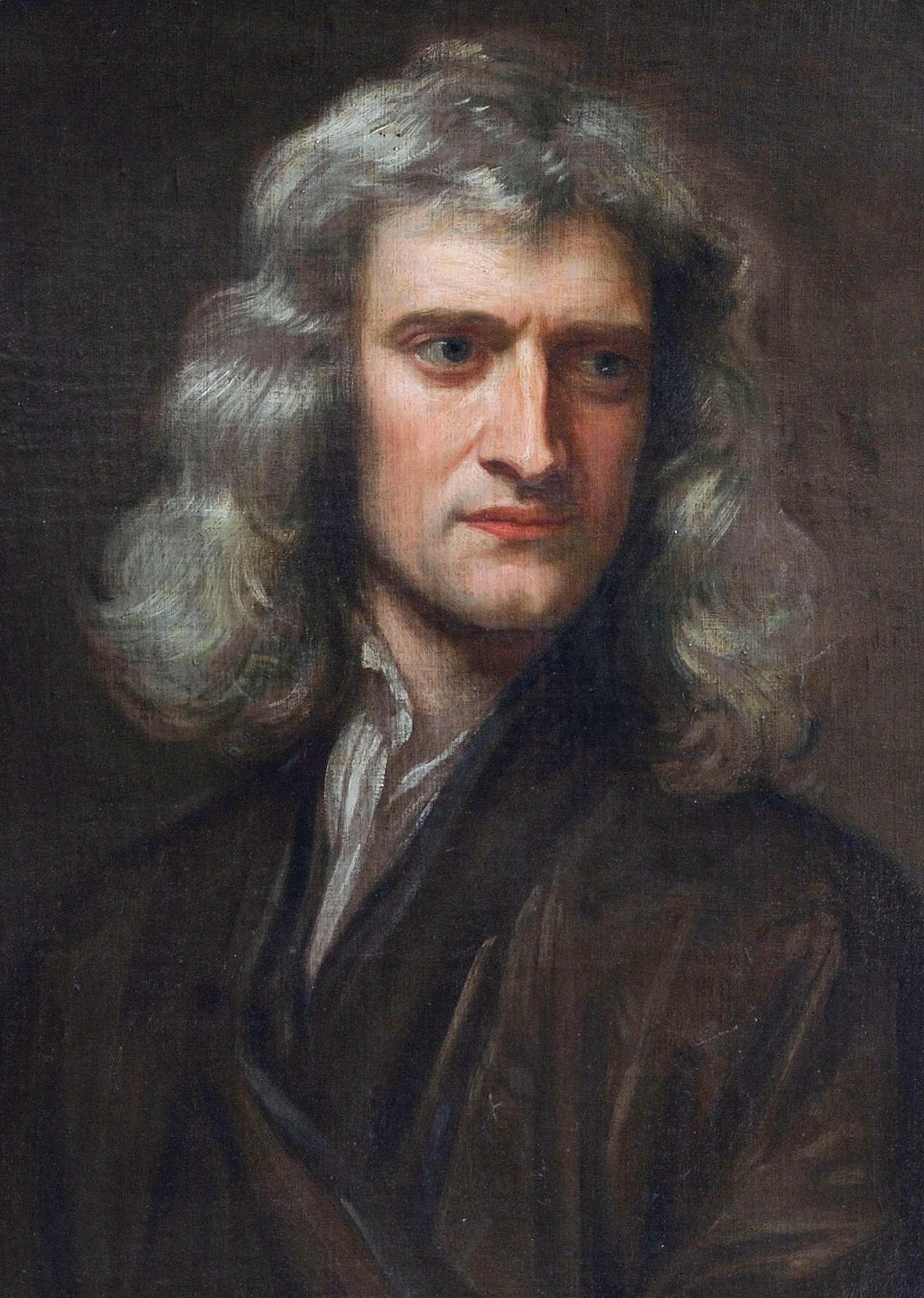
Newton was born on Christmas Day 1642 in Woolsthorpe, England, under the Old Style Julian calendar (January 4, 1643 today) [1]. He grew up after losing his father before birth and spent much of his boyhood in rural Lincolnshire [1]. At The King’s School in Grantham, teachers noticed his passion for mechanical sundials, water clocks, and geometric drawings [1].
In 1661, Newton entered Trinity College, Cambridge as a sizar student paying part of his way through college chores [1]. Beyond standard Aristotelian textbooks, he devoured writings by Rene Descartes, Galileo Galilei, and Johannes Kepler on motion and astronomy [1]. Soon after his bachelor degree, Cambridge closed in 1665 as plague spread through London [1].
Between summer 1665 and spring 1667, Newton spent most months isolated on the family farm [1]. Freed from formal classes, he worked relentlessly on continuous motion math, light refraction, and planetary gravity [1]. Standard static algebra failed completely whenever speeds curved or accelerated continuously [1]. Newton therefore invented fluxions, known today as calculus, years before Gottfried Wilhelm Leibniz published parallel continental notation [1].
Why the Moon Does Not Fall Straight Down
William Stukeley later recorded a dinner conversation where an aging Newton recalled watching apples drop in the orchard [2]. Why did apples fall straight downward toward Earth’s core rather than sideways or upward [2]? Newton wondered whether Earth’s pull stretched far higher than treetops, reaching the Moon itself [1, 2].
Newton checked that idea with numbers drawn from Galileo’s fall measurements and Kepler’s lunar periods [1]. He calculated how far a stone falls in one second on Earth [1]. Then he compared how far the Moon bends inward away from a straight tangent line each second [1].
How Universal Gravitation Links Apples and Planetary Orbits
- Step 1
Terrestrial Free-Fall
Near Earth’s surface, gravity accelerates unsupported apples downward along a radial line toward Earth’s core [1]. - Step 2
Orbital Tangential Speed
A satellite or Moon travels sideways fast enough that curving downward gravity matches Earth’s round drop-off [1]. - Step 3
Inverse-Square Scaling
Testing orbital acceleration showed gravitational strength decreases proportionally to 1 divided by distance squared [1].
Imprecise older values for Earth’s radius threw Newton’s 1666 check off slightly, keeping him quiet for years [1]. Later French meridian surveys gave tighter planetary dimensions [1]. Around 1679, correspondence with Robert Hooke also sharpened Newton’s orbital mechanics framing [1, 2]. Newton then proved cleanly that an inverse-square force yields exact elliptical Keplerian planetary orbits [1, 2].
Prisms, White Light, and the Reflecting Telescope
Before publishing gravitational mechanics, Newton first stunned London scientists with precision glass prism experiments [1]. Contemporaries believed colorless sunlight was pure and that glass prisms tinted light chemically [1].
In his crucial double-prism experiment (experimentum crucis), Newton isolated a single red or blue ray exiting a first prism and passed it through a second prism [1]. The isolated color bent cleanly at its characteristic angle without breaking into any new colors, proving white light is a composite blend of distinct spectral rays [1].
Realizing glass lenses always focus different colors slightly differently and blur star images, Newton bypassed refracting lenses altogether [1]. He ground concave metal mirrors to build the first functional reflecting telescope around 1668 [1]. Appointed Lucasian Professor of Mathematics at Cambridge in 1669, Newton sent his compact mirror telescope to the Royal Society in London, sparking immediate fascination [1].
In 1672, he published his landmark paper on light and colors in Philosophical Transactions [1]. Sharp debates with Robert Hooke and continental critics frustrated Newton, leading him to delay releasing his complete optical treatise until 1704 [1]. Modern crystal light interactions explored in our guide on semiconductor optics and blue light physics rely heavily on spectral wavelength principles traced back to Newton’s prism tests.
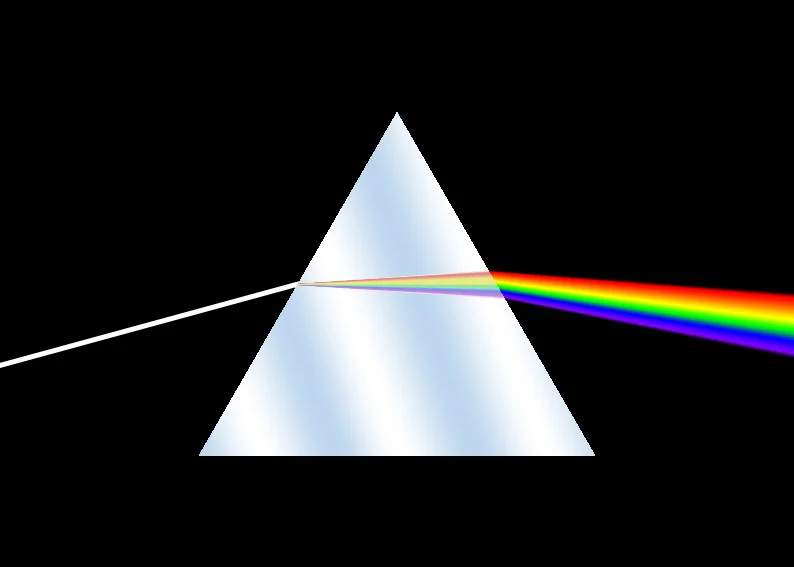
Table 1 summarizes the major pillars of Newton’s scientific career across mathematics, optics, gravitation, and later public service [1, 2, 3].
| Scientific Domain | Milestone Discovery | Primary Historical Period | Enduring Practical Legacy |
|---|---|---|---|
| Calculus (Fluxions) [1] | Continuous derivatives and integrals | 1665 to 1666 (Woolsthorpe) | Mathematical engine for fluid dynamics, finance, and aerospace |
| Optics and Spectroscopy [1] | Composite white light and mirror telescope | 1666 to 1672 (Cambridge/Royal Society) | Eliminated chromatic blur in giant modern astronomical telescopes |
| Three Laws of Motion [1, 2] | Inertia, force-acceleration (F=ma), action-reaction | 1684 to 1687 (Principia Mathematica) | Structural engineering, vehicle safety, and rocket propulsion |
| Universal Gravitation [1, 2] | Inverse-square attraction linking Earth and orbits | 1687 (Principia Book III) | Predicts tides, planetary trajectories, and artificial satellite paths |
Compiled from Stanford Encyclopedia of Philosophy and Cambridge Digital Library Newton Archives [1, 3].
Inside the 1687 Principia: Three Laws and Halley’s Rescue
The Principia almost never reached print because the Royal Society had spent its printing budget on a pricey illustrated book on fishes [2]. Astronomer Edmond Halley stepped in personally as publisher and editor [2, 3]. He funded printing costs out of pocket, smoothed bitter disputes with Robert Hooke, and wrote an opening Latin poem honoring Newton [2, 3].
Inside Books I through III, Newton built mechanics from three concise laws [1, 2]. First, objects keep resting or gliding steadily unless pushed by a net force [1, 2]. Second, net force equals mass times acceleration, defined cleanly via momentum change [1, 2]. Third, whenever one body pushes another, the partner pushes back equally in reverse [1, 2].
Paired with universal gravitation, those laws explained ocean tides pulled by lunar gravity and flattened poles on spinning planets [1, 2]. They also turned comets from terrifying portents into predictable solar orbiters [1, 2]. Halley famously used Newton’s methods to predict the return of the bright comet now bearing Halley’s name [1, 2].
The Principia is structured into three disciplined Latin volumes [1, 2]. Book I derives mathematical motion in free empty space, showing why central inverse-square forces produce ellipses, parabolas, or hyperbolas [1]. Book II tackles bodies moving through resisting fluids like air and water [1]. Book III, titled “The System of the World,” applies those axioms directly to moons, tides, Jupiter’s satellites, and comets [1, 2].
In later decades, Newton served England outside Cambridge lecture halls [1]. Appointed Warden and later Master of the Royal Mint starting in 1696, he oversaw national silver recoinage and hunted counterfeiters diligently [1]. Elected President of the Royal Society in 1703 and knighted by Queen Anne in 1705, Newton guided British experimental science until his death in London in 1727 [1]. His life spanned a historic shift from qualitative Aristotelian philosophy to quantitative empirical science [1, 2].
What the study cannot tell us: Limits Where Einstein Takes Over
Newton himself candidly admitted he could not explain how gravity pulled planets silently across empty vacuum without physical contact [1]. He declared famously that he framed no guesses about the hidden mechanism carrying attraction instantly between Sun and Earth [1].
Two centuries later, astronomers spotted one tiny flaw in Mercury’s orbit near the Sun’s fierce gravity well [1]. Newton’s equations also break down inside black holes and subatomic quantum scales, where gravitational energy or speeds climb close to the speed of light [1]. In 1915, Albert Einstein replaced invisible Newtonian action-at-a-distance with General Relativity, showing massive stars curve four-dimensional spacetime itself [1].
Yet Einstein’s equations smoothly reduce right back down to Newton’s inverse-square formulas at everyday speeds and weak planetary gravity. NASA trajectory engineers still plot spacecraft slingshots around Mars and Jupiter with astonishing precision using Newtonian mechanics first [1, 2]. Bridges, aircraft wings, weather fluid equations, and orbiting communication satellites all depend daily on the mathematical laws set down in 1687 [1, 2]. Understanding both fluid buoyancy engineering on Earth and orbital mechanics above Earth starts from Newton’s three laws.
Frequently Asked Questions About Isaac Newton
Frequently Asked Questions
Did an apple actually hit Isaac Newton on the head?
No. Contemporary memoirs by Newton’s friend William Stukeley record Newton watching an apple drop vertically to the ground in the Woolsthorpe orchard, prompting him to ask why gravity always pulls straight toward Earth’s center and whether it reaches the Moon.
Why did Newton wait twenty years before publishing his gravity equations?
Newton initially noticed minor discrepancies caused by imprecise estimates of Earth’s radius, disliked public controversies over priority with rivals like Robert Hooke, and preferred private study until Edmond Halley visited Cambridge in 1684 and urged him to publish.
Did Albert Einstein prove Isaac Newton completely wrong?
No. General Relativity extends gravity accurately near massive black holes, strong solar wells like Mercury’s orbit, and near light speed, while Newtonian laws stay remarkably accurate for rockets, satellites, bridges, and everyday motion.
What did Newton prove with glass prisms besides creating rainbows?
By isolating one colored beam from a prism and passing it through a second prism without further splitting, Newton proved white sunlight is composed of distinct pure spectral wavelengths rather than being altered by the glass.
Technical Terms and Definitions
Scientific terms used in this article
- Inverse-Square LawDistance-Squared Force Rule
- A physical law stating gravitational attraction weakens fourfold whenever separation distance doubles.
- Law of InertiaNewton's First Law
- Objects remain motionless or glide steadily in a straight line unless a net external force alters them.
- Method of FluxionsNewton's Calculus
- Newton’s mathematical system for computing instantaneous rates of velocity and curved orbital areas.
- Reflecting TelescopeMirror-Based Telescope
- An optical instrument using curved mirrors instead of glass lenses to eliminate colored edge blurring.
Scientific References and Primary Literature
Isaac Newton (Stanford Encyclopedia of Philosophy)
- Journal
- Stanford University
- Study Type
- Review
- Year
- 2007
If I have seen further it is by standing on the shoulders of Giants.
Sir Isaac Newton
Timeline
- 1665
Cambridge Plague Retreat
Newton leaves Cambridge for Woolsthorpe and develops fluxions, optics, and early gravity ideas.
- 1668
First Reflecting Telescope
Built mirror-based telescope avoiding lens color distortion.
- 1687
Principia Mathematica Published
Edmond Halley funds first edition uniting terrestrial and orbital motion under three laws.
- 1703
Royal Society President
Elected President of the Royal Society and knighted in 1705.

No comments yet. Be the first to join the conversation.